
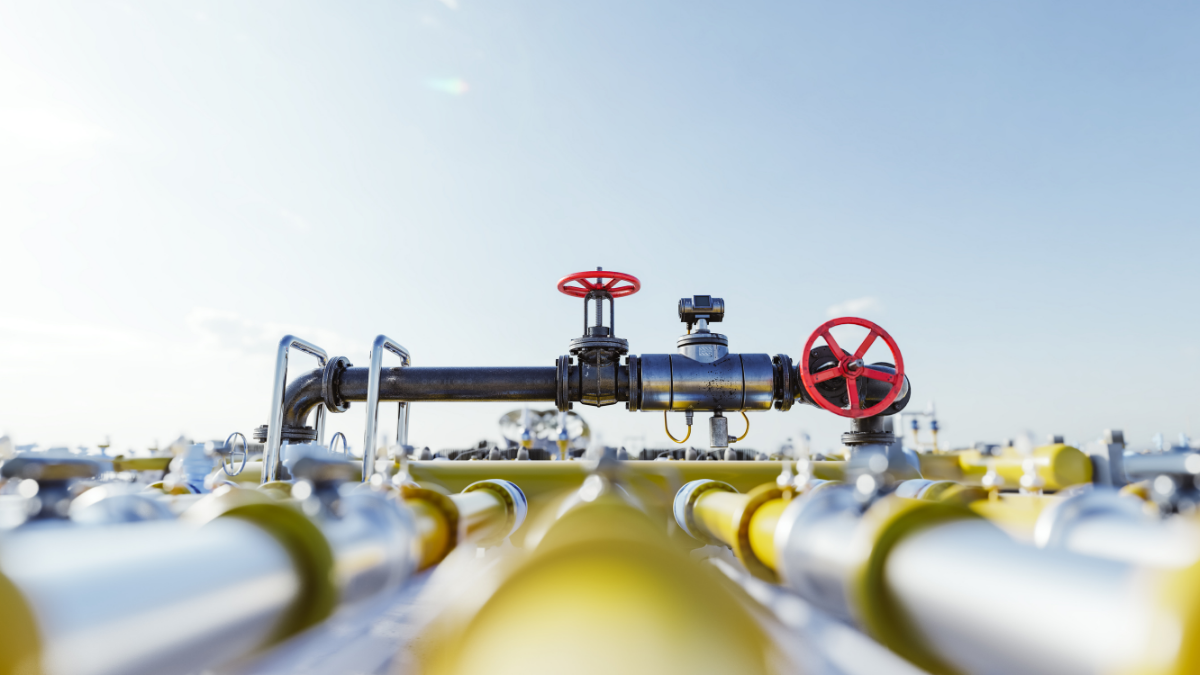

The government is considering a Rs46 billion security plan to protect critical oil and gas infrastructure. The proposed mechanism would establish 14 dedicated wings across Khyber Pakhtunkhwa and Balochistan.
These forces would protect gas pipelines, exploration operations and other energy infrastructure from security threats. The proposal follows around 23 sabotage incidents reported over the past two years.
The incidents involved the Shewa and Bettani pipelines, along with Sui Northern Gas Pipelines Limited’s main northern network.
Sabotage Hits Gas Supplies and Raises Costs
The attacks caused an estimated loss of 7,624 million cubic feet of gas. That volume was equivalent to around 25 LNG cargoes, according to the government’s estimates.
The financial loss stood at Rs12.7 billion based on a local gas price of $6 per mmBtu. However, the loss reached Rs27.7 billion when calculated using an RLNG price of $13 per mmBtu.
Meanwhile, the government estimates that a complete suspension of northern gas supplies would create another major financial pressure. SNGPL would need to rely more heavily on expensive RLNG to meet supply requirements.
Consequently, the utility’s annual revenue requirement could increase by Rs97 billion. The higher requirement could also raise SNGPL’s prescribed gas price by around Rs333 per mmBtu.
The prescribed price could rise from Rs1,719 to Rs2,052 per mmBtu during the current financial year.
Northern Network Receives Gas From New Discoveries
The northern gas network currently receives 556 mmcfd from indigenous sources. These supplies include 146 mmcfd from recent discoveries in different areas.
The sources include Mami Khel, Shewa and Spinwam in the Waziristan Block. They also include Bettani under the Wali Exploration Licence and Koi Palak in the Baska North Block.
The proposed security arrangements aim to protect these supplies and prevent disruptions to the network.
Two-Part Security Mechanism Proposed
The government’s proposed security mechanism consists of two separate components. The first component involves four dedicated wings for SNGPL pipelines and northern gas sources.
Establishing the four wings would cost an estimated Rs12 billion. Their annual recurring expenses would stand at around Rs4 billion.
However, two wings have already been deployed under the proposed arrangement.Therefore, the additional requirement for two more wings stands at an estimated Rs8.969 billion.
The annual recurring cost for these additional wings would be around Rs2 billion. The second component involves 10 regular wings under a CPEC-style security framework.
These wings would protect exploration, drilling, wellhead, processing and other exploration and production activities. Four wings would operate in Khyber Pakhtunkhwa, while six would be deployed in Balochistan.
E&P Security Costs to Be Shared
The establishment cost for the 10 E&P security wings is estimated at Rs30 billion. Of this amount, Rs12 billion would be allocated for Khyber Pakhtunkhwa.
Meanwhile, Rs18 billion would be allocated for Balochistan. The proposed Rs30 billion cost would be shared equally among three parties.
E&P companies, the federal government and the respective provincial governments would each contribute Rs10 billion.
However, E&P companies would fully bear the annual recurring cost of Rs10 billion.
Under the proposed arrangement, the recurring cost would carry no financing cost. It would also have no prescribed gas price impact or consumer pass-through.
Existing Security Arrangements
Existing arrangements already involve significant personnel and annual spending to protect energy infrastructure.
Around 1,513 personnel currently protect SNGPL pipelines. Their annual cost stands at approximately Rs3 billion.
In addition, E&P companies have deployed around 1,828 personnel for security purposes. Those arrangements cost approximately Rs2.174 billion annually.
The proposed mechanism would therefore add a broader security structure around pipelines, gas sources and exploration activities.
At the same time, the government expects the plan to address security risks affecting energy supplies in Khyber Pakhtunkhwa and Balochistan.

