
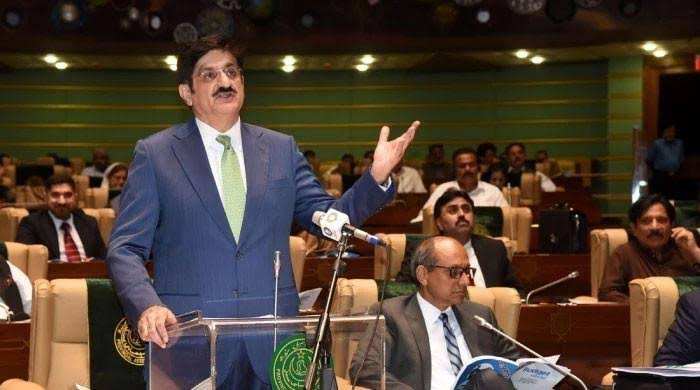

Budget Approved After Opposition Motions Rejected
The Sindh Assembly has approved a Rs3.652 trillion budget for the 2026-27 financial year.
The budget was passed on Sunday night after a detailed session in the House. During the proceedings, the opposition moved 1,600 cut motions against different allocations. However, all motions were rejected by the assembly.
The House also approved Rs165 billion in supplementary grants. These grants were authorised along with the main provincial budget.
The approval marks a key step in Sindh’s financial planning for the new fiscal year. The government said the budget focuses on managing provincial resources while continuing development and administrative spending.
Chief Minister Syed Murad Ali Shah defended several budget allocations during the session. He opposed multiple cut motions moved by opposition lawmakers.
One cut motion challenged the allocation for the National Games. The chief minister opposed the move, and the House rejected it.
Another motion was moved against funding linked to a provincial film project. The chief minister defended the allocation and said the project helped present a positive image of Sindh.
Finance Bill Passed With No New Taxes
The Sindh Assembly also passed the Sindh Finance Bill.
According to the government, no new taxes have been imposed under the bill. Instead, the province has revised, rationalised, and streamlined the existing tax structure.
The Finance Bill includes changes to some tax rates. It also introduces adjustments to the provincial tax framework.
The government said the purpose of these changes is to improve tax administration. It also aims to make the existing system more effective and organised.
Officials said the provincial tax net has been adjusted without placing a fresh tax burden on citizens.
Agricultural Super Tax Amendment Rejected
During the passage of the Finance Bill, MQM lawmaker Sabir Qaimkhani moved an amendment related to agricultural income.
The amendment proposed an 8 percent super tax on annual agricultural income of Rs50 million.
Chief Minister Murad Ali Shah opposed the proposal. He said the federal government had also reduced the super tax on agricultural income.
He argued that people involved in agriculture generally do not earn such high incomes. After the discussion, the assembly rejected the amendment.
Following the approval of the budget, supplementary grants, and Finance Bill, the Sindh Assembly session was adjourned.
The passage of the budget has cleared the way for the provincial government to begin implementing its financial plan for FY2026-27.

