
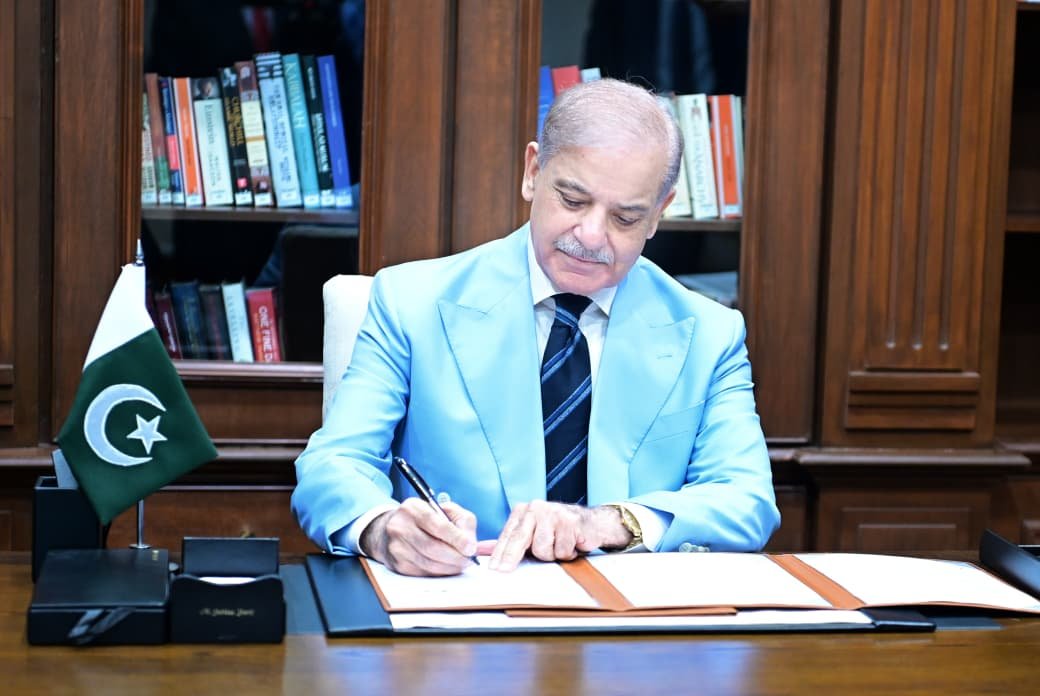

Prime Minister Shehbaz Sharif has signed a Memorandum of Understanding between the United States and Iran.
He acted in his official capacity as mediator during the electronically executed agreement process.
The development marks a significant diplomatic milestone involving Pakistan’s active engagement in regional peace efforts.
According to official statements, the agreement was signed by the presidents of both countries electronically.
Islamabad Memorandum of Understanding Takes Effect
The agreement has been referred to as the “Islamabad Memorandum of Understanding”. It reportedly came into force immediately after electronic signatures were completed by both sides.
The MoU reflects a negotiated framework aimed at reducing tensions between Washington and Tehran. It is designed to support de-escalation through structured diplomatic engagement rather than military confrontation.
Prime Minister Shehbaz Sharif confirmed that both sides have agreed to proceed under the outlined framework.
Key Provisions of the Agreement
Under the initial phase of the agreement, Iran is expected to reopen the Strait of Hormuz. In return, the United States is expected to lift its naval blockade as part of the arrangement.
The agreement includes broader commitments aimed at easing hostilities and restoring maritime stability. It also opens space for further negotiations on long-term political and security arrangements. Officials describe the accord as a structured step toward reducing regional military tensions.
International and Regional Reactions
The agreement has drawn attention from multiple international and regional stakeholders. Pakistan acknowledged support from countries including Qatar, Saudi Arabia, Türkiye, and Egypt.
Prime Minister Shehbaz Sharif also highlighted the role of Pakistan’s military leadership in facilitating progress. He specifically mentioned Field Marshal Syed Asim Munir for contributing to diplomatic coordination efforts.
Meanwhile, US President Donald Trump confirmed the agreement while warning of possible consequences if violated. He stated, “If they violate the agreement, we’ll strike again,” while expressing hope for stability.
Iranian officials welcomed the implementation and emphasized diplomatic achievements over military confrontation. They confirmed that the ceasefire framework had entered into force immediately after signing.
Economic and Global Market Impact
Global markets responded positively to the announcement of the agreement. Oil prices declined amid expectations of improved supply flows through the Strait of Hormuz.
Analysts linked the price movement to anticipated stabilization in regional energy routes. The easing of tensions is also expected to influence global trade and shipping confidence.
Unresolved Issues and Ongoing Negotiations
Despite the agreement, several key disputes remain unresolved between the two countries. These include concerns over Iran’s missile programme and its regional alliances.
The United States has maintained that military options remain available if necessary. Iran has stated that its strategic defense capabilities remain unchanged under the agreement.
The memorandum extends an earlier ceasefire framework by 60 days. This period is intended to support negotiations on a longer-term settlement.
Future Diplomatic Process
Upcoming discussions are expected to focus on sanctions relief and verification mechanisms. They will also address nuclear-related arrangements and broader regional security concerns.
Pakistan is expected to continue its diplomatic engagement throughout the next phase. While a planned signing ceremony in Switzerland has been cancelled, the electronic agreement remains in effect.The situation is expected to evolve as negotiations progress in the coming weeks.

