

China’s electric vehicle industry recorded another strong month in October 2026, with leading automakers reporting impressive global sales figures. BYD maintained its dominant position, while Geely, Leapmotor, Xpeng and Xiaomi strengthened their presence in the increasingly competitive electric vehicle market.
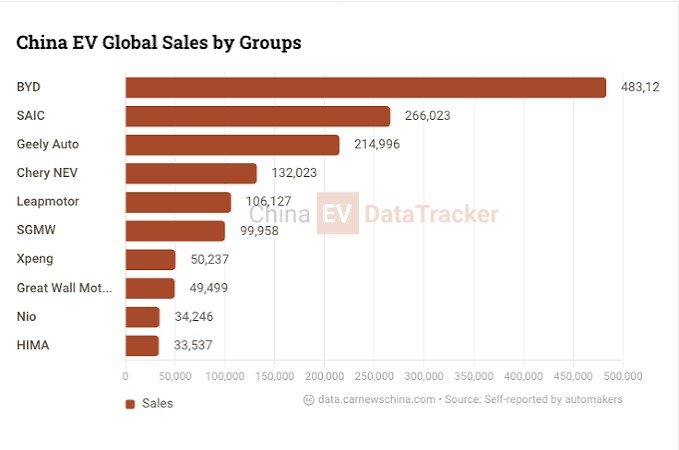
According to sales data released on November 2, BYD sold 483,125 passenger vehicles globally in October, placing it well ahead of its major Chinese competitors. Geely followed with 214,996 new energy vehicle sales, while Leapmotor recorded 106,127 deliveries.
The figures highlight the growing strength of China’s automotive industry as manufacturers expand their electric and plug-in hybrid vehicle offerings.
However, competition is intensifying, with several smaller manufacturers reporting record deliveries and rapid international expansion.
BYD Maintains Dominance With Nearly Half a Million Sales
Chinese automotive giant BYD maintained its leadership with 483,125 passenger vehicle sales during October 2026.
The company’s Dynasty and Ocean series remained its biggest contributors, accounting for 423,843 vehicles. Its Fang Cheng Bao brand added 43,872 units, while Denza recorded 15,152 sales.
BYD’s luxury Yangwang brand contributed 258 vehicles.
Including commercial vehicles, BYD’s total new energy vehicle sales reached 490,168 units, an increase of approximately 11% compared with October 2025.
The company also exported 170,194 new energy vehicles, more than doubling its overseas shipments compared with the previous year.
Its October passenger vehicle sales included 305,743 fully electric vehicles and 177,382 plug-in hybrid vehicles. These figures show that battery-powered models were an important driver of the company’s growth.
Despite strong international demand, BYD continues facing intense price competition in China’s domestic market.
Geely Crosses 200,000 Electric Vehicle Sales
Geely strengthened its position with 214,996 new energy vehicle sales in October.
The company’s Galaxy lineup led the performance with 153,385 vehicles, reflecting strong demand for its mainstream electric and hybrid models.
Luxury electric vehicle brand Zeekr recorded 32,483 sales, while Lynk & Co also contributed to the group’s results.
Geely’s electric and hybrid vehicle sales increased approximately 21% year-on-year.
The milestone is particularly significant because new energy vehicles accounted for roughly 69% of Geely Auto’s total monthly sales.
This demonstrates the company’s accelerating transition toward electrified transportation.
Geely also benefited from strong overseas demand, with total vehicle exports exceeding 107,000 units during October.
Leapmotor Emerges as One of China’s Fastest-Growing EV Brands
Leapmotor delivered 106,127 vehicles globally during October 2026.
The figure represents a 50.99% increase compared with the same month last year, making the company one of the standout performers.
October also marked the fourth consecutive month in which Leapmotor delivered more than 100,000 vehicles.
The company has expanded rapidly by offering technology-focused electric vehicles at competitive prices.
Leapmotor also announced that it expects to deliver its two-millionth vehicle during November 2026.
The milestone would demonstrate how quickly the brand has expanded its production and customer base.
Leapmotor’s performance indicates that newer automakers are becoming increasingly capable of competing with established industry leaders.
Xpeng Breaks Monthly Delivery Record
Its sales increased 21.8% compared with September and 19.6% year-on-year.
Overseas deliveries reached a record 13,326 vehicles, representing an impressive 166% annual increase.
The results suggest growing international interest in the company’s electric vehicles and advanced automotive technologies.
Xpeng has invested heavily in intelligent driving systems, digital vehicle architecture and connected-car features.
Its expanding international presence could become increasingly important as competition intensifies within China.
Xiaomi Crosses 50,000 Monthly Vehicle Sale
The company has entered the automotive industry relatively recently but is rapidly expanding its manufacturing and distribution network.
Xiaomi has established an annual vehicle sales target of 550,000 units for 2026.
By the end of October, it had reportedly achieved approximately 60% of this target.
Although the company has made substantial progress, the figures indicate that it still faces a challenging final two months to reach its full-year ambition.
Other Chinese EV Manufacturers Report Mixed Results
Several additional manufacturers also recorded significant sales during October.
Changan’s Nevo brand delivered 63,648 vehicles, representing a 75% increase compared with the previous year.
The company’s Deepal brand recorded another 32,602 deliveries.
Great Wall Motor sold 49,499 new energy vehicles, including 12,187 Ora vehicles and 8,648 Wey vehicles.
GAC Aion reported 42,357 sales, reflecting an annual increase of 56.8%.
Meanwhile, Nio delivered 34,246 vehicles across its three brands. Its main Nio lineup accounted for 18,125 deliveries, followed by Onvo with 8,383 and Firefly with 7,738.
However, not every manufacturer experienced growth.
Huawei’s Harmony Intelligent Mobility Alliance reported 33,537 deliveries, down 50.8% year-on-year.
Li Auto also recorded weaker demand, delivering 29,025 vehicles, an 8.6% annual decline.
Why China’s Electric Vehicle Industry Continues Expanding
China’s automotive industry has become a major force in the global transition toward electric transportation.
Domestic manufacturers are competing through improved battery technology, modern vehicle software, affordable models and expanding international sales networks.
Government policies, extensive charging infrastructure and strong manufacturing capacity have also supported the industry’s development.
However, China’s domestic automotive market remains highly competitive.
Manufacturers face pricing pressure, changing consumer demand and rising development costs.
Industry data also shows that international shipments are becoming increasingly important for companies such as BYD and Geely.
According to the China Passenger Car Association, China’s passenger new energy vehicle wholesale shipments reached approximately 1.8 million units in October 2026. The figure includes vehicles destined for domestic dealers and export markets.
What Do These Figures Mean for Pakistan and Global Car Buyers?
The rapid growth of China’s electric vehicle industry has implications beyond its domestic market.
Chinese manufacturers are increasingly offering vehicles with longer driving ranges, advanced safety features and modern infotainment systems at competitive prices.
For markets such as Pakistan, greater competition could create opportunities for improved access to electric and hybrid vehicles.
However, affordability will depend on import policies, local distribution networks, charging infrastructure and after-sales services.
Chinese automotive expansion could also encourage additional investment in dealerships, servicing facilities and battery-related technologies.
What Comes Next for China’s Electric Vehicle Market?
The October sales figures highlight two important developments.
First, BYD continues to operate on a scale far beyond many of its closest Chinese electric vehicle competitors.
Second, emerging manufacturers such as Leapmotor, Xpeng and Xiaomi are expanding rapidly, increasing competitive pressure across the industry.
While some companies are achieving record deliveries, others face declining sales and difficult market conditions.
The coming months will test whether manufacturers can maintain growth while managing pricing pressure and expanding international operations.
China’s electric vehicle race is no longer only about which manufacturer sells the most cars. It is increasingly about which companies can combine affordability, advanced technology, international expansion and long-term profitability.

