
FBI and CISA Warn of Cyberattacks
Cybercriminals are increasingly targeting industrial refrigeration systems, raising concerns about food safety and critical infrastructure. The FBI and Cybersecurity and Infrastructure Security Agency (CISA) have issued a joint warning about these attacks.
The agencies report that hackers are targeting refrigeration controllers and cold-chain monitoring systems worldwide. Successful attacks could spoil food supplies, damage equipment and create potential fire hazards.
The warning also involves the US Departments of Health and Human Services (HHS), Agriculture (USDA) and Transportation (DOT). Together, the agencies are urging organisations to strengthen security around vulnerable refrigeration equipment.
“Every organization that depends on refrigeration and monitoring systems should assume it could be a target,” said Chris Butera, CISA’s Acting Executive Assistant Director for Cybersecurity.
How Hackers Are Breaking Into Refrigeration Systems
According to the joint advisory published Thursday, attackers are exploiting weaknesses in unpatched or internet-accessible refrigeration controllers.
These systems help operators monitor temperatures remotely, manage defrost cycles and control cooling equipment. However, inadequate security can expose these devices to cyberattacks.
The agencies specifically warned about vulnerabilities in electronic temperature controllers and commercial refrigeration management systems. These devices often operate in retail grocery stores and cold-storage facilities.
“Globally, malicious cyber actors are targeting vulnerabilities and weaknesses in unpatched or internet-accessible electronic temperature controllers and commercial refrigeration controllers in retail grocery and cold storage facilities,” CISA warned.
Moreover, attackers can exploit several security weaknesses to manipulate refrigeration operations, including:
- Authentication bypass vulnerabilities.
- Arbitrary code injection flaws.
- Weak security configurations.
- Unpatched internet-connected controllers.
Once attackers gain access, they can modify temperature settings and force equipment into continuous heating or defrost cycles.
Consequently, refrigeration units may fail to maintain the temperatures required for safe storage.
Food Spoilage, Equipment Damage and Fire Risks
A successful cyberattack can create serious operational and financial problems for affected organisations.
For example, manipulated temperature settings can spoil food and damage stored products. Additionally, prolonged equipment disruption can reduce the lifespan of refrigeration systems.
The consequences may extend beyond financial losses, particularly in healthcare and food production facilities. Unsafe storage conditions can also affect medical supplies and temperature-sensitive products.
Furthermore, attackers may interfere with temperature monitoring systems. This can prevent operators from noticing dangerous changes before significant damage occurs.
The agencies also warn that certain attacks could create fire hazards. Therefore, securing refrigeration controls has become an important infrastructure protection priority.
European Attacks Reveal the Scale of the Threat
The latest warning follows several cyber incidents involving refrigeration systems across Europe.
In October, hackers compromised refrigeration controllers at an estimated 250 to 350 French supermarkets. They remotely activated defrost functions, causing refrigerator and freezer temperatures to rise.
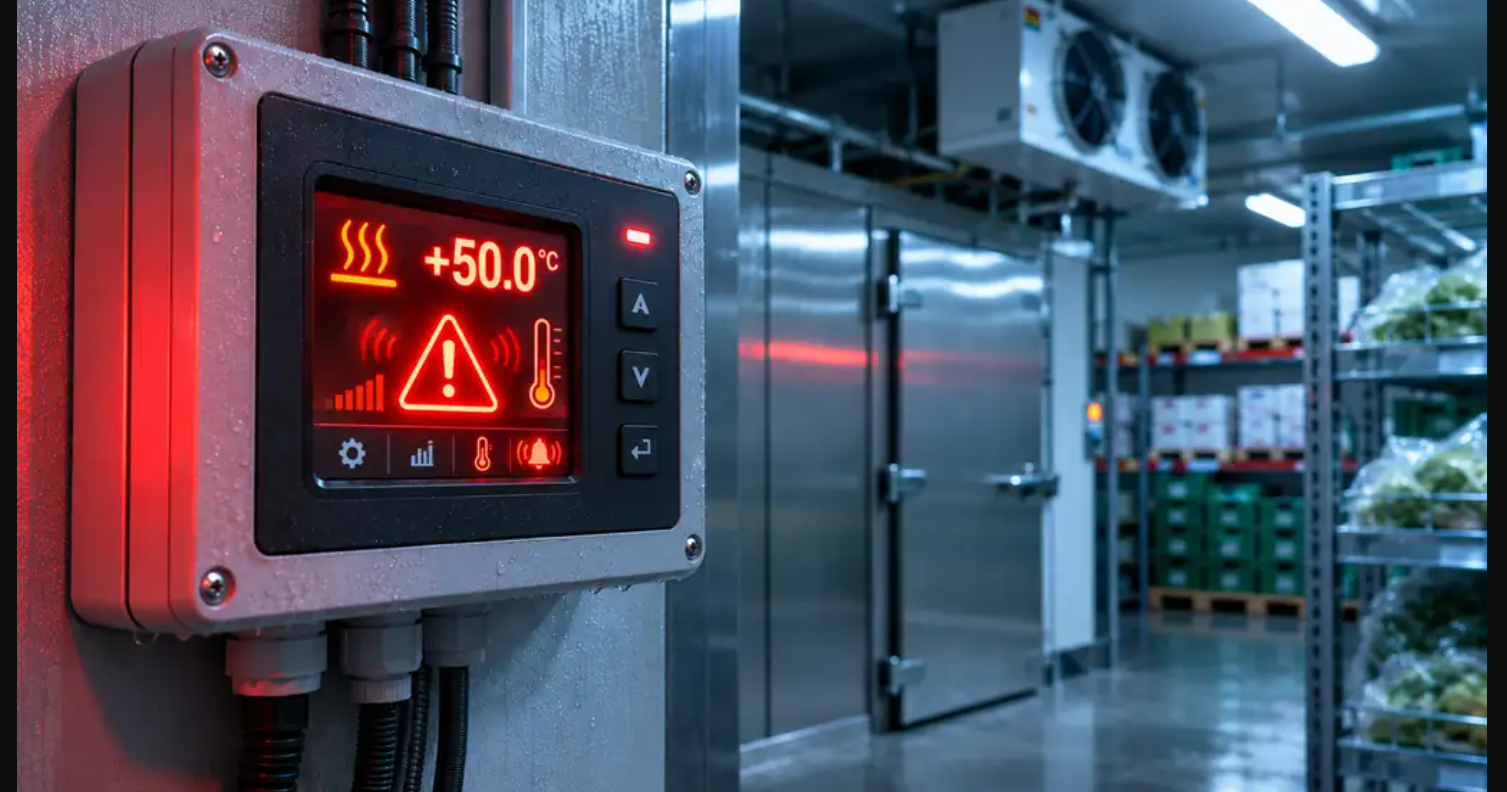
Another wave of attacks emerged in November, affecting more than 115 stores across six European countries. Some refrigeration systems shut down completely, while others recorded temperatures reaching 50°C (122°F).
The attacks demonstrated how manipulating industrial cooling equipment can disrupt everyday operations. They also highlighted the risks facing businesses that depend on continuous temperature control.
On November 3, the French Blood Establishment (EFS) confirmed another cybersecurity incident involving a refrigeration equipment provider.
The incident altered temperature and defrost settings at three facilities used to store blood products. This raised further concerns about the security of temperature-sensitive medical supplies.
FBI and CISA Recommend Stronger Refrigeration Security
To reduce these risks, US agencies have urged organisations to strengthen their refrigeration system security.
Their recommendations include:
- Remove refrigeration controllers from the public internet.
- Secure all necessary remote access connections.
- Replace default passwords with stronger credentials.
- Install available security updates.
- Separate operational technology systems from business networks.
- Enforce safe temperature limits on refrigeration controllers.
These measures can help organisations reduce unauthorised access and limit the impact of potential attacks.
Additionally, separating operational technology from business networks can make it harder for attackers to move between connected systems.
Why Refrigeration Cybersecurity Matters
The growing threat highlights how cyberattacks can affect physical infrastructure beyond computers and traditional digital networks.
Industrial refrigeration supports supermarkets, healthcare facilities, food production, chemical facilities and transportation operations. Therefore, disruptions can have consequences across several essential industries.
Although the latest incidents have exposed serious weaknesses, organisations can reduce their risks through stronger access controls and regular security updates.
The central concern now extends beyond stolen data or compromised accounts. Hackers can manipulate the systems responsible for preserving food, medical supplies and other temperature-sensitive products, making refrigeration security increasingly critical.
For the latest updates, visit and follow The Truth International website (www.thetruthinternational.com) and subscribe to the YouTube Channel.