
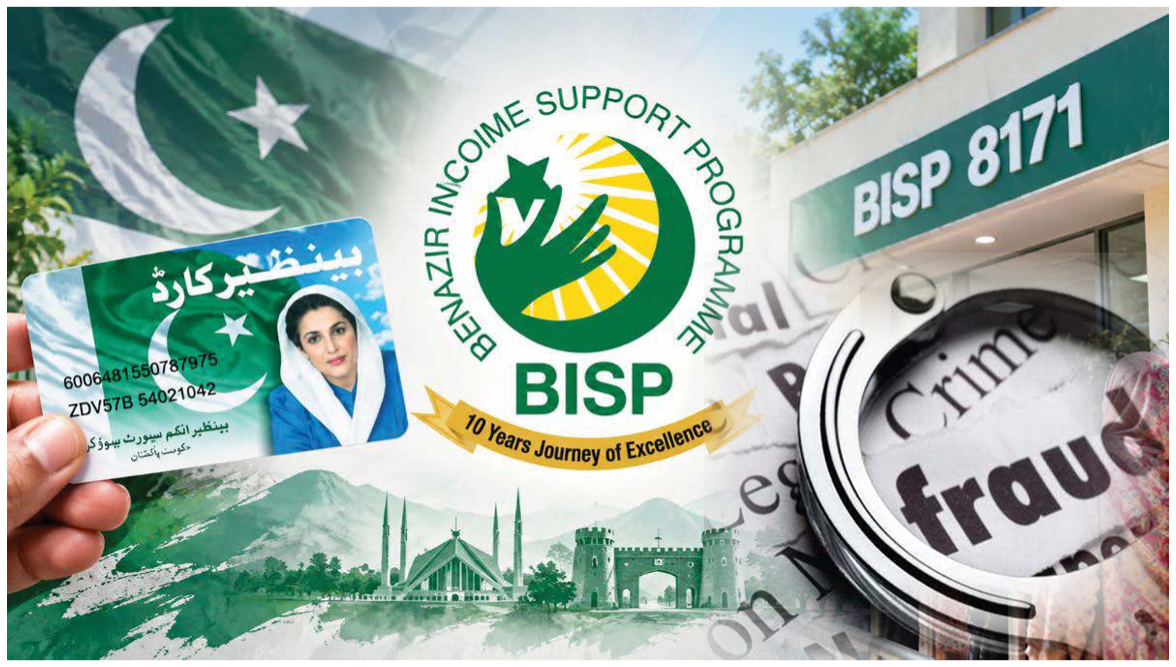

On 23 October 2026, the Poverty Alleviation Ministry laid fresh documents before the National Assembly. They put the irregularities in the Benazir Income Support Programme at Rs24 billion. They counted 140,488 government employees among the recipients. They showed that only about Rs712 million had been recovered. And they recorded that payments continued for six years after the problem was first identified.
That identification dates to December 2019, when a federal cabinet was told that a forensic data exercise, run with the national identity authority NADRA, had found more than 140,000 government employees, or their spouses, collecting cash from a programme built for the poorest women in Pakistan. Ministers announced that civil servants would be barred. The country was promised a clean-up. This article works backwards from today’s disclosures to that promise, because the distance between the two is the story.
“Scam” is the word that has travelled furthest in the headlines, but it blurs three very different things: money stolen by people, money paid out because a database could not tell who was who, and money that went to people the state had already decided should not receive it. What follows pulls them apart, using audit findings, parliamentary records and official briefings current as of 28 October 2026.
| Rs24 billion
irregularities reported to the National Assembly, 23 Oct 2026 |
≈3%
of that sum recovered so far (Rs712.4 million) |
2,259,404
beneficiaries removed, 1 July 2025 to 30 June 2026 |
A lifeline too large to hide in
The Benazir Income Support Programme, launched in 2008, began as a modest cash transfer to poor women. It is now the backbone of Pakistan’s social protection system. Its flagship Kafaalat stream pays an unconditional quarterly stipend, currently Rs14,500 per family, with a rise to Rs18,000 planned from January 2027 under commitments made to the International Monetary Fund. Beside it sit the Taleemi Wazaif education stipends, which depend on school attendance, and the Nashonuma nutrition programme for mothers and young children.
The scale explains why every irregularity matters. The 2026-27 budget allocates Rs838 billion to the programme, up 17 percent from Rs716 billion the year before. About 10.2 million families are enrolled today, and the government’s target is 12 million. An official briefing to the First Lady in June cited a World Bank study putting coverage at 10.3 million families, roughly 24 percent of Pakistani households, and estimating that every rupee disbursed generates Rs2.34 in real income. An earlier impact evaluation by Oxford Policy Management, commissioned by the government and the World Bank, reported consistent progress against the programme’s poverty-reduction target, including a seven-percentage-point fall in poverty.
This is the uncomfortable truth at the centre of the debate. Leakage from a failing programme is waste. Leakage from one that demonstrably helps is theft from the people it helps, and it erodes the political consent that keeps a programme this large alive.
Counting the loss: three numbers, three meanings
Three headline figures circulate, and they are routinely stacked on top of each other as if they were one scandal. They are not. Each measures something different, and they are listed here newest first.
| Figure | Source and date | What it measures | What it does not prove |
| Rs24 billion; 140,488 government employees | Poverty Alleviation Ministry documents presented to the National Assembly, 23 October 2026 | Payments to government employees and pensioners, dominated by Rs23.13 billion in FY2019-20 | A total for all BISP leakage. It covers one category of ineligible recipient. |
| Rs19 billion+ | Public Accounts Committee sub-committee, 22 July 2026 | Payments from FY2010-11 to FY2022-23 allegedly withdrawn outside beneficiaries’ registered districts or provinces | Proven fraud. The FIA inquiry was still incomplete. |
| Rs25 billion+; 601,850 cases | Auditor General’s audit of FY2024-25, reported June 2026 | Financial exposure created by weak spouse-data profiling in the BISP management information system | Confirmed theft. The bulk of it is money paid to 596,252 records with no spouse CNIC on file. |
The most important distinction is hidden in the audit’s arithmetic. The bulk of the Rs25 billion, Rs25.46 billion, is the total paid to 596,252 beneficiaries whose files hold no spouse CNIC. By simple division that is roughly Rs42,700 per record, the order of magnitude of an ordinary year’s stipends rather than a pattern of outsized payouts. The auditors, in other words, found a hole in a verification field, not 600,000 thieves. The money is genuinely at risk, because without a spouse record the system cannot test whether a husband is a civil servant, but it is an exposure and not yet a proven loss.
Nor can the three numbers simply be added. The categories overlap, the periods differ, and several are still being adjudicated. What can be said without qualification is narrower and, arguably, more damning: the state has identified a specific class of ineligible recipients since 2019, and by its own accounts has recovered about 3 percent of the Rs24 billion at issue. For scale only, Rs24 billion is under 3 percent of this year’s Rs838 billion allocation. That is a reason against panic about the programme’s survival and no reason at all for comfort about its controls.
The record at a glance, latest first
| Date | What the record shows |
| 23 Oct 2026 | Ministry tells the National Assembly: Rs24 billion, 140,488 employees, about Rs712 million recovered, 2,259,404 beneficiaries removed in FY2025-26. |
| July 2026 | PAC examines Rs19 billion+ in out-of-district payments; FIA arrests in Hyderabad and Kot Addu. |
| June 2026 | Audit of FY2024-25 reports exposure above Rs25 billion; budget allocates Rs838 billion for 2026-27. |
| Oct–Dec 2025 | FIA raids in Mirpurkhas and Dera Ghazi Khan; reports say more than 10 million women now hold accounts for wallet-based payments. |
| 28 Aug 2025 | PAC sub-committee told officers up to grade 22 were among recipients; FIA reports 879 FIRs and 292 arrests; BISP says it has no recovery mechanism. |
| Feb 2021 | A further 29,961 beneficiaries declared ineligible as more data became available. |
| Early 2020 | Officials say about 140,000 government employees benefited; 2,543 officers of grade 17 and above identified; notices issued and FIA inquiries begin. |
| 24 Dec 2019 | Cabinet told that a NADRA-assisted forensic review found 820,165 undeserving beneficiaries, more than 140,000 of them linked to government employees. Exclusions approved and civil servants barred; annual savings projected at Rs16 billion. |
October 2026: the ledger and the clean-up
The October documents are the most complete official accounting so far. Government employees and pensioners received Rs23.13 billion in FY2019-20, and a further Rs900 million was paid after they had been identified. The counts then zigzag: more than 12,000 employees (Rs146.7 million) in 2020-21, 2,447 in 2021-22, 2,235 in 2022-23, just 227 in 2023-24, then 12,078 in 2024-25. A sudden fall and rebound may reflect how thoroughly each year was checked rather than how many people behaved differently, which is itself a warning about relying on audits after the money has gone out.
The hardest category to discuss is staff. The documents show that 236 BISP employees were themselves among those who received funds meant for beneficiaries, and that recovery proceedings and disciplinary action have begun, with Rs21.5 million recovered from staff so far. The ministry also reported 55,579 complaints during the previous fiscal year about unauthorised deductions, embezzlement and misappropriation, and says inquiries are under way. Its reply to Parliament, however, did not give a consolidated count of the agents it has suspended, blacklisted or proceeded against.
The state’s answer: purge, block, digitise
The government’s response has three prongs, and parts of it are substantial. The first is removal. Parliament was told that 2,259,404 beneficiaries were removed from the programme between 1 July 2025 and 30 June 2026, with payments to more than 800,000 others suspended. Some outlets labelled all of these “fake”, but the published ministry details do not break down the reasons, so that label deserves caution. The second is blocking. A written reply from Minister Syed Imran Ahmad Shah said 229,157 government employees or their spouses had been blocked after updated payroll and pension data were obtained from the Controller General of Accounts, ministries, autonomous bodies and state-owned enterprises, and more than six million records had been forwarded for profiling. Of those blocked, 32,971 were exempted from recovery because their monthly pension was Rs29,000 or below, under a BISP Board decision. The minister cautioned that the numbers and recoverable amounts could still change.
The third is digitisation. More than 10 million women have been given CNIC-linked accounts and wallets, with biometric verification meant to stop agents and male relatives from intercepting payments. The promised date has moved, though: officials spoke of full digital disbursement by March 2026, then June, then July, and in October the ministry described a gradual shift to Social Protection Wallets. An integrated grievance management system links complaints to the six partner financial institutions that still run the retail networks. BISP has also warned beneficiaries that its only genuine SMS number is 8171 and that messages from any other number are fake.
Digitisation is the right instinct but not a cure. Fewer than 6,000 of the country’s roughly 16,000 ATMs are biometric, which is why programme managers lean on local biometric-enabled shops. Every reform that relies on a gatekeeper creates a new toll booth unless someone is watching it.
July 2026: the Rs19 billion trail and the counter
On 22 July 2026 a PAC sub-committee examined more than Rs19 billion paid between FY2010-11 and FY2022-23. Auditors said funds had been withdrawn outside beneficiaries’ registered districts and provinces, in breach of programme rules. Payments for beneficiaries from 39 districts had been processed through a single mobile-shop franchise in Multan. More than half of 92 sampled beneficiaries could not be traced, and payments had also been made to 21 deceased individuals. FIA officials asked for two more weeks to finish their inquiry, and the committee chair asked why eight months had produced so little.
The same hearing reviewed government-employee cases. BISP’s additional secretary said most of the employees involved held lower grades, that inquiries had been held, and that no one had been dismissed. Senator Saleem Mandviwalla of the Pakistan Peoples Party criticised the programme’s reliance on deputation staff, saying it had weakened institutional oversight.
Days later the FIA moved at the point of cash-out, where women queue at agents and shops. It arrested three alleged agents in Hyderabad, two of them government employees, and six retailers in Kot Addu who allegedly charged beneficiaries Rs1,500 for SIM cards that were supposed to be free. These are allegations at the investigation stage. Individually, such charges look small, and the women who pay them have little power to refuse. Multiplied across millions of quarterly payments, they amount to a quiet tax on the poor that rarely appears in an audit headline because no single transaction is large.
June 2026: the audit that found the hole
The Auditor General’s review of FY2024-25 supplies the sharpest evidence of how the controls failed. A federal cabinet directive of 24 December 2019 barred government employees, pensioners and their spouses from the programme. Yet BISP paid Rs515.7 million to 12,078 government employees, pensioners or their spouses. The largest share went to wives: 9,124 spouses of serving employees in grades 1 to 16 received Rs402.8 million. A further 278 government employees were irregularly enrolled as higher-secondary students under the Taleemi Wazaif stipend, drawing Rs2.5 million for their families.
The deeper problem was identity. BISP tests a woman’s eligibility partly by cross-referencing her husband’s identity card, and the audit found that this check can be defeated by omission or duplication. In 5,558 cases a single spouse CNIC was linked to as many as seven different women, involving Rs239 million. In 97,179 cases the system allowed multiple Proxy Means Test scores for the same household head, producing 18,964 irregular enrolments and an estimated Rs533.5 million in misallocation. In some households five to ten married women were recorded together, a statistically improbable pattern that triggered no alert and led to Rs17.4 million in payments.
The auditors blamed missing anomaly thresholds and validation controls in the management information system. The Departmental Accounts Committee directed BISP to block the beneficiaries, begin recovery, seek clarification from NADRA, introduce independent verification of spouse relationships and physically verify a sample of high-risk cases. These read less like exotic reforms than baseline data hygiene, and their absence is a governance finding more than a crime story.
Late 2025: raids, a hearing and a promise of wallets
In the closing months of 2025 enforcement and reform ran in parallel. In October the FIA arrested 21 people in Mirpurkhas, Sindh, among them 18 alleged sub-agents and three BISP employees. In November it arrested 12 people in Dera Ghazi Khan over illegal deductions. By December, reports said more than 10 million women had become account holders as the programme prepared to replace agent-based cash-outs with wallets.
The turning point had come in August. A Public Accounts Committee sub-committee heard from the BISP secretary that 85 officers of grade 20 and 630 of grade 19 were among the recipients, with grade 22 officers on the list, most from provincial cadres. The same hearing was told that the programme had no mechanism to recover the money. The FIA reported 879 FIRs and 292 arrests in BISP-related cases. The session also examined Rs15.06 million paid to individuals who had died, in some cases before 2008. The secretary responded that in 94 percent of 841 cases the beneficiaries were later found alive, and the committee ordered verification. It was also told that BISP had failed to recover Rs607 million in penalties from banks that did not de-credit dormant beneficiary accounts as their agreements required.
2019 to 2021: where it began
The trail starts on 24 December 2019. A forensic review conducted with NADRA identified 820,165 beneficiaries as undeserving, more than 140,000 of them linked to government employees. The cabinet approved their exclusion and barred civil servants from the programme, with annual savings projected at Rs16 billion. In early 2020 officials said 2,543 officers of grade 17 and above had been identified, notices were issued, and FIA inquiries began. In February 2021 a further 29,961 beneficiaries were declared ineligible as more data became available.
The exclusions drew political objections at the time, with PPP chairman Bilawal Bhutto among those who expressed anger over the removal of some 800,000 names, a reminder that welfare clean-ups are never politically neutral. The pattern in the records has not: identification, notices, and then very little recovery.
What critics, and the independent evidence, add
Defenders of the programme point to its documented effects and to the clean-up already under way. Officials cite the coverage and income findings above, and removing more than two million records in a single year is no trivial exercise. One commentator in The News read the expanded budget as settling a dispute over whether BISP would be cut or devolved to the provinces, while noting that transfers keep poor families afloat without giving them the resources to escape poverty.
Critics focus on a different axis: consequences. Members of the PAC sub-committee asked why no recovery mechanism existed years after the problem was identified. Another commentary in The News argued that weak beneficiary lists invite fraud, cash through intermediaries invites deductions, and audits after disbursement amount to accountability in name only. The ministry’s own figure of roughly 3 percent recovered gives that critique empirical weight.
There is also a measurement problem that neither side has resolved. The programme publishes no single, consistent leakage rate. Readers are given an audit exposure, a ministry total, a committee review and an enforcement tally, each with its own period and definition. Without a standing number, such as the share of each quarter’s disbursement later found to be ineligible, nobody can say whether the system is getting cleaner or merely getting audited more.
What would actually close the gap
The following are analytical recommendations, drawn from the gaps the official record itself exposes.
- Stop the payment at the match, not after the audit. Once a CNIC is matched to payroll or pension data, the stipend should be blocked automatically. The record shows payments continuing for six years after identification.
- Make the spouse field a hard gate. No verified spouse CNIC, no enrolment, plus a time-limited review of the 596,252 existing records that lack one.
- Create the missing recovery power. The BISP secretary told the PAC in August 2025 that no mechanism existed. Deductions from salaries and pensions through the accountants-general would turn identification into recovery.
- Publish agent-level accountability. The ministry has not given a consolidated count of agents suspended or blacklisted. Publishing complaint and sanction data by agent is cheap and would deter small-scale extortion.
- Keep the wallet toll-free. Free SIMs must be free, offline alternatives must exist for women whose fingerprints fail, and wallet agents need the same monitoring as cash agents.
- Report one leakage rate. A single annual measure, independently audited and with a stated method, so the public sees one number instead of a rotating set.
So is BISP a scam? The record supports a more demanding answer. There is documented, prosecutable wrongdoing: arrests, FIRs, recoveries and staff implicated. There is a much larger layer of documented control failure, where money went to people the rules excluded because systems could not or did not stop it. And there is a layer of unproven exposure, large numbers that describe risk rather than loss, which headlines routinely blur into the first two.
What is beyond argument is the timeline. The state knew in 2019, said so publicly, and in 2026 was still counting recoveries in the hundreds of millions against irregularities in the billions. The 2.26 million records removed in a single year suggest either that the register was dirtier than most citizens understood or that the clean-up is finally becoming serious. Possibly both.
For the 10 million families who depend on the quarterly transfer, the practical question is simpler: will the money reach the woman it was meant for, in full and on time? A safety net is only as strong as its weakest knot, and in BISP’s case the weakest knots have been found, repeatedly, in the data.
For the latest updates, visit and follow The Truth International website (www.thetruthinternational.com) and subscribe to the YouTube Channel.

