

GOVERNMENT SEEKS GREATER INCENTIVES FOR EV ADOPTION
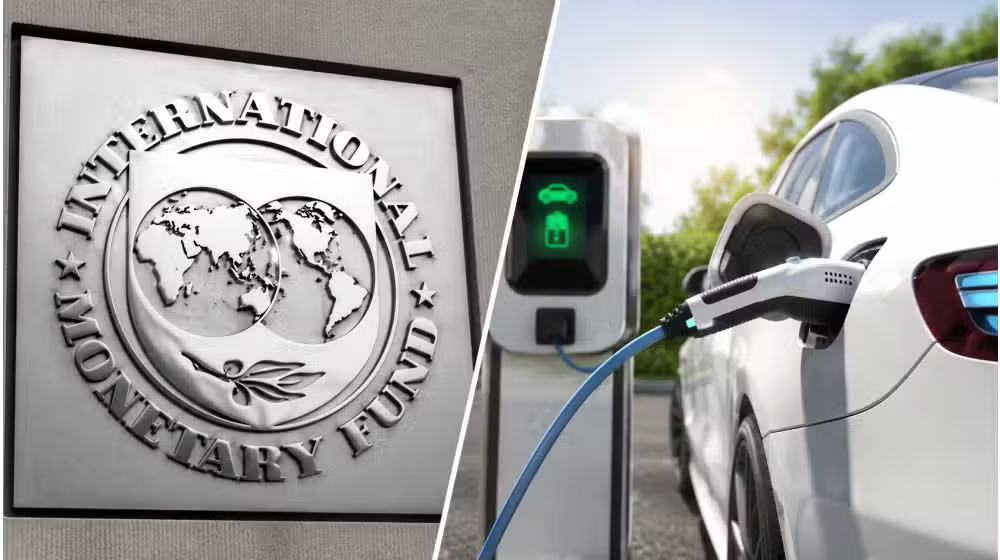
Pakistan’s Ministry of Industries has opposed an International Monetary Fund proposal to impose an 18 percent General Sales Tax on electric vehicles and instead advocated a significantly lower rate of 1 percent under the country’s upcoming auto policy framework.
During discussions with a visiting IMF mission, government officials presented key elements of the proposed policy and recommended a reduced tax structure for New Energy Vehicles. The proposal covers electric cars, buses, trucks, pickups, tractors, motorcycles, three-wheelers, and other commercial vehicles.
Meanwhile, officials argued that hybrid vehicles already benefit from a reduced GST rate of 8.5 percent and questioned why fully electric vehicles should not receive stronger tax incentives aimed at encouraging faster market adoption.
TARIFF REFORMS AND INDUSTRY PROTECTION REMAIN KEY ISSUES
At the same time, officials highlighted what they described as distortions within the current tax structure. They noted that imported EV components currently face a GST rate of 1 percent, whereas locally manufactured parts remain subject to an 18 percent tax. Consequently, the government proposed extending the 1 percent rate across the entire EV supply chain to reduce refund accumulation and create equal treatment for manufacturers.
Furthermore, discussions also addressed Pakistan’s broader tariff reform commitments under the National Tariff Policy. Authorities have provided written assurances to reduce the weighted average applied tariff from 10.6 percent in FY25 to 7.4 percent by FY30.
However, the Ministry of Industries expressed concerns regarding the pace of tariff reductions. Officials argued that countries including India and Bangladesh continue to maintain significantly higher duties to protect domestic manufacturing sectors.
Separately, the government has submitted the Motor Vehicle Development Act to Parliament and expects lawmakers to approve the legislation before the end of June 2026 despite concerns raised by coalition partners.

