
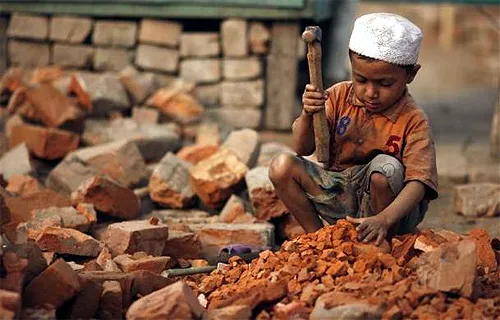

More than 8.6 million children in Pakistan are engaged in child labour, according to a new national report. The report also reveals that over 6.6 million children perform hazardous work that threatens their health and development.
The National Commission for Human Rights (NCHR) launched the report in collaboration with UNICEF. Titled “Pakistan: Child Labour Surveys, Evidence for Action,” it provides the first nationally representative child labour dataset in nearly three decades.
New Report Highlights Scale of Child Labour Crisis
Speaking at the launch ceremony, Rabiya Javeri Agha said Pakistan last conducted a comprehensive child labour survey in 1996. Consequently, policymakers relied on outdated data for more than twenty years.
The report shows that Punjab carries the largest burden. Around six million children in the province are engaged in labour activities. Meanwhile, Sindh has 1.6 million child labourers. Khyber-Pakhtunkhwa recorded 745,155 cases, while Balochistan reported 201,352. Islamabad Capital Territory accounted for 15,180 working children.
Poverty Identified as Major Driving Factor
According to the findings, poverty remains the strongest cause of child labour. In addition, children from less educated households face a greater risk. The report also found that boys are more likely than girls to engage in labour and hazardous occupations.
Many children work within family farms, workshops, and homes. Therefore, conventional labour inspections often fail to detect these cases. Furthermore, the report highlights serious impacts on children’s wellbeing.
Working children are more likely to leave school and suffer health problems. Across provinces, many reported work-related injuries and illnesses. Moreover, some older child labourers showed symptoms of depression.
Federal Minister for Human Rights Azam Nazeer Tarar said the issue requires collective action. He stressed that child labour remains more widespread than many people realize.

