
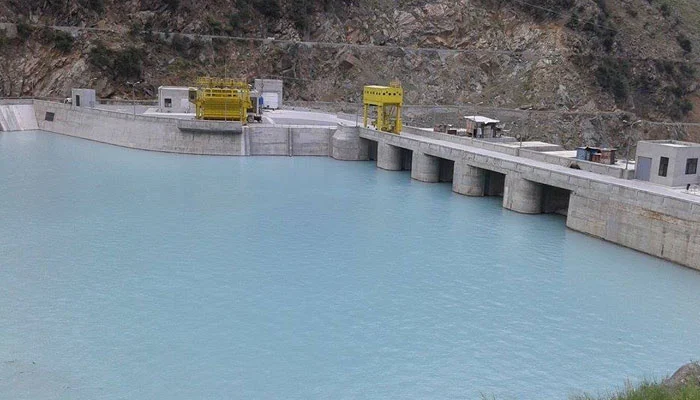

Pakistan’s major reservoirs have stored 9.466 million acre-feet (MAF) of water, reaching 72% of national capacity. Official figures released on Sunday showed the latest improvement. The country has a total water storage capacity of 13.149 MAF. Meanwhile, water inflows across the Indus River System have increased significantly.
As of August 2, nationwide inflows reached 401,600 cusecs. Regulated outflows stood at 304,700 cusecs. The stronger water position offers relief during the peak summer season. However, rainfall patterns have created different conditions across major reservoirs.
Tarbela Reservoir Nears Maximum Capacity
Tarbela Dam continues to benefit from strong inflows from northern glaciers and monsoon activity. The reservoir received 219,700 cusecs against releases of 162,000 cusecs.
Tarbela currently holds 5.063 MAF of water. Its total storage capacity stands at 5.580 MAF.
Therefore, the reservoir has reached around 90.72% of its available capacity. The strong position provides additional support for irrigation during the ongoing Kharif season.
Chashma Barrage also remains close to full capacity. It currently stores 0.285 MAF against its maximum capacity of 0.311 MAF.
That figure puts Chashma at around 91.64% of its storage capacity.
Mangla Continues to Face Water Shortage
Mangla Dam presents a different picture. Lower rainfall across its catchment area has kept inflows relatively weak.
The reservoir received only 46,200 cusecs of inflows. Consequently, irrigation authorities reduced releases to 7,000 cusecs to retain more water.
Mangla currently stands at 56.74% of its capacity. Therefore, additional rainfall over the Jhelum catchment could become important during the remaining monsoon period.
Water managers will continue monitoring rainfall and weather conditions through mid-August.
Water Releases Support Kharif Crops
Pakistan is currently diverting 354,600 cusecs through its canal network for Kharif crops. These include cotton, rice, and sugarcane.
Sindh is receiving the largest provincial share at 195,000 cusecs. Punjab follows with 145,000 cusecs.
Meanwhile, Balochistan is drawing 12,000 cusecs. Khyber Pakhtunkhwa is receiving 2,500 cusecs.
Environmental releases are also continuing downstream of Kotri Barrage. Since April 1, water managers have released 0.532 MAF into the Arabian Sea.
These releases help limit seawater intrusion and protect the vulnerable Sindh Delta from further land degradation.
Rainfall Will Remain Crucial
Pakistan’s overall water position has improved, but reservoir levels remain uneven. Tarbela and Chashma currently hold strong reserves, while Mangla needs stronger inflows. Therefore, late-monsoon rainfall could play an important role in balancing the country’s water resources.
Officials will closely watch weather patterns during the coming weeks. Renewed rainfall over the Jhelum catchment could improve Mangla’s storage before the winter sowing season begins.
For now, stronger inflows provide some relief for farmers and water managers. However, careful management will remain essential to maintain supplies for agriculture and environmental needs.

