
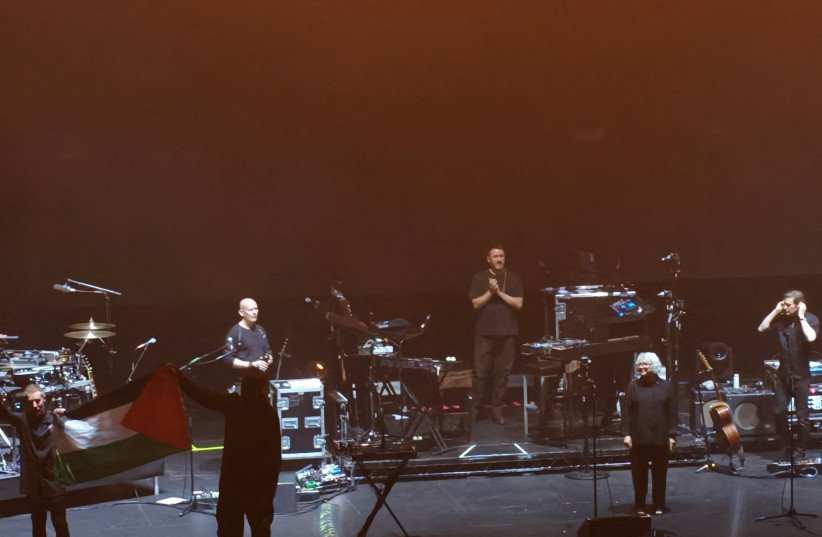

Group alleges questioning and passport confiscation following concert in Singapore
SINGAPORE: British trip-hop band Massive Attack has said Singapore authorities detained members of the group and questioned them after performers displayed a Palestinian flag during a concert in the city-state last week.
In a statement shared on Instagram, the band said members were “surprised and disappointed” after police allegedly isolated and questioned them separately following the performance. The group also claimed that officers searched several hotel rooms and temporarily confiscated passports before returning them.
Singapore police did not immediately comment on the band’s latest allegations. Earlier, authorities said two members of the band received stern warnings and were barred from re-entering Singapore, although officials did not publicly identify them.
During the concert, band members Robert Del Naja and Grant Marshall held up a Palestinian flag as audience members chanted “Free Palestine,” according to witnesses.
Authorities cite concerns over public order
Singapore police previously stated that the band’s actions had the potential to affect the country’s racial and religious harmony. Officials noted that Singapore prohibits the public display of foreign national emblems without prior approval or an official exemption.
The Palestinian flag remains a particularly sensitive symbol because of the ongoing conflict in Gaza and Singapore’s diverse, multi-religious population, which includes a significant Muslim community.
Band defends action as expression of human rights
Meanwhile, Massive Attack rejected suggestions that displaying the Palestinian flag violated the law. The band said it believed the flag represented a sovereign state recognised by many countries and described the incident as a reminder of the importance of protecting freedom of expression and universal human rights.
Formed in Bristol in 1988, Massive Attack has built a reputation for incorporating political and humanitarian themes into its performances. Concert visuals frequently highlight international conflicts and human rights issues, including those involving Gaza, Sudan, Iran and Ukraine.
The incident has renewed discussion about the balance between artistic expression and public order regulations during international performances in Singapore.

