

With Gilgit-Baltistan gaining growing attention for tourism, renewable energy and development, can the region turn its natural wealth into lasting opportunities for its people?
Gilgit-Baltistan is often introduced through its mountains.
The towering peaks of the Karakoram, the winding Karakoram Highway, blue lakes and green valleys have made the region one of Pakistan’s most recognisable destinations. Yet behind these familiar images lies a region whose importance extends far beyond tourism.
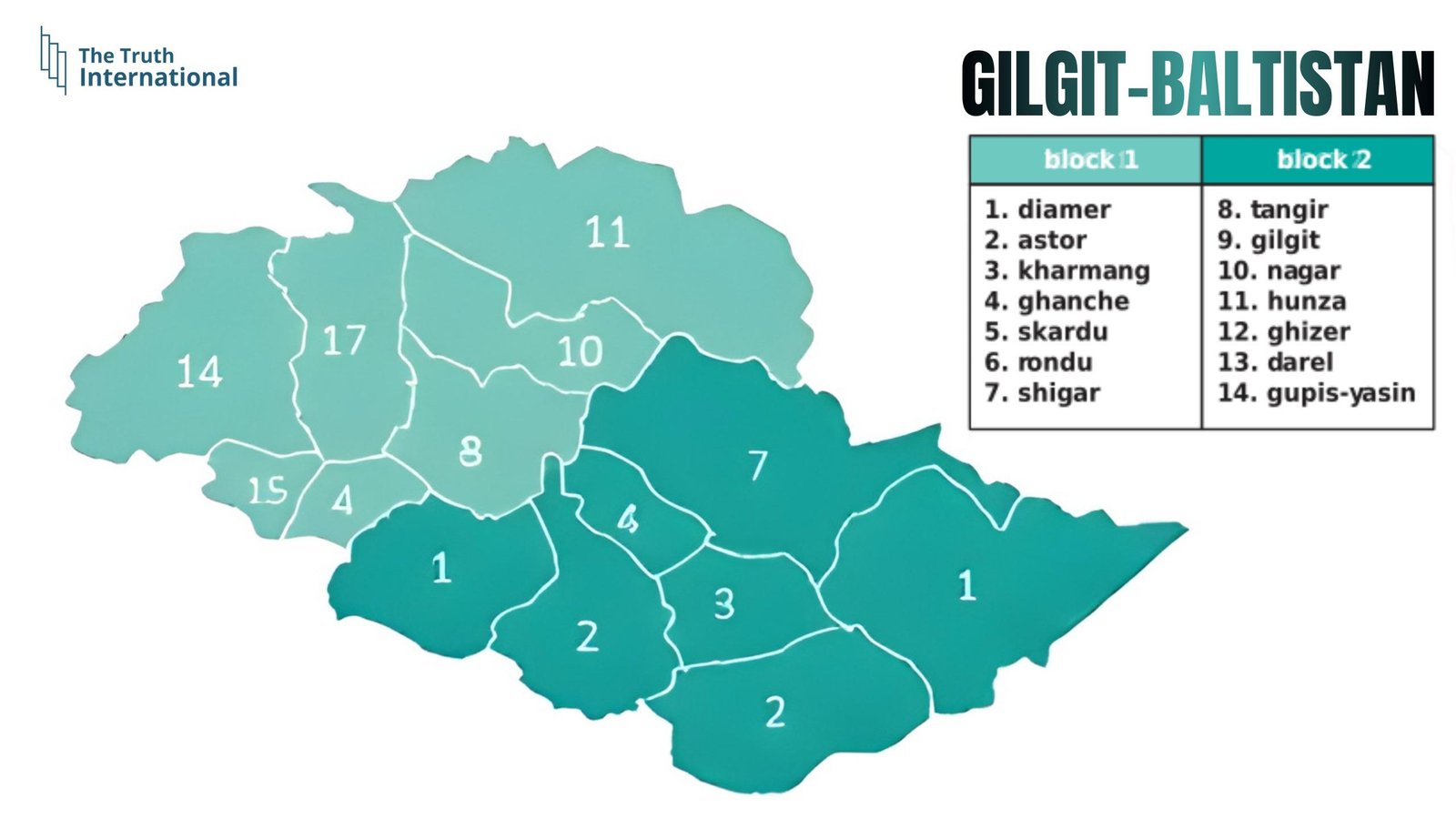
Spread across a vast and difficult landscape, Gilgit-Baltistan comprises 14 districts: Diamer, Astore, Kharmang, Ghanche, Skardu, Roundu, Shigar, Tangir, Gilgit, Nagar, Hunza, Ghizer, Darel and Gupis-Yasin.
Each district carries its own character, economy and development needs.
That diversity is precisely what makes Gilgit-Baltistan fascinating. It is not one uniform mountain landscape, but a collection of valleys and communities connected by rivers, roads, culture and a shared dependence on the environment.
From Hunza and Nagar to Skardu and Shigar, tourism has become an important source of economic activity. Ghizer attracts visitors with its lakes and valleys, while Astore offers access to high-altitude landscapes and trekking routes. Diamer remains an important gateway through which travellers enter the region, while Ghanche and Kharmang add another dimension to Baltistan’s cultural and natural heritage.
But the region’s future cannot depend on scenic beauty alone.
Fourteen Districts, Fourteen Development Stories
The needs of Gilgit city are not identical to those of a remote settlement in Darel. The tourism priorities of Hunza differ from the agricultural requirements of Gupis-Yasin. Skardu’s growing hospitality sector faces different challenges from communities in Astore, Tangir or Ghanche.
This makes development planning particularly important.
In mountainous regions, distance means more than kilometres. A road can be blocked by snowfall or landslides, while a bridge can become a vital connection between an entire community and the rest of the country.
For residents, infrastructure is therefore not simply about convenience.
A reliable road can determine whether a farmer reaches a market, whether a student attends school or whether a patient reaches a hospital on time.
This reality has placed connectivity, public services and climate resilience alongside tourism in Gilgit-Baltistan’s development conversation.
The region’s 2025-26 budget reflects that broader challenge. The Gilgit-Baltistan government lists a total budget of around Rs148.6 billion, including Rs37 billion for development spending. The scale of this allocation highlights the need to balance recurring public-service requirements with investments that can strengthen the region’s long-term economic capacity.
When Tourism Becomes an Economic Engine
For decades, Gilgit-Baltistan’s international image has largely revolved around mountaineering.
K2, Nanga Parbat, Broad Peak and the region’s other towering peaks have drawn climbers from around the world. But the tourism economy has gradually expanded beyond professional mountaineering.
Families now travel to Hunza, Skardu, Astore, Ghizer and other valleys. Hotels, guesthouses, restaurants, transport operators, tour companies, guides and local shops have consequently become part of a growing tourism ecosystem.
The opportunity is enormous.
Yet it also comes with a responsibility to make tourism sustainable.
The Gilgit-Baltistan Tourism Department has increasingly focused on improving the sector through regulation, digitalisation and professional training. In September 2025, the Directorate of Tourist Services launched a Digital Tourism Portal in Skardu to improve accessibility, transparency and regulatory oversight across tourism and hospitality services. The initiative also highlighted the need for capacity-building, particularly for local tour guides.
This shift matters because modern tourism is no longer simply about attracting visitors.
It is about making the entire experience safer, more organised and more beneficial for local communities.
From Scenic Valleys to Sustainable Tourism
Gilgit-Baltistan’s tourism potential also continues to expand.
In 2025, the Tourism Department announced the opening of eight new peaks for mountaineering and trekking, creating additional opportunities for adventure tourism while emphasising safety and environmental protection.
Such initiatives can open new economic opportunities for local guides, porters, accommodation providers and transport businesses.
However, more visitors also mean greater pressure on fragile mountain ecosystems.
Waste management, water availability, road capacity and responsible construction are becoming increasingly important as tourism expands. The objective should therefore not be to turn every valley into a heavily developed tourist centre.
The real opportunity lies in building tourism that allows local communities to earn from their natural and cultural assets without losing them in the process.
This is where Gilgit-Baltistan’s story becomes bigger than tourism.
The Tourism Potential TTI Highlighted Before the World Took Notice
The Truth International has also followed this changing story through its coverage of Gilgit-Baltistan.
Its reporting has highlighted the region’s tourism potential, infrastructure challenges and the growing need to balance development with environmental protection. In January 2025, TTI reported that Gilgit-Baltistan had been included among CNN Travel’s top 25 must-visit destinations for 2025, reflecting the region’s growing international tourism profile.
TTI’s coverage has also looked at the pressures that accompany this popularity, including road disruptions and the impact of extreme weather on travel.
That combination tells an important story.
Gilgit-Baltistan is attracting greater attention, but becoming a major destination requires more than beautiful landscapes. It requires dependable roads, visitor safety, trained tourism professionals, digital services and careful environmental planning.
The region is therefore standing at an interesting point in its development.
Its mountains have already put it on the world map.
The next challenge is turning that global attention into long-term opportunities for the people who call these mountains home.
And increasingly, that future is connected to something just as important as tourism: energy.
From Energy Security to a More Connected Gilgit-Baltistan
If tourism is to become a year-round economic engine, Gilgit-Baltistan needs something even more basic: reliable energy.
For communities scattered across high-altitude valleys, electricity is not only a household necessity. It supports hotels, shops, hospitals, schools, communication networks and small businesses. As tourism expands and local economies become more connected, dependable power is becoming essential to the region’s next stage of development.
That is why renewable energy has gained growing importance.
A New Push for Solar Power
The federal government’s 100-megawatt solar power project is now among the major initiatives aimed at addressing Gilgit-Baltistan’s energy needs. Launched in 2026, the Rs25 billion project is designed to improve electricity availability across the region. The plan includes solar installations for government buildings as well as a larger utility-scale component.
The project has moved forward through several stages during 2026. In July, Prime Minister Shehbaz Sharif reviewed its progress and directed authorities to ensure timely completion and transparent procurement. The project includes 18MW of rooftop solar systems with battery storage across 499 government buildings, while an 82MW utility-scale component is being processed.
For Gilgit-Baltistan, the significance goes beyond the number of megawatts.
Reliable energy can strengthen the same tourism economy discussed earlier. A hotel cannot operate smoothly without electricity. A small business cannot depend on unstable power. A health facility cannot provide consistent services without dependable energy.
In that sense, energy is becoming part of tourism infrastructure too.
Powering More Than Homes
The region also has considerable hydropower potential because of its rivers and mountainous terrain.
Earlier development plans have included hydropower projects such as Naltar-III and the Gilgit-KIU Hydropower Project, alongside the solar push. The government has also linked energy development with wider infrastructure and economic initiatives in the region.
The larger objective should be to create an energy system that supports communities throughout the year.
That could allow businesses to expand beyond the short tourism season. It could help schools and health facilities operate more effectively. It could also encourage small industries and local entrepreneurs to invest in their own communities.
And this matters because Gilgit-Baltistan’s future cannot depend entirely on visitors arriving during the summer months.
The Road That Connects Everything
Energy is only one part of the equation.
For a region where mountains dominate the landscape, roads are lifelines.
The Karakoram Highway connects Gilgit-Baltistan with the rest of Pakistan and serves as an important route for tourism, trade and everyday travel. Yet its location also leaves it vulnerable to landslides, floods and rockfalls.
This vulnerability became particularly visible in 2025.
The Truth International reported several disruptions to major routes, including a landslide that blocked the Karakoram Highway in Diamer and later river erosion that washed away a major portion of the highway in Upper Hunza.
These incidents demonstrate why infrastructure in Gilgit-Baltistan must be designed with mountain conditions in mind.
A road in the region is not simply a transport project.
It is a connection to markets, hospitals, schools, tourism destinations and neighbouring communities.
When Climate Changes the Journey
That connection becomes even more important as climate-related risks intensify.
The summer of 2025 showed how quickly weather can transform travel conditions in Gilgit-Baltistan. Flash floods and landslides affected roads, homes, agricultural land and tourist routes across several districts.
The situation along the Babusar route was particularly difficult, with hundreds of tourists stranded before rescue teams and local communities helped move them to safety.
The Truth International closely followed these developments, reporting on the floods, road closures and rescue operations across the region. Its coverage also highlighted the wider challenge posed by glacial melt, flash floods and unpredictable weather.
These events underline a crucial point.
Gilgit-Baltistan’s infrastructure cannot simply be built for normal weather. It must be prepared for a future in which extreme conditions can arrive suddenly.
Building Climate-Ready Valleys
That means stronger bridges, safer roads, better drainage and improved early-warning systems.
It also means ensuring that communities are not left disconnected when disaster strikes.
In August 2025, a natural disaster in Ghizer demonstrated the value of local awareness when an early warning helped residents evacuate ahead of a potentially catastrophic flood threat.
Such experiences show why climate resilience must include local communities.
The people who live among these mountains understand their valleys, rivers and weather patterns in ways that outside planning cannot always replicate. Combining that local knowledge with modern monitoring, communication and emergency systems could make disaster response much faster.
Development Without Losing the Mountains
The same principle applies to tourism.
Gilgit-Baltistan cannot attract more visitors while allowing uncontrolled construction to overwhelm its lakes, valleys and water resources.
In July 2025, the government announced a five-year ban on new hotel construction around tourist lakes, citing concerns about environmental pressure, water resources and unplanned development.
The decision reflects a larger question facing the region:
How can Gilgit-Baltistan grow without destroying what makes it special?
The answer lies in sustainable planning.
Tourism infrastructure should expand where communities can support it. Waste should be managed before destinations become overwhelmed. Water resources must be protected, while new construction should respect the fragile mountain environment.
A Future Beyond Tourism
This is where the region’s development story begins to move beyond travel.
Gilgit-Baltistan has the potential to build a broader economy around renewable energy, agriculture, digital work, handicrafts, education and entrepreneurship.
Better connectivity can help young people access online education and employment. Improved electricity can support small enterprises. Digital tourism can help local businesses reach visitors before they even arrive.
The federal government has also introduced initiatives involving education, solar power, laptops and business opportunities for young people in Gilgit-Baltistan. TTI reported on these projects in May 2026, highlighting their focus on energy, education and youth opportunities.
This combination could gradually change the economic identity of the region.
Instead of being known only as a place people travel to, Gilgit-Baltistan can increasingly become a place where people study, work, build businesses and create opportunities.
And that may be the most important transformation of all.
Because the mountains have already given Gilgit-Baltistan its identity.
The real challenge now is to build a future strong enough to match them.

