
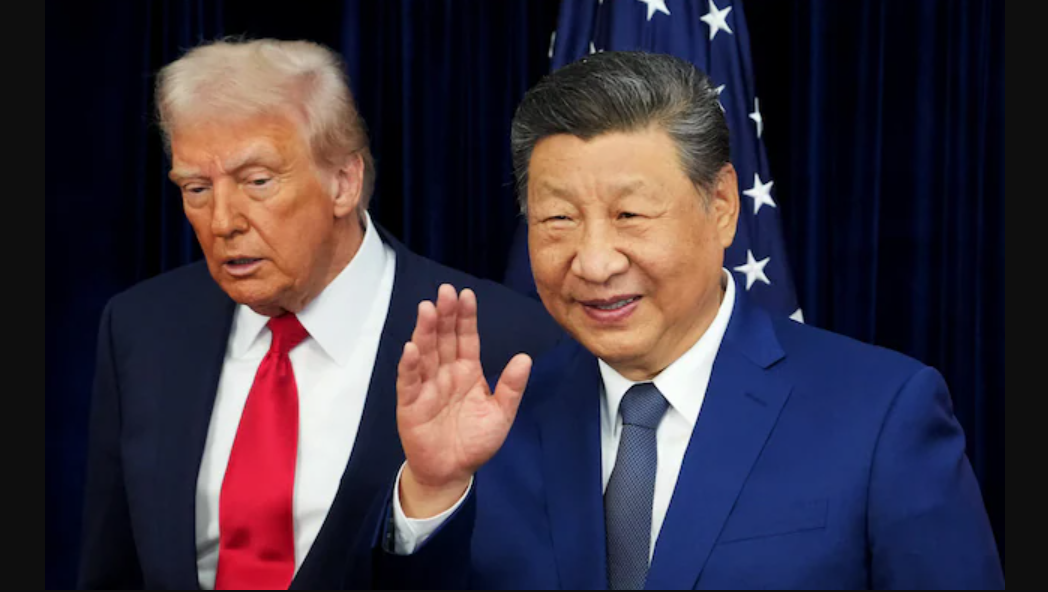

Donald Trump has said China could play a bigger role in addressing the Iran conflict. However, he stopped short of criticising Beijing strongly.
Speaking on the issue, Trump downplayed China’s current involvement. At the same time, he acknowledged that Beijing has some level of engagemeTrump says China could do more on Iran conflict while halting US diplomacy and stressing strict nuclear conditions.
“I don’t think much. I think maybe helping, but I don’t think much they could,” he said. “They could help a lot more. I’m not overly disappointed.”
This statement reflects a measured stance. While expectations remain, Washington has not expressed deep frustration with China.
Comparison With US Global Role
Trump also compared China’s position with that of the United States. He pointed to Washington’s involvement in other global conflicts.
He said the US supports allies in different regions. Therefore, he does not view China’s actions as unusually negative.
This comparison appears to soften criticism. It also highlights the broader context of global power dynamics.
US Halts Diplomatic Travel for Talks
At the same time, Trump confirmed a pause in US diplomatic travel related to Iran talks. He made it clear that Washington expects Iran to take the initiative.
“We have all the cards,” he said.
He added that the US would not send officials on long overseas trips. In particular, he referenced an “18-hour journey” to Pakistan.
Instead, he suggested that Iran could either call or visit Washington. This stance signals a shift in negotiation strategy.
Clear Red Line on Nuclear Issue
Trump also outlined a firm condition for any potential agreement. He stressed that Iran must not develop nuclear weapons.
“They know what has to be in the agreement. Very simple. They cannot have a nuclear weapon, otherwise there’s no reason to meet,” he said.
This statement reinforces the central US demand. It also indicates that talks depend on Iran’s compliance with this condition.
Diplomatic Signals and Strategic Messaging
Trump’s remarks send a mixed but calculated message. On one hand, he leaves room for China to contribute more. On the other hand, he avoids direct confrontation.
Meanwhile, the pause in diplomatic travel shows confidence in the US position. It also places pressure on Iran to respond.
These developments highlight the delicate balance in ongoing tensions. Global powers continue to shape the direction of the conflict.
What Comes Next?
The situation remains uncertain. However, diplomatic signals from Washington suggest a wait-and-watch approach.
China’s future role could become more significant. At the same time, Iran’s response will likely determine the next steps.
For now, the US appears firm on its conditions. Yet, it remains open to engagement under specific terms.

