
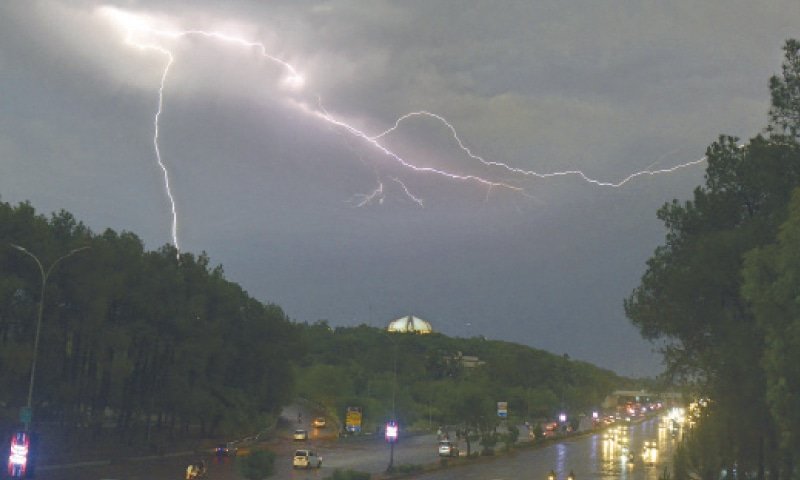

National Disaster Management Authority has issued a nationwide alert over an unusually intense monsoon season expected in 2026. Authorities warn that a developing El Niño could significantly disrupt normal weather patterns. As a result, Pakistan may face extreme rainfall, flash floods, and unpredictable climate conditions.
Stronger and Unpredictable Monsoon Expected
Officials say this year’s monsoon will not follow traditional patterns. Rainfall may occur in sudden and intense bursts. Some regions could receive extremely heavy rain within a short period.
Experts warn that certain areas may experience a month’s worth of rainfall in just one or two days. This raises serious concerns about urban flooding and infrastructure damage.
Moreover, the intensity of rainfall may vary across regions. While some areas could face heavy downpours, others may experience limited rainfall.
Risk of Cloudbursts and Flash Flooding
Climate experts have highlighted the increased likelihood of cloudbursts. These sudden and intense weather events can cause severe flooding in a short time.
Dr Tayyab, a technical expert, explained that such conditions are highly dangerous. Rapid accumulation of rainwater can overwhelm drainage systems. Therefore, cities and low-lying areas remain at high risk.
In addition, flash floods may develop quickly in vulnerable regions. This makes early warning systems and preparedness essential.
Regional Rainfall Imbalance
The impact of the monsoon will not be uniform. Provinces like Sindh and Balochistan are expected to receive below-average rainfall.
On the other hand, northern regions may experience higher temperatures along with intense weather activity. This combination can increase the risk of extreme climate events.
Such uneven distribution of rainfall could also affect agriculture. Farmers may face challenges due to either excessive water or drought conditions.
Rising Flood Threat in Major Rivers
Authorities have identified increased flood risks in major river systems. The Indus River is considered the most vulnerable this season.
Compared to other rivers such as the Ravi River, Sutlej River, and Chenab River, the Indus may face higher water levels.
Therefore, monitoring river flow and water levels will be critical. Authorities are preparing for potential overflow and flooding scenarios.
Nationwide Preparedness Measures Underway
NDMA has shared a detailed advisory with all provinces. The guidelines focus on emergency planning and disaster response.
Officials are reviewing contingency plans across the country. They are also ensuring that essential supplies are available in case of emergencies.
Coordination between federal and provincial departments is being strengthened. This will help improve response time during disasters.
Importance of Early Action
Authorities are urging proactive measures to reduce risks. Early preparation can minimize damage to life and property.
Public awareness campaigns may also play a key role. Citizens are advised to stay informed and follow safety guidelines.
Climate Change and Future Challenges
Experts believe that climate change is increasing the frequency of extreme weather events. Therefore, such intense monsoon patterns may become more common.
Pakistan remains highly vulnerable to climate shifts. As a result, long-term planning and infrastructure upgrades are essential.
The upcoming monsoon season could be one of the most challenging in recent years. Authorities are on high alert and monitoring developments closely.
While uncertainty remains, preparedness efforts are in progress. The focus is on minimizing risks and ensuring public safety.

