
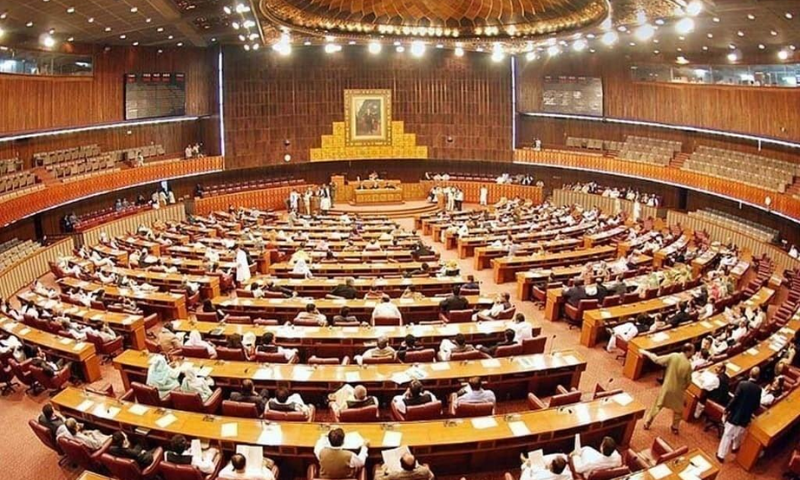

Parliamentary finance committees have raised serious concerns over the Federal Board of Revenue’s (FBR) ambitious tax target for fiscal year 2026-27. They warned that the goal appears unrealistic given repeated shortfalls in revenue collection.
The government has set an FBR target of Rs15.26 trillion for FY27. This marks an increase of more than 8 percent compared to the Rs14.13 trillion target for the previous year. However, actual collections in FY26 reached only around Rs13 trillion, highlighting a significant gap.
Lawmakers questioned whether such a steep increase is achievable under current economic conditions.
Concerns Over Growth, Investment, and Fiscal Focus
The Standing Committees on Finance and Revenue of both the Senate and National Assembly highlighted concerns that the budget focuses heavily on revenue generation and fiscal consolidation.
They noted limited policy measures aimed at boosting economic growth, investment, and employment creation.
One committee chairman stated that the approach places excessive pressure on taxpayers while restricting development spending under IMF-linked fiscal constraints.
Members stressed that persistent reliance on higher taxation without structural reform may weaken economic stability.
Debt Servicing and Fiscal Pressure Raise Alarm
Committee members pointed out that debt servicing remains the largest component of government expenditure. It has now exceeded Rs8 trillion.
They urged the government to develop a comprehensive debt management strategy. Such a strategy would reduce borrowing costs and create fiscal space for development projects.
Lawmakers also raised concerns about heavy dependence on enforcement-based tax measures instead of expanding the tax base through reforms.
Retailer Tax Scheme Sparks Debate
A newly proposed retailer tax scheme drew particular criticism during committee discussions.
Members warned that the scheme could distort the tax system and discourage compliance under the normal tax regime.
They also expressed concern that it may erode the existing tax base rather than strengthen it.
One member emphasized that sustainable economic growth requires broad-based reforms. These include improving tax efficiency, strengthening debt management, and encouraging investment.
Senate Committee Questions FBR Performance
In a separate session, the Senate Standing Committee on Finance and Revenue reviewed FBR’s performance and future outlook.
Officials informed the committee that a new Tax Policy Office has been created. This office will separate tax policy formulation from tax administration to improve efficiency.
However, senators raised doubts about FBR’s ability to meet its targets. One senator described the super tax as a possible deterrent to investment in Pakistan.
Another member highlighted that provincial tax authorities were performing better than FBR in some areas, raising further concerns about federal tax efficiency.
Government Defends Reforms and Policy Direction
Finance officials defended the ongoing reforms, stating that economic policy requires stability and predictability for investors.
They described the newly created Tax Policy Office as a major structural reform. It aims to improve long-term policy consistency.
Officials also confirmed that economic consultations will continue throughout the year instead of being limited to the annual budget cycle.
Revenue Measures Worth Rs650 Billion Introduced
To support the Rs15.26 trillion target, the government has introduced enforcement and taxation measures worth nearly Rs650 billion.
Out of this, enforcement actions are expected to generate Rs400 billion. Meanwhile, tax policy changes are projected to contribute Rs250 billion.
These measures include adjustments in penalty regimes, new Federal Excise Duties on luxury vehicles, and taxes on naphtha and solvent oil.
A sales tax has also been introduced on 21 items, applied on printed retail prices.
New Retailer Scheme Introduced for Small Businesses
The budget includes a fixed tax scheme for small retailers with annual turnover up to Rs200 million.
Under this scheme, retailers will pay a 1 percent tax on turnover. A minimum payment of Rs25,000 will be required at the time of filing.
Authorities say the measure aims to widen the tax net and improve compliance. However, lawmakers remain cautious about its potential impact on small businesses.
Committee Review Continues
The Senate finance committee is continuing clause-by-clause scrutiny of the Finance Bill 2026-27. The process is expected to continue in the coming sessions as lawmakers push for revisions and clarifications.

