
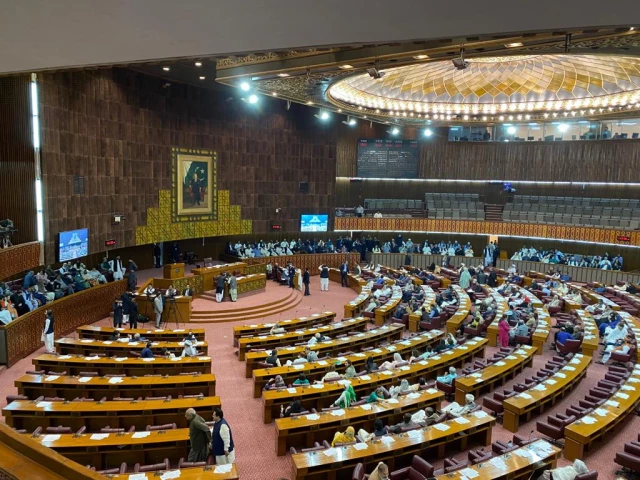

ISLAMABAD: The National Assembly Secretariat expects to save a significant amount from its Rs17 billion budget this fiscal year after introducing major administrative reforms. The secretariat has already achieved substantial savings over the past two years. It has also reduced the size of its workforce while changing how officials receive appointments.
According to a background briefing, the reforms introduced under National Assembly Speaker Sardar Ayaz Sadiq have produced savings of around 30%.
National Assembly Returns Rs8.6 Billion to Exchequer
The National Assembly Secretariat abolished 302 posts during the reform process. It also returned Rs8.6 billion to the national exchequer from combined allocations of Rs29 billion for fiscal years 2024-25 and 2025-26.
The returned amount represents around 30% of the allocations for those two years.
The secretariat now expects further savings from its Rs17 billion allocation for the current fiscal year.
“We also anticipate major savings against this year’s Rs17 billion,” a senior secretariat official said.
The reforms have also reduced the overall size of the workforce by nearly 20%.
Appointment Process Undergoes Major Changes
The National Assembly has also changed its approach to appointments. Previously, officials could exercise discretionary powers when making appointments. The secretariat has now replaced those powers with service procedures based on laws and rules.
The new framework aims to improve transparency throughout the appointment process. It also seeks to protect the Speaker from political pressure and outside influence when making appointments.
Moreover, the reforms have introduced a clearer service structure for National Assembly employees. Under the new system, employees will also have to submit annual returns and wealth statements.
The Federal Board of Revenue will make these declarations public, similar to the practice followed for other civil servants.
Reforms Contrast With Federal Rightsizing Efforts
The National Assembly’s savings come as the federal government continues efforts to reduce its administrative size. However, federal rightsizing reforms have so far produced limited major changes.
The cabinet committee responsible for rightsizing has introduced several measures during the past two years. Yet, the government has not announced a comprehensive restructuring plan.
Instead, the federal government has relied partly on ad-hoc measures. These include executive allowances and the All-Pakistan Service Provincial Disparity Allowance.
Critics have raised concerns that such measures could create further disparities within the civil service.
Finance Minister Reviews Rightsizing Progress
Finance Minister Muhammad Aurangzeb chaired a meeting of the sub-committee on rightsizing on Monday. The meeting reviewed progress on the government’s ongoing rightsizing exercise. Officials also discussed ways to accelerate the implementation of approved recommendations.
According to the Finance Ministry, Waves 1 to 4 have largely progressed following cabinet approval. The ministry said follow-up work continues where recommendations have already been made. Meanwhile, recommendations for Waves 5 and 6 have been prepared and shared with relevant authorities. Work on Waves 7 and 8 is also underway.
Aurangzeb stressed the need for faster implementation of the approved measures. He also called for clear calculations of recurring savings. Furthermore, he directed officials to ensure that the fiscal impact of rightsizing measures appears in the budget and medium-term fiscal framework.
The National Assembly’s experience therefore provides a notable example of how institutional reforms can reduce expenditure while improving administrative accountability.
Its reported Rs8.6 billion saving and reduction in posts show the potential impact of structural changes. The government’s wider rightsizing drive will now face pressure to deliver similar measurable results across the federal system.

