
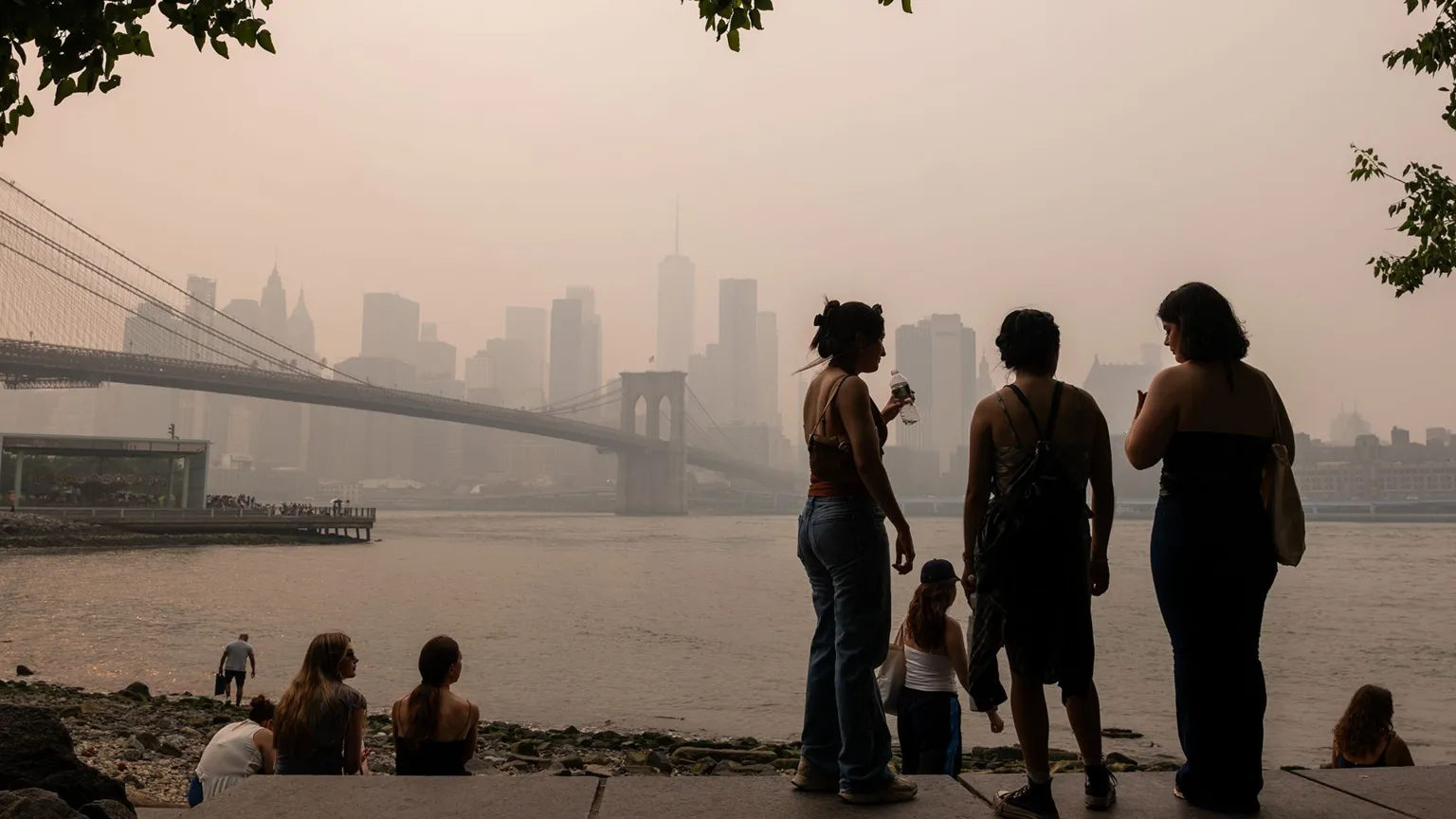

Air quality alerts expand across northeastern and midwestern states as evacuations continue
OTTAWA: More than 800 wildfires are burning across Canada, sending thick smoke into several US states and prompting widespread air quality alerts, event cancellations and evacuation orders as authorities respond to deteriorating conditions.
According to the Canadian Wildland Fire Information System, 858 active wildfires were burning on Thursday, including 30 new fires. Officials said most of the blazes remain out of control, with northwestern Ontario emerging as one of the hardest-hit regions.
Smoke from the fires spread across major cities, including Toronto, Detroit, Chicago, Minneapolis, Pittsburgh and New York, where authorities warned residents to limit outdoor activities because of hazardous air quality.
Health warnings and emergency measures
New York Governor Kathy Hochul described the situation as a serious public health concern, saying thick smoke had blanketed large parts of the state. Authorities activated emergency air quality protocols, opened cooling centres and distributed protective masks in affected communities.
Meanwhile, several outdoor events, children’s camp activities and concerts were cancelled, while some beaches also closed because of poor air quality. Weather officials said northwesterly winds are expected to continue carrying smoke into parts of the United States through the weekend before conditions gradually improve early next week.
Evacuations and climate concerns
The fires have also forced evacuations from several First Nations communities in northern Ontario. Local leaders reported extensive destruction, with some residents fleeing by boat as flames approached their communities.
Canadian officials said more than 150 firefighting crews remain deployed to contain the blazes, while emergency authorities continue supporting displaced residents.
Scientists say wildfires are a natural part of Canada’s boreal forest ecosystem but note that rising temperatures and increasingly dry conditions have contributed to larger and more frequent fire seasons in recent years.
Canadian Prime Minister Mark Carney said federal authorities remain in close coordination with provincial governments and local communities, while Ontario Premier Doug Ford pledged continued support for firefighting operations, stating that resources would be provided as needed to combat the ongoing emergency.

