

By Humaira Motala
Karachi: Once again, the demand for new administrative units and provinces has been sparked — this time from within the government itself. Interior Minister Mohsin Naqvi’s recent statement has reignited the debate, raising questions about governance, service delivery, and political intent. Coming at a time when the current setup is widely described as a “hybrid system,” Naqvi is seen by many as representing the other partner in that arrangement. His call therefore carries weight beyond routine political rhetoric, forcing both parliament and the public to ask: is this about bringing the state closer to the people, or about redrawing Pakistan’s political map?
MQM-P Backs Demand: “Engine of Pakistan’s Economy”
The debate found immediate backing from MQM-Pakistan, which has once again strongly supported the idea of separating Karachi from Sindh. The party argues that the city, which generates the bulk of Pakistan’s revenue, should have control over its own resources so that what is earned in Karachi is spent on Karachi. Calling it the “engine of the entire Pakistan economy,” MQM-P maintains that an independent administrative setup for the metropolis is the only way to fix its decades-old issues of infrastructure, water, transport and governance.
Sindh Government Rejects: “Dangerous Precedent”
However, the Sindh government has strongly opposed the idea. Provincial leaders and ministers like Sharjeel Memon, Saeed Ghani and Nasir Hussain argue that carving out Karachi from Sindh will only deepen existing fault lines and promote hate and division among communities. They maintain that Karachi is an integral part of Sindh’s history, culture, and economy, and that separating it administratively would set a dangerous precedent for the federation. For them, the solution lies in better governance and resource allocation within the existing provincial structure, not in division.
PML-N Opposition: “Will Never Be Approved”
The Pakistan Muslim League-Nawaz has also come out in opposition to the proposal. A senior PML-N minister and veteran politician, Rana Sanaullah, Special Assistant to the Prime Minister on Political Affairs, stated in a TV talk show that any legislation aimed at dividing provinces into units would “never be approved” in the National Assembly. He also asserted that such proposals were never discussed in cabinet or in parliament. The party argues that such moves risk destabilizing national harmony, and that the focus should remain on strengthening local government systems within provinces rather than redrawing administrative boundaries.
MQM-P Counter: Parliamentary Precedent Cited
Commenting on PML-N’s remarks, MQM-Pakistan head Mustafa Kamal fired back, saying those who want to reorganize Pakistan into smaller administrative units have the political strength to do so. He argued whether the 26th or 27th amendment bills were discussed in cabinet before they were floated for approval in parliament. He disclosed that both the bills were presented on the day of passing and were passed unanimously even before discussion. “If a bill for new provinces is brought to the floor of the National Assembly, it would be passed — just as the 26th and 27th constitutional amendments were,” Kamal said. His statement signals MQM-P’s confidence that with the right backing, even a contentious legislative move can sail through parliament.
Saeed Sarbazi’s Expert View: Ill-timed Debate, Governance Needed, Not Division
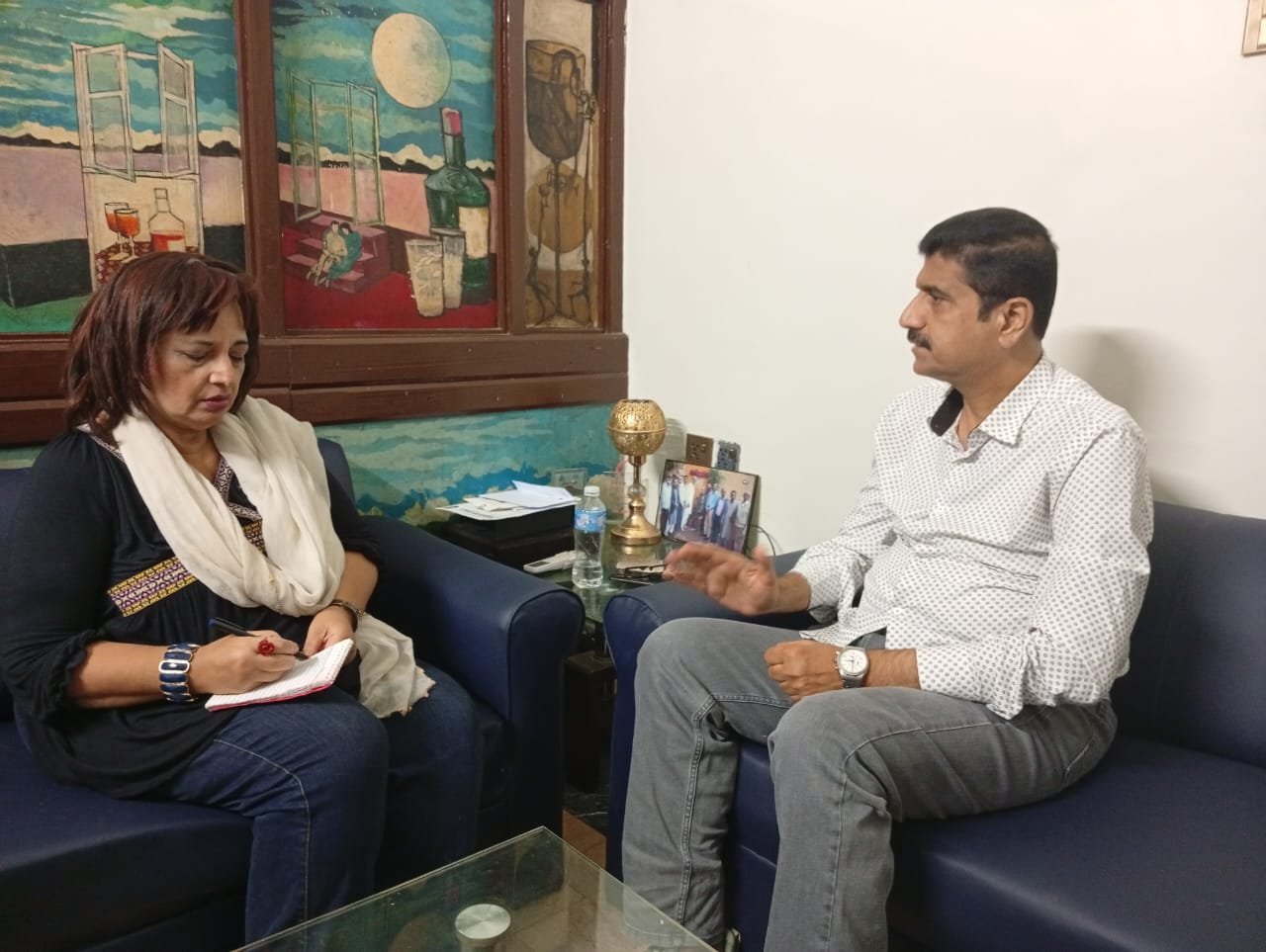
Talking to this correspondent, senior journalist, news editor at a reputable daily and former president of the Karachi Press Club, Saeed Sarbazi said raising such a subject at this critical stage was ill-timed. With the country going through a severe economic meltdown amid the Iran-US conflict, he argued, separating Karachi from Sindh would not serve any purpose. Sarbazi pointed out a key administrative fact: “More than 65 percent of Karachi belongs to cantonment areas. So blaming the Sindh government for the state of 34 percent of the infrastructure is not fair.” For him, the debate distracts from the real issue of joint responsibility and better coordination between all stakeholders.
Federal Responsibility: Revenue vs Investment Gap
Sarbazi, a seasoned union worker turned leader, also highlighted the federal government’s obligations in the debate. “If Karachi is mini Pakistan, where the country’s most important ports are located and the entire Pakistan benefits from its structure and institutions, then it is obligatory on the Federal government to provide monetary support,” he stated. He cited the example of the National Highway M9 — a key CPEC project — which still remains a single lane in parts despite years of promises. “Till to-date the federal government has not completed the double lane highway,” Sarbazi said, arguing that Karachi generates the most revenue but gets the least direct federal investment in return.
“Start With Punjab”: A Pilot Model Suggested by Sarbazi
The former KPC president further added that the discussion should not be limited to Sindh alone. “Punjab Assembly has already passed a resolution to divide Punjab into South and Central Punjab,” Sarbazi noted. “If those who aspire to see how administrative units will function and become a model, then it should start from Punjab. If it presents a good governance model, then perhaps Sindh will follow.” His remarks suggest that instead of confrontation, a pilot model in Punjab could set the tone for the rest of the country.
Power Politics and PPP’s Role in Sindh
Saeed Sarbazi, who holds the unprecedented record of being elected unopposed along with his entire panel to the Karachi Press Club, stated that such tactics of creating more administrative units are often ignited by power corridors as a tool for arm-twisting political parties. “Though democratically elected governments have flaws, these can only be corrected through good governance,” he said. “Such arm-twisting only brings political instability in Pakistan.” Sarbazi emphasized that the role of the Pakistan Peoples Party in the Sindh government should not be underplayed. “It is serious about improving infrastructure in the province — by providing people with good transport, water at their doorstep, and by improving the sewage and drainage system.”
The Way Forward: Merits, Concerns, and Alternatives
As the debate over new provinces resurfaces, both merits and concerns demand attention. Proponents argue that smaller administrative units can ensure better governance, resource equity in neglected regions, and help curb heavy migration to urban centers by creating more economic hubs. Decentralization, they say, can also weaken feudal control and empower local political leadership. However, critics argue that instead of creating more units, existing local bodies should be strengthened with financial and administrative autonomy. They warn that new provinces would only increase bureaucracy, overhead costs, and public expenditure without guaranteeing service delivery. Other options being discussed include an empowered metropolitan government for Karachi, direct federal development packages for mega cities, and a constitutional review of the NFC award to ensure fair resource distribution.
In the end, as Saeed Sarbazi, put it: “Pakistan does not need more divisions on paper. It needs governance on the ground. Until the state delivers water, roads, and justice to every citizen, the map can be redrawn a hundred times and nothing will change.”
Meet the author:
The writer is a senior journalist and columnist covering crime, law, social issues, governance, energy, health, literature, and women and children’s rights across Pakistan’s leading English media houses.
Feedback: mediawomen2014@gmail.com

