

By Anum Waqar and Mah Noor
Background
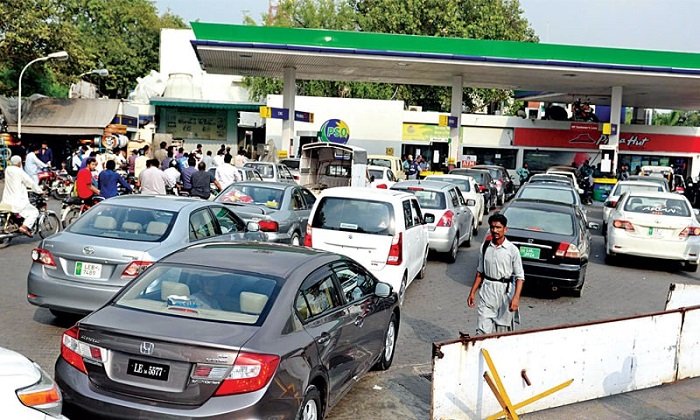
Today’s world is shaped by interconnected conflicts whose consequences extend far beyond national borders. Countries such as Pakistan often experience these effects most severely, even when they are not directly involved in the fighting. Global energy prices have risen by 40 to 50 percent amid the ongoing crisis in the Middle East, particularly because of tensions involving Iran and disruptions along strategic oil routes. Consequently, import-dependent economies face intensified inflationary pressure. Pakistan relies heavily on imported energy, particularly oil, and has therefore experienced direct consequences, including record increases in fuel prices, higher household expenses, and rising transportation costs. These shocks coincide with other challenges, such as growing debt, declining foreign-exchange reserves, and stringent conditions imposed by the International Monetary Fund (IMF).
Together, these pressures show how global conflicts can quickly translate into domestic financial strain and reduced purchasing power for ordinary citizens. Trade disruptions and fears of shortages also alter consumption patterns and the use of household assets, as families search for alternative ways to obtain energy, travel, and manage prolonged uncertainty.
Alongside the economic burden, the crisis associated with tensions among Iran, the United States, and Israel intersects with Pakistan’s domestic security and social challenges, making everyday life more uncertain and stressful. The country has experienced militant attacks and cross-border tensions, particularly with India and Afghanistan, which have disrupted mobility, restricted travel, and heightened perceptions of danger. Travel advisories warning of terrorism, armed conflict, and kidnapping further demonstrate how insecure movement has become. The convergence of global conflict, economic instability, and domestic insecurity creates not only socioeconomic deprivation but also emotional and psychological distress, as people worry about their employment, personal safety, and future. Pakistan therefore provides a clear example of how distant geopolitical crises can become lived realities, reshaping how people in the Global South behave, cope, and understand security.
Effects on the Masses
Global Impacts
Ongoing conflicts disrupt the world’s economic, political, and social networks far beyond the front lines. Warfare in strategically important regions, particularly the Middle East and Eastern Europe, has created turbulence in global energy markets and caused unpredictable fluctuations in oil and gas prices. As vital supply routes, including the Strait of Hormuz and Black Sea corridors, face increasing insecurity, energy and transportation costs rise across the world, fuelling inflation in both developed and developing countries. Sanctions, trade barriers, and uncertainty in shipping also interrupt supply chains for food, fertilizers, and industrial inputs. The result is a global environment in which the cost of living rises, household welfare declines, and economic inequality deepens.
Everyday Challenges Faced by Ordinary Citizens
At the local level, the effects of global conflicts in Pakistan are most visible in the daily lives of ordinary citizens, particularly through inflation, concerns about personal safety, and restrictions on mobility. Increases in global oil prices directly raise domestic fuel costs and subsequently increase transportation fares, electricity charges, and the prices of basic commodities through cost-push inflation. This weakens the real income and purchasing power of lower- and middle-income households, forcing them to reduce travel, purchase cheaper goods, and limit spending on health and education. Daily-wage earners and workers in the informal sector are especially vulnerable because their unstable incomes make it difficult to absorb sudden price shocks. As a result, many households become increasingly dependent on debt and experience greater livelihood insecurity. Collectively, these conditions place considerable psychological, social, and financial pressure on ordinary people.
Trust in the State and Institutions
In Pakistan, prolonged exposure to security problems, economic uncertainty, and repeated external shocks has contributed to a gradual decline in public trust in the state and its institutions. When inflation makes basic commodities unaffordable, citizens often perceive a widening gap between official economic policies and everyday realities. This perception is reinforced by externally influenced fiscal measures, including tax increases, austerity programmes, and reductions in subsidies associated with IMF conditions. Such measures can weaken confidence in institutions such as the State Bank of Pakistan, the Ministry of Finance, and other regulatory bodies, while also creating broader perceptions of injustice in the distribution of resources. The cumulative effect is an image of a weak state that appears unable to protect its citizens from economic instability.
During this critical period, the Punjab government announced free public transport across the province to reduce the burden of high fuel prices and support daily commuters. Although the initiative provided immediate relief, it also resulted in severe overcrowding on many routes. The measure is commendable, but it addresses only one aspect of the crisis. Rising food prices, utility bills, and other essential household expenses also require sustained policy attention if the government is to restore public confidence.
Financial Pressures
By the fiscal year 2022-23, Pakistan’s external debt had reached approximately US$126.3 billion, of which US$97.5 billion was owed directly by the government. This included about US$45 billion owed to multilateral institutions such as the World Bank and the IMF. Debt repayments totalling US$77.5 billion were scheduled between April 2023 and June 2026, with major obligations to Saudi Arabia, China – including roughly US$27 billion in bilateral and commercial debt – and private creditors through Eurobonds. These repayments placed intense pressure on foreign-exchange reserves, which, in early 2023, stood at approximately US$4 billion and barely covered one month of imports. The IMF’s US$7 billion bailout programme was accompanied by additional requirements, including anti-corruption measures and subsidy reductions, while economic growth for 2023 was projected at only 0.5 percent despite inflation of approximately 27 percent.
This cycle of vulnerability was intensified by the COVID-19 pandemic and the 2022 floods, which caused an estimated US$30 billion in losses and pushed approximately 8.4 to 9.1 million people into poverty. These shocks also disrupted the US$6.5 billion IMF programme initiated in 2019. Energy imports, which account for about 25 percent of total imports, create further pressure, particularly because costly contracts with Independent Power Producers (IPPs) are indexed to the US dollar and continue to burden taxpayers even during periods of low demand. In addition, short-term commercial loans priced at LIBOR or SHIBOR plus 1.5 percent mature rapidly, forcing Pakistan to seek repeated rollovers from allies such as China.
Psychological and Emotional Impacts
Financial stress caused by inflation and unemployment often manifests as anxiety, sleep disturbances, family conflict, and reduced emotional well-being. Research in Pakistan has identified links between economic hardship, perceived stress, and mental-health disorders. Reports describing ‘financial trauma’ illustrate how rising living costs weaken the coping capacity of low-income households. Uncertainty further intensifies this distress; despite periodic stabilization efforts, surveys have indicated that 84 percent of respondents remain pessimistic about the economy.
Long-term structural problems also contribute to insecurity. Since Pakistan joined the World Trade Organization, tariff reductions – from approximately 45 percent to 8.6 percent – have increased exposure to low-cost imported goods, placing pressure on local industries and prolonging trade deficits and volatility. Similarly, the privatization framework introduced under the 1994 IPP policy shifted substantial financial risks to the state. Energy shortages and interruptions have subsequently disrupted businesses, reduced employment opportunities, and deepened feelings of hopelessness among affected communities.
Fear of the Future
Pakistan’s persistent current-account deficits, which reached approximately US$18 billion at their peak in 2018, together with repeated policy reversals, have discouraged investment and contributed to a broader sense of economic insecurity. Weak per-capita growth also signals the possibility of generational setbacks: in 2023, population growth was estimated at 1.8 percent, while economic growth was only about 0.29 percent. Employment anxiety remains particularly acute among young people, with youth unemployment reported at approximately 10.7 percent. These conditions reinforce pessimism and uncertainty about long-term opportunities.
The floods and the pandemic exposed Pakistan’s vulnerability to major shocks. Exports remained at approximately US$28 to US$29 billion despite higher IMF targets, while foreign direct investment stayed near US$2 billion annually amid capital controls and policy uncertainty. Without sustained reforms, default risks can disrupt essential imports, weaken industry, and create social instability similar to the economic turmoil experienced in Sri Lanka.
Pressure of Masculine Provider Roles
Cultural expectations often position men as the primary providers for their families, which intensifies stress when employment opportunities decline. With unemployment among young men reported at approximately 10.7 percent, the inability to fulfil the breadwinner role can generate shame, isolation, and a perceived loss of social worth. Some studies have reported alarmingly high levels of finance-related suicidal ideation, reaching 72 percent in selected samples. In a patriarchal society where masculinity is closely associated with financial provision, economic failure may be experienced as emasculation. These pressures can also discourage men from adapting to changing circumstances or seeking emotional and psychological support.
Mental Health Stigma and Lived Reality
Cultural stigma often discourages people from seeking psychological support because vulnerability is perceived as weakness, particularly among men. Yet the lived reality is that heavy debt burdens – including external liabilities estimated at Rs. 37 to 41 trillion – can produce severe anxiety, depression, and emotional exhaustion. Research published in 2023 linked poverty with mental-health disorders, while also showing that supportive family relationships can provide an important protective buffer when stigma is reduced. IMF-driven reductions in subsidies, including major support for the power sector, can further restrict access to essential services and intensify psychological distress among low-income households.
Brain Drain Intentions
Economic insecurity, limited opportunities, and low productivity have also increased intentions to migrate. More than 859,000 Pakistanis reportedly left the country in 2023, while some projections suggested that the figure could approach one million. The loss of skilled workers has been estimated to cost the country approximately US$4.2 billion annually in human capital. As outdated technology and low productivity leave Pakistan behind competitors such as Bangladesh and Vietnam, skilled young professionals increasingly migrate to the Middle East and Europe. This pattern encourages the export of labour rather than the development of high-value goods and services.
Capital flight compounds the problem. An estimated US$333 billion left Pakistan between 1978 and 2018, as affluent individuals and businesses moved assets abroad. Greater openness under free-trade arrangements can facilitate the movement of capital and skilled labour when domestic institutions remain weak. As a result, Pakistan loses both financial resources and professional expertise, limiting its productive capacity and weakening economic sovereignty.
Conclusion
Pakistan’s continuing economic difficulties, shaped by rising debt, IMF-mandated austerity, and exposure to global conflict, generate extensive financial and psychological pressure. These interconnected pressures include financial trauma, uncertainty, fear of the future, expectations surrounding masculine provider roles, mental-health stigma, and growing intentions to migrate. Together, they deepen social vulnerability in a country where poverty affects more than 40 percent of the population and inflation has remained above 25 percent for prolonged periods. For regulatory professionals, including those working at Pakistan’s Board of Investment, understanding these human consequences is essential. Trade facilitation, investment policy, and economic reform must therefore be aligned with human-centred measures that protect livelihoods, strengthen public trust, and improve long-term social resilience.

