
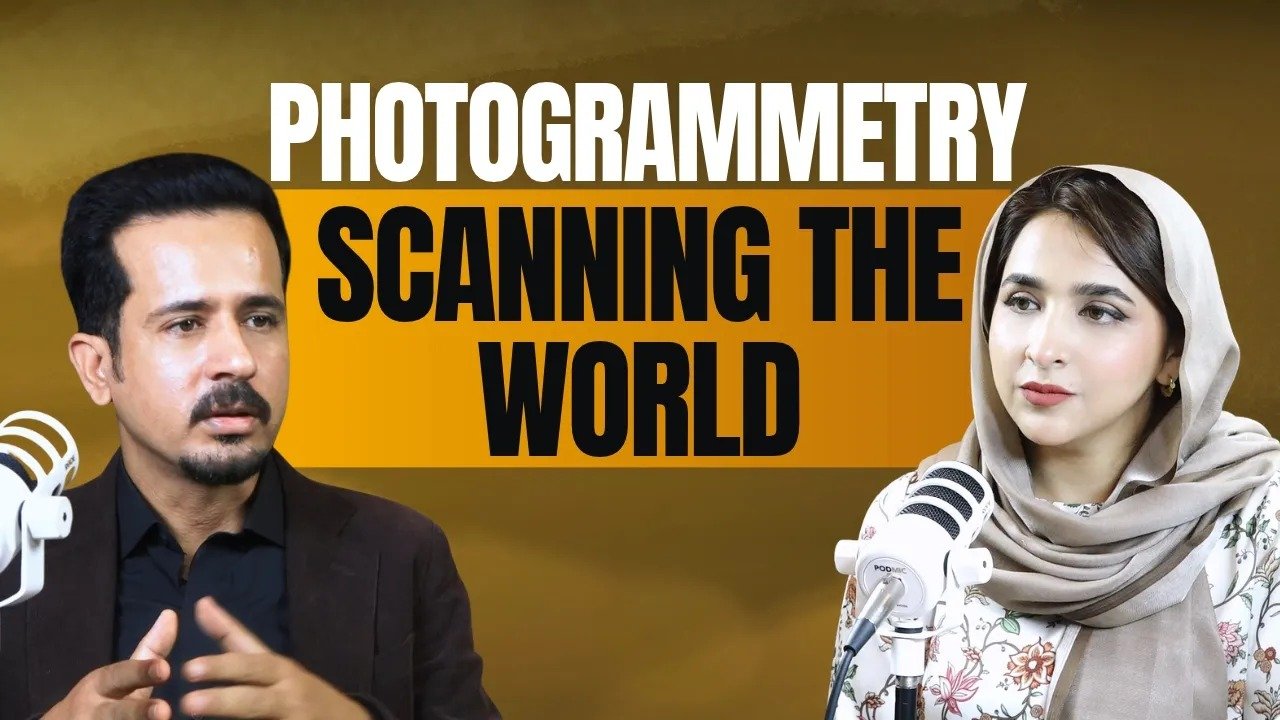

“What if the forests, trees and landscapes we see in Hollywood films are not entirely real, but digital creations built from real-world scans? For Pakistani artist Asif Janjua, turning the physical world into realistic 3D environments has become a remarkable career.”
In an episode of The Truth International Podcast, Asif Janjua shared his journey from photography to international 3D scanning projects. He also explained how his work eventually contributed to projects connected with major international studios, including the Hollywood film The Jungle Book.
Janjua described himself as one of Pakistan’s first photogrammetry artists. His interest in cameras and gadgets started during childhood. Before entering this field, he worked in a government department as a photographer. However, his passion led him towards a European-based company that introduced him to professional scanning technology.
He left his previous job and joined the company during its early stages in Pakistan. His photography experience helped him handle cameras, but photogrammetry introduced him to an entirely new technical process. He began learning how scanners capture real surfaces and turn them into digital assets.
Initially, his work focused on scanning surfaces such as tiles and carpets. Artists then used these digital textures in the floors and environments of different video games. Over time, the work expanded from surface scanning to complete 3D assets, including buildings and other real-world objects.
Janjua explained that photogrammetry requires much more than taking ordinary photographs. The process involves specialised cameras, flashes, lighting equipment and scanning tools. Artists must carefully study each project before visiting the location. They identify the required objects, choose suitable equipment and plan how to capture them accurately.
He shared the example of a project at Rohtas Fort. Such assignments require research trips and detailed location scouting. The team examines the site and identifies the structures or objects they need to scan.
Lighting plays a particularly important role in this process. Direct sunlight can damage the quality of a scan. Artists also use colour checkers to record accurate colours before scanning. This helps them match the real object’s appearance in the final digital asset.
The work also demands patience and careful attention. Janjua explained that even a small camera setting change or sudden sunlight can ruin hours of effort. Sometimes, teams spend one or two weeks working at a location. They continue their scanning work in different weather conditions.
The process does not end after capturing the images. Every evening, the team reviews its data and checks whether the scans contain missing information. If they miss a section of a building or an object, they may need to return and capture it again. Once the team confirms the quality, artists process the data and create the final 3D assets.
One of the most interesting parts of Janjua’s experience involved scanning trees for The Jungle Book. He explained how artists created a highly detailed digital tree from scanned parts. They could then change its size, position and appearance to create thousands, even millions, of variations.
This approach helped studios build large digital forests without scanning every individual tree. The team provided high-resolution assets, while environment artists used them to create the final surroundings for the film.
Janjua also discussed how technology and artificial intelligence have changed the industry since he entered the field. When he started, online learning resources and accessible technical information were limited. Today, aspiring artists can find more learning opportunities. However, practical experience, technical understanding and attention to detail remain essential.
His journey highlights how a passion for photography can open doors to an international creative industry. Through photogrammetry, Janjua has helped transform real-world locations and natural objects into digital environments for global entertainment projects. His story also shows that Pakistani creative talent can contribute to some of the world’s most ambitious visual productions.
For the latest updates, visit and follow The Truth International website (www.thetruthinternational.com) and subscribe to the YouTube Channel.

