
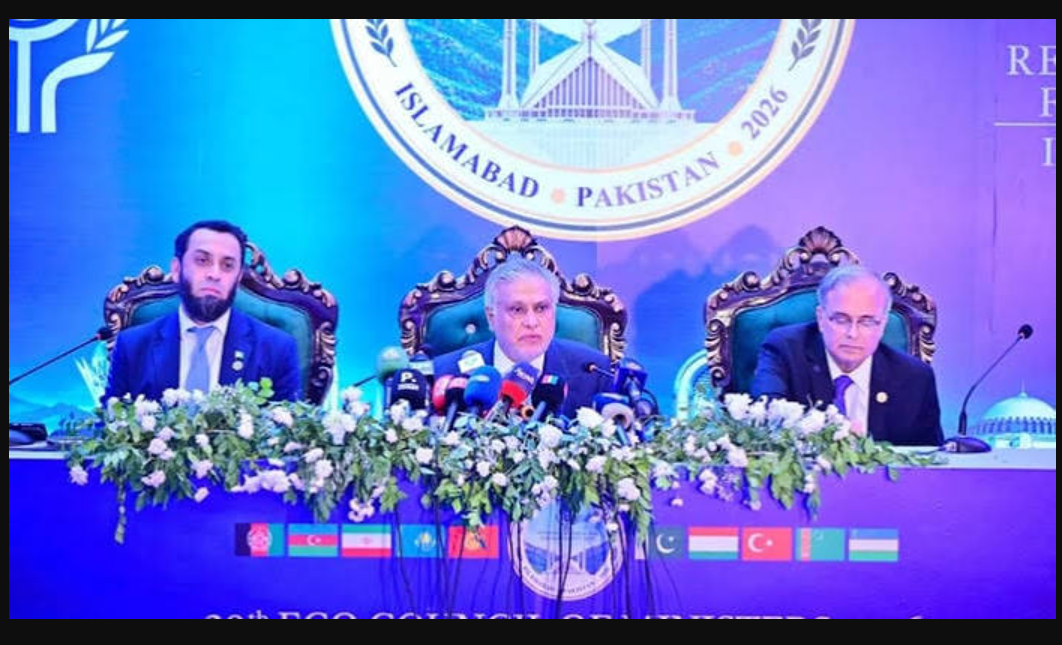

Pakistan is preparing to host a major security meeting involving Saudi Arabia and Turkiye later this month. Deputy Prime Minister and Foreign Minister Ishaq Dar confirmed that the top-level committee overseeing the Makkah defence agreement would meet in Islamabad. The proposed gathering aims to strengthen coordination among the three countries and establish a framework for implementing their mutual defence commitments.
Pakistan signed the trilateral defence agreement with Saudi Arabia and Turkiye in August. Under the pact, an armed attack against one member would be treated as an attack against all three. Consequently, the agreement establishes a shared commitment to collective security and mutual assistance.
Ishaq Dar Confirms Islamabad Meeting Later This Month
Speaking to journalists on Monday, Dar discussed the upcoming meeting after the Economic Cooperation Organisation (ECO) ministerial gathering in Islamabad.
He said: “The apex committee of this body… will be actually meeting, hopefully, end of this month in Islamabad.”
Dar also explained that the agreement follows the principles of individual and collective self-defence. Furthermore, he maintained that its provisions do not violate the United Nations Charter.
He specifically referred to Article 51 of the UN Charter, which recognises the right of individual and collective self-defence against armed attacks.
According to Dar, the agreement does not represent an attempt by the three countries to confront other nations. Instead, its primary objective is to strengthen defence cooperation and improve regional security.
How the Pakistan-Saudi Arabia-Turkiye Defence Agreement Works
The trilateral agreement establishes a mutual assistance arrangement among its three signatories. Its central principle considers an armed attack against one member an attack against all three.
The agreement also requires the countries to employ “all necessary means” when addressing threats to territorial integrity, sovereignty and internationally recognised borders.
Under Article 2, the other signatories must provide immediate assistance if one member faces armed aggression from another country or group of countries. The assistance can involve available measures of mutual support.
The arrangement resembles NATO’s Article 5 collective defence provision. However, the agreement also recognises that each country’s contribution will depend on an assessment of requirements and available resources.
These resources include military capabilities and other forms of support. Therefore, the agreement provides flexibility in determining the nature and extent of assistance during a security crisis.
Committee to Oversee Implementation of Defence Pact
Dar said the three countries were working to establish an institutional framework for implementing the agreement. The process began with an inaugural meeting in Istanbul on August 31.
Additionally, the countries plan to establish a working committee responsible for overseeing implementation. Its proposed membership includes one Foreign Office representative, three secretaries and one military representative.
The apex committee will provide a high-level platform for coordination. Meanwhile, the working committee will help manage the agreement’s practical requirements and institutional arrangements.
Defence Agreement Includes a Ten-Year Minimum Commitment
The agreement also establishes specific conditions governing membership and withdrawal. None of the three signatories can withdraw during the first 10 years after the agreement enters into force.
After this initial period, any country seeking to leave must provide at least three months’ written notice. The notification must reach the other signatories through diplomatic channels.
The pact will remain in force indefinitely unless a member exercises its withdrawal rights. However, leaving the agreement will not cancel projects or activities approved before withdrawal.
Confidentiality obligations will also remain effective after a member’s departure. The signatories must protect classified documents and information obtained through their cooperation.
Furthermore, they cannot disclose or transfer protected information to outside states, companies or individuals. Any amendments to the agreement will require consultations and unanimous approval from the designated core parties.
Intelligence Sharing and Joint Military Training Among Key Areas
Beyond mutual defence commitments, the agreement outlines several areas of military cooperation. These include defence industry collaboration, intelligence sharing, logistical assistance and counterterrorism operations.
The signatories also intend to expand joint military training and cooperation in research and development. Advanced technologies will form another important part of their defence partnership.
At an emergency alliance meeting in Riyadh earlier this month, the three countries agreed to ensure rapid deployment of military forces and capabilities in Saudi Arabia amid Houthi attacks.
Turkiye has condemned the attacks against Saudi Arabia and offered assistance with Riyadh’s military technology requirements. It has also agreed to join a Saudi-led coalition focused on protecting navigation in the Red Sea.
However, Turkiye’s formal approval of the agreement remains subject to parliamentary ratification.
Regional Conflict Adds Importance to Defence Cooperation
The proposed Islamabad meeting comes amid growing security concerns across the Middle East. Saudi Arabia has faced repeated attacks by Houthi rebels in Yemen, targeting cities, oil facilities and shipping.
Meanwhile, the wider regional conflict has continued following US-Israeli strikes against Iran in February. The fighting has drawn several countries into escalating security tensions.
Diplomatic efforts to end the conflict have yet to produce a breakthrough. Iran has restricted maritime traffic through the Strait of Hormuz, an important route for international oil shipments.
Additionally, Iranian attacks have targeted infrastructure and US assets across the Middle East. Bahrain also faced another Iranian drone attack on Sunday, ending a prolonged pause in strikes against the country.
On Friday, Iran’s Revolutionary Guards announced that they had targeted a US early-warning radar system in Bahrain. The announcement followed US strikes on Qeshm Island in the Strait of Hormuz earlier this month.
Against this backdrop, Pakistan, Saudi Arabia and Turkiye are seeking stronger defence coordination. The upcoming Islamabad meeting will provide an opportunity to advance the agreement’s institutional arrangements and collective security commitments.
For the latest updates, visit and follow The Truth International website (www.thetruthinternational.com) and subscribe to the YouTube Channel.

