

Experts Highlight Practical Skills and Inclusive AI Readiness for Pakistan’s Future
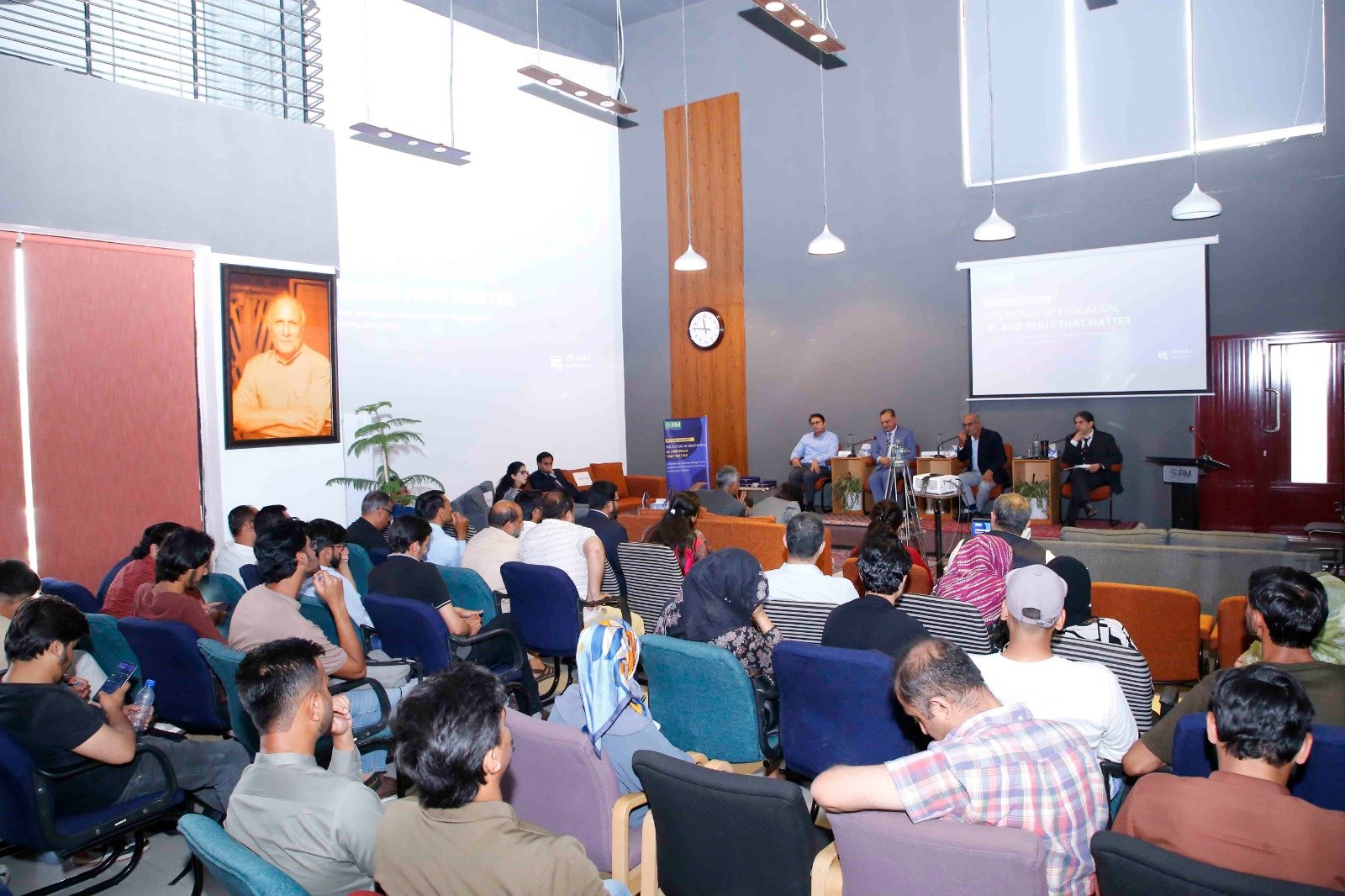
ISLAMABAD: Academic degrees alone will not prepare Pakistan’s workforce for an AI-driven economy — that was the central message of a national seminar organized by the Institute of Rural Management (IRM) in Islamabad on 20 May 2026. Titled “Beyond Degrees: The Future of Education, AI, and Skills That Matter,” the seminar brought together policymakers, academics, technology experts, and development professionals to chart a path forward for education, jobs, and artificial intelligence in Pakistan.
Participants agreed that future employability will depend increasingly on practical skills, digital literacy, adaptability, critical thinking, and continuous learning — competencies that formal degree programmes do not consistently develop. The seminar called for urgent reform across education, governance, and workforce development systems.
Prof. Dr. Raheel Qamar, Rector, COMSATS University, said that artificial intelligence is no longer a theoretical idea but a practical tool helping solve real-world problems in education, healthcare, research, and industry. He stressed that universities must update their curricula, teaching methods, and assessment systems to prepare students for a fast-changing technological future.
Israr Mohammed Khan, Director General, National Centre for Rural Development (NCRD), stressed the importance of deploying artificial intelligence for practical solutions in agriculture, including modern farming, productivity improvement, supply chains, and market access. He said AI can help transform rural economies by enabling farmers to make better decisions and improve the marketing of their products.
Ghulam Shabbir, Development and Public Policy Specialist, highlighted that AI readiness is not only about technology but also about strong institutions, effective governance, and public-sector capacity. He emphasized the need for digital inclusion and evidence-based policymaking to ensure underserved communities also benefit from Pakistan’s digital transformation.
Usman Zahid, Chief AI Officer, White Rice Impact, noted that many organizations struggle with AI adoption not because the technology is unavailable but because people are often unprepared to use it effectively. He stressed that critical thinking, creativity, and workforce readiness will be essential for successful AI adoption across sectors.
The seminar concluded with a collective call for stronger collaboration among government, academia, industry, and development organizations to build an inclusive, skilled, and future-ready workforce for Pakistan.
About IRM: The Institute of Rural Management (IRM) is a not-for-profit development organization based in Islamabad, Pakistan. Established with a mandate to advance inclusive and sustainable development, IRM works across education, livelihoods, capacity building, and rural transformation in partnership with federal and provincial governments, UN agencies, and bilateral and multilateral donors.

