
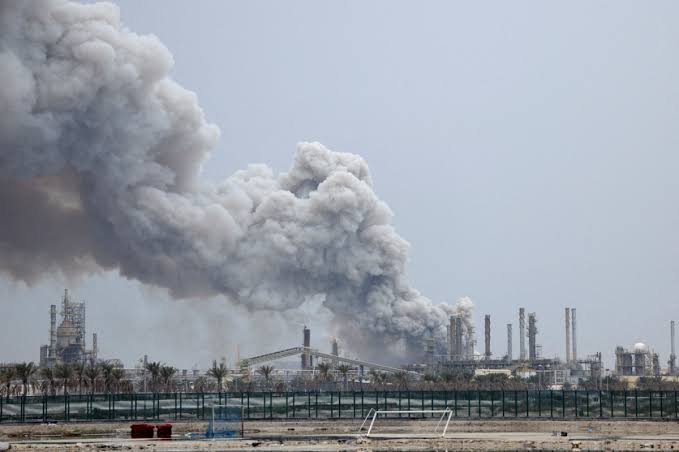

Kuwait Petroleum Corporation Reports Major Damage
Kuwait Petroleum Corporation has reported significant damage and several injuries after one of its oil facilities was struck during repeated Iranian attacks on Saturday.
The state-owned energy company confirmed that the facility was targeted more than once. However, it did not immediately identify the damaged site or disclose the full extent of the disruption to its operations.
Kuwait’s state news agency reported that the attacks caused substantial material losses. Several people were also injured during the incident and the subsequent emergency response.
Kuwaiti authorities have not yet released the names or medical conditions of those injured. The country’s armed forces said firefighters and oil-sector employees were among those hurt while responding to the attacks.
Emergency crews were deployed to control the situation and protect nearby units from further damage. Authorities were also assessing the affected infrastructure and reviewing whether production, refining or distribution operations had been interrupted.
Kuwait Petroleum Corporation has not announced any deaths linked to the oil facility attack. It has also not provided an estimate of the financial damage.
Missile and Drone Threats Disrupt Kuwait
The reported strike on the oil facility came as Kuwait faced sustained missile and drone threats from Iran.
Kuwait’s armed forces said air-defence systems intercepted Iranian ballistic missiles and drones early on Saturday. The continued threats also forced authorities to temporarily suspend operations at Kuwait International Airport.
Kuwait Airways later began rescheduling flights after the disruption. The country briefly restricted its airspace as officials responded to the threat of further attacks.
A separate Iranian attack struck a power generation and water desalination facility in Kuwait. The incident caused a fire and forced several electricity-generating units out of service.
It was the second reported attack on Kuwaiti desalination infrastructure within two days. Such facilities are essential because Kuwait depends heavily on desalinated seawater for its drinking water supply.
Several firefighters and at least one worker were injured while tackling fires caused by other attacks, according to the Kuwait Fire Force.
Kuwait’s Foreign Ministry condemned the targeting of vital infrastructure. It said attacks on energy and water facilities endangered civilians and violated international law.
The government held Tehran responsible for the strikes and warned that attacks on essential infrastructure could have serious humanitarian and economic consequences.
Regional Conflict Threatens Gulf Energy Infrastructure
The latest attacks occurred during a new escalation between Iran and the United States following the collapse of a ceasefire.
The United States carried out a seventh consecutive night of strikes on Iranian targets. US Central Command said its operations targeted surveillance locations, military logistics infrastructure, underground weapons storage sites and maritime capabilities.
Iran said its attacks on countries hosting American forces were retaliation for US military operations against Iranian infrastructure.
Iran’s Islamic Revolutionary Guard Corps claimed that it targeted American-linked military locations in Kuwait, including Camp Arifjan and Ali Al Salem Air Base. Reuters said it could not independently verify Iran’s claims regarding damage to US military facilities.
Iran also launched attacks or triggered security alerts in other regional countries, including Bahrain, Jordan and Saudi Arabia.
The growing focus on energy, water and transport infrastructure has increased concern about the conflict spreading across the Gulf.
The Strait of Hormuz remains at the centre of the confrontation. The narrow waterway has traditionally carried a major share of global oil and natural gas shipments.
Any prolonged disruption to Gulf oil facilities or shipping routes could affect international energy supplies and prices. Oil prices had already climbed by more than four percent on Friday, reaching their highest level in more than a month.
Kuwaiti authorities have not announced whether the damaged oil facility has resumed normal operations.
Further assessments are expected as emergency teams inspect the site, treat injured personnel and determine the effect of the repeated attacks on Kuwait’s energy sector.

