
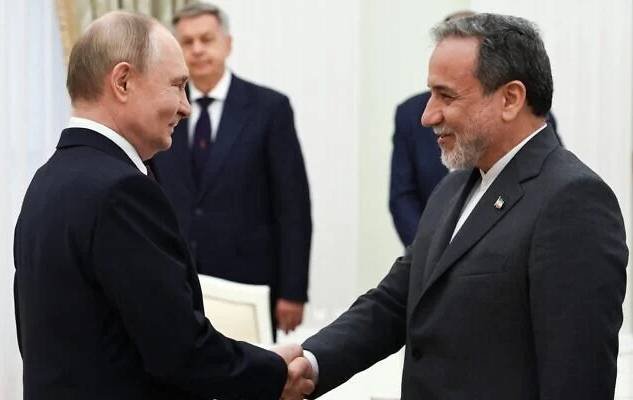

Iran has stepped up its diplomatic efforts at a critical moment. Foreign Minister Abbas Araghchi has arrived in Russia for high-level talks. His visit comes as tensions with the United States remain unresolved and regional instability grows.
Araghchi landed in Saint Petersburg early Monday. He is expected to meet Vladimir Putin. Both Iranian and Russian officials have confirmed the meeting. Kremlin spokesman Dmitry Peskov said discussions are planned at the highest level.
The visit follows intense diplomatic activity. Araghchi recently traveled between Islamabad and Muscat. His engagements aimed to keep dialogue alive amid a fragile geopolitical environment.
Backchannel Messages and Stalled US Talks
Iran has continued indirect communication with Washington. According to reports, Tehran sent written messages to the United States. These were delivered through Pakistan as a mediator.
The messages outlined key red lines. They focused on nuclear policy and the Strait of Hormuz. However, officials clarified that these were not formal negotiations.
A report by Axios suggested Iran also proposed reopening the strait. The plan includes delaying nuclear talks to a later stage. Iranian media referenced the report but did not reject it.
Diplomatic momentum suffered a setback over the weekend. Donald Trump cancelled a planned visit by US envoys. The trip was expected to take place in Islamabad. Trump described the proposed talks as unproductive.
Despite this, he indicated that communication channels remain open. He suggested Iran could contact the United States directly.
Araghchi’s regional meetings highlight continued efforts. In Pakistan, he met Asim Munir, Shehbaz Sharif, and Ishaq Dar. These discussions focused on de-escalation and regional stability.
Hormuz Blockade Deepens Global Economic Concerns
The ongoing crisis in the Strait of Hormuz remains a major issue. Iran has kept the waterway closed. This has disrupted global supplies of oil, gas, and fertilizers.
Prices have surged in international markets. Many developing countries face rising risks of food insecurity. The economic impact continues to spread beyond the region.
Iran has defended its position strongly. The Islamic Revolutionary Guard Corps stated that control of the strait is a strategic priority. Officials described it as a key deterrence tool.
The United States has responded with countermeasures. Washington imposed restrictions on Iranian ports. Iran’s military warned that continued pressure would trigger a response.
Araghchi earlier stated that ensuring safe transit in the strait benefits all countries. He emphasized cooperation with neighboring states. However, no immediate breakthrough has been announced.
Israel-Lebanon Tensions Add to Regional Instability
The broader region is also witnessing renewed violence. Israel and Hezbollah have exchanged accusations of ceasefire violations.
Benjamin Netanyahu said Israeli forces are actively targeting threats. He accused Hezbollah of undermining the truce.
Hezbollah responded with similar claims. The group warned it would react to continued attacks.
According to Lebanon’s health ministry, Israeli strikes killed 14 people in the south. Civilians were among the casualties. Infrastructure damage has also been reported.
The conflict traces back to earlier hostilities. Cross-border attacks escalated after regional tensions intensified. A fragile ceasefire is now under strain.
High-Stakes Diplomacy Faces Uncertain Outcome
Araghchi’s visit to Russia reflects growing urgency. Iran is seeking support from key global players. The outcome of his meeting with Putin may shape future developments.
At the same time, indirect talks with the United States remain uncertain. The combination of diplomacy, military pressure, and economic disruption is creating a complex situation.
Global attention is focused on the next steps. A diplomatic breakthrough could ease tensions. Failure may deepen the crisis further.
For now, the region remains on edge. Every move carries significant political and economic consequences.

