

Young professionals turn to remote work and community initiatives amid economic collapse
GAZA: Thousands of university graduates across Gaza continue searching for employment as the prolonged war, economic collapse and widespread infrastructure damage leave young professionals with few opportunities to begin their careers.
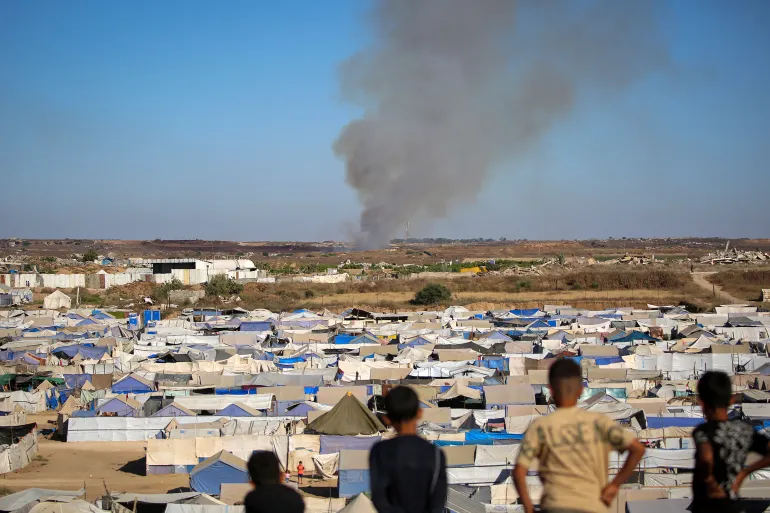
Among them is Rawan al-Jabali, an English language and translation graduate from the Islamic University of Gaza. After completing her degree two years ago, she has been unable to secure employment while living with her displaced family in Nuseirat. Weak internet access, repeated power outages and the destruction of workplaces have further complicated her job search.
“I studied translation believing it would provide career opportunities, but most institutions that once offered employment no longer exist,” she said.
According to Gaza’s Government Media Office, around 80 percent of the population is unemployed, while poverty has surpassed 93 percent as the conflict continues to devastate the territory’s economy.
Engineering graduate Mohammed al-Khudari faces similar challenges. Unable to find work in his profession, he now applies for positions in cafés, restaurants and cleaning services, saying earning an income has become more important than working in his field of study.
Economic collapse reshapes labour market
Economists say Gaza’s labour market was already under pressure before the conflict because of years of economic restrictions. However, the war has accelerated the crisis, shrinking economic activity, increasing dependence on humanitarian assistance and limiting opportunities for skilled workers.
Experts warn prolonged unemployment risks eroding professional skills, increasing poverty and encouraging migration among qualified graduates seeking opportunities elsewhere.
Community initiatives offer limited support
Despite the difficult conditions, local organisations are attempting to help displaced students and graduates. One such initiative, Peace Work Space in Deir el-Balah, provides stable electricity and internet access for remote work, online education and job applications.
Founder Mohammed al-Buheisi said the centre has expanded from accommodating 10 people to around 80 despite rising operational costs. He believes strengthening digital skills and promoting remote employment offer the most sustainable path for Gaza’s young workforce while local job opportunities remain extremely limited.
As reconstruction efforts remain slow, many graduates continue adapting by seeking online work, developing new skills and accepting employment outside their academic specialisations simply to support themselves and their families.

