

Europe’s Biggest Music Contest Begins Amid Political Tensions
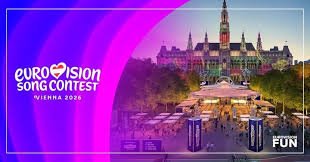
The Eurovision Song Contest has officially begun in Vienna, marking the 70th edition of Europe’s biggest live music competition. The event opened on Tuesday with strong celebrations, but political tensions quickly overshadowed the festive atmosphere.
The host city has been decorated with Eurovision’s “United by Music” slogan and heart-themed displays. Artists from 35 countries are set to compete across multiple stages this week.
However, the excitement has been mixed with controversy. Several countries, including Spain, Ireland, the Netherlands, Slovenia, and Iceland, are boycotting the event. They are protesting Israel’s participation in the contest.
As a result, the opening days of Eurovision are taking place under intense political attention and divided public opinion.
Strong Security Measures Deployed Across Vienna
Authorities in Austria have significantly increased security across Vienna for the duration of the contest. Police units from across the country have been deployed to protect venues, performers, and visitors.
Additional support has also arrived from Germany to strengthen security operations. Officials are focusing on crowd safety and potential protest management during live events.
Security concerns have increased due to past threats. Authorities referenced a 2024 terror plot linked to a planned attack at a Taylor Swift concert in Vienna.
Austria’s intelligence leadership has also warned about ongoing risks from extremist groups and Iran-linked networks. These concerns have prompted heightened surveillance across key locations.
Large-scale pro-Palestinian demonstrations are expected throughout Eurovision week. Police are preparing for peaceful protests while ensuring public order.
Despite tensions, organizers have confirmed that all shows will continue as scheduled under strict security protocols.
Competition Continues as Artists Compete for Final Spot
The first semifinal took place at the Wiener Stadthalle, where 15 acts competed for a place in Saturday’s grand final.
Israeli singer Noam Bettan performed the emotional ballad “Michelle” during the semifinal. She is competing to secure Israel’s place in the final after the country finished second in 2025.
The top 10 performers from Tuesday’s semifinal will qualify for the final round. They will join winners from Thursday’s second semifinal.
Automatically qualified countries include the United Kingdom, France, Germany, and Italy due to their financial contributions. Host nation Austria also receives direct entry into the final.
Bookmakers have highlighted Finland as a strong favorite this year with its entry “Liekinheitin” (“Flamethrower”). Other notable performers include Greece’s Akylas with “Ferto,” Portugal’s Bandidos do Cante with “Rosa,” and San Marino’s Senhit featuring Boy George in “Superstar.”
Eurovision Faces Political Debate but Maintains Cultural Role
Eurovision has historically combined music with political debate. The contest expelled Russia in 2022 following its invasion of Ukraine, setting a precedent for political consequences.
More recently, the 2024 and 2025 editions saw protests over Israel’s participation and the conflict in Gaza. Allegations of voting irregularities also sparked controversy among viewers and participating countries.
In response, organizers introduced stricter voting regulations. They also reduced the number of votes per viewer to limit coordinated manipulation and improve transparency.
Despite recurring political tensions, Eurovision continues to maintain its cultural identity. Experts say the contest remains one of Europe’s most resilient entertainment events.
It continues to attract millions of viewers worldwide each year. Organizers emphasize that the core mission remains unity through music, even during times of political division.
As performances continue in Vienna, the contest reflects both celebration and controversy. It remains a rare global stage where music and politics often intersect under intense public attention.

