

By Humaira Motala
Karachi: While addressing ABAD — the Association of Builders and Developers of Pakistan — on Wednesday, Inspector General Sindh Mr. Javed Alam Odho once again reaffirmed the commitment to resolve the Mir Raza murder case on merit and without pressure.
He admitted mistakes had been made by the police department, but reassured that all measures would be taken to correct them. He also claimed that the crime rate in Karachi had dropped by 14 percent. He also urged for reforms and need of more professional training in Medico-legal system of police.
But all those numbers and all those assurances fall flat in the face of one unresolved case. The fact that a builders’ association felt compelled to raise the Mir Raza murder issue speaks volumes. It is not ABAD’s mandate, yet its leaders did it anyway — because the mistrust between citizens and Karachi Police has grown too deep to ignore.
That mistrust exists not because of a lack of competent leadership at the top, but because subordinate SSPs failed to deliver where it mattered most.
“Neither he nor SSP SIU Samiullah Soomro were able to convey to the grieving family that the police were with them, and that they would do everything to ensure they got the justice they deserved. It was that simple.
Had SSP East, Zubair Sheikh, treated it with the same seriousness that DIG East showed toward my complaint — on a far smaller scale — perhaps IG Sindh, Javed Alam Odho would not have had to stand before the media and accept mistakes on behalf of his force. That is why we have a full hierarchy in place. If every SSP did his job, including answering the 14-point query letter sent by Police Surgeon Dr. Summaiya Syed to SSP East, the Sindh government would not have been left in a defensive position. Not after so much investment in the police, and not after so many operations in the Katcha and riverine belts.”
A Meeting That Set the Standard
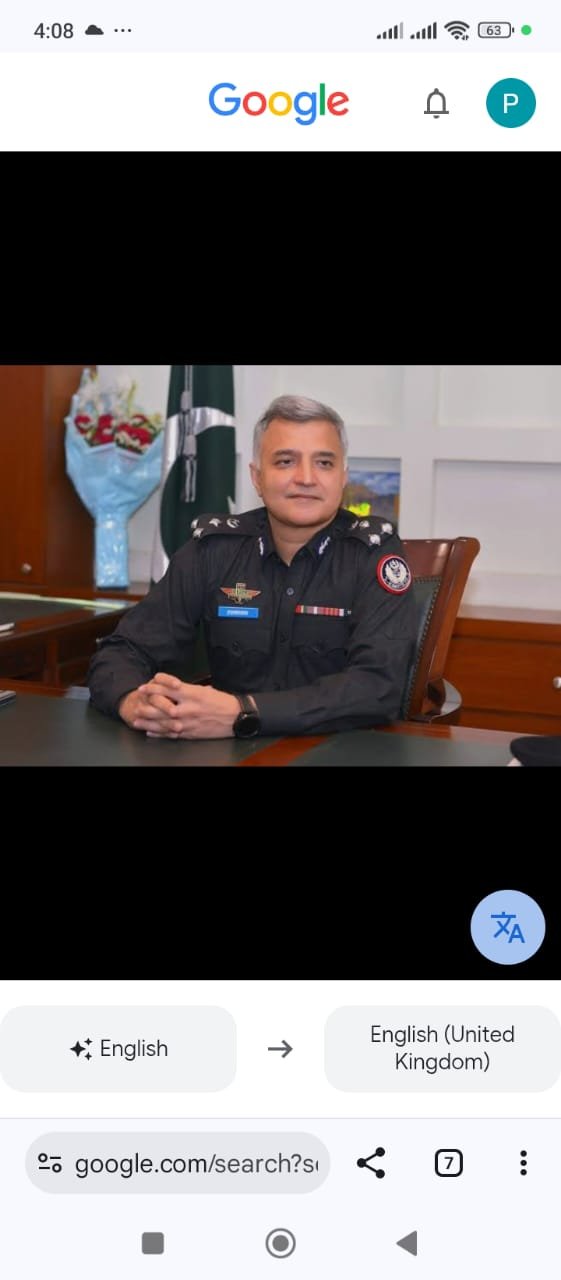
I saw this gap first-hand in my initial meeting with DIG East, Dr. Farrukh Ali Lanjhar. He came across as accessible, direct, and willing to listen — the kind of officer who says, “call me when you need me.”
When I requested time from DIG East Dr. Farrukh Lanjhar for an interview, I expected a formal reply or a future date. Instead, he politely asked me to walk into his office and join him for a cup of tea. I was pleasantly surprised by the cordiality.
I walked in expecting bureaucracy. What I found was courtesy, and a senior officer who was ready to resolve the issue of a female journalist without making her feel like a petitioner.
Does the Police Force Lack Role Models?
The meeting was also a wake-up call. At the ASP/SP level, many officers still treat citizens as subjects of a colony and themselves as masters, not servants.
“A Meeting That Set the Standard
I saw this gap first-hand in my initial meeting with DIG East, Dr. Farrukh Ali Lanjhar. He came across as accessible, direct, and willing to listen — the kind of officer who says, “call me when you need me.”
I walked in expecting bureaucracy. What I found was courtesy, and a senior officer who was ready to resolve the issue of a female journalist without making her feel like a petitioner.”
I often wonder what fuels this snobbery and arrogance. Is it clearing the CSS? But given our quota system and an exam that has been reduced to testing memory and English rather than intellect or judgment, that in itself is no great achievement. If it were, every government department would be running like a multinational — either making huge profit or excelling in service delivery.
Is it the training we inherited from the British Raj, designed to produce a ruling elite? Or is it the culture of imitating seniors who remain inaccessible and aloof?
Yet we do have exceptions. DIG East Dr. Farrukh Lanjhar, DIG Traffic Pir Mohammad Shah, DIG CTD Capt. (R) Azfar Mahesar, DIG RRF Usman Ghani Siddiqui, DIG Amir Farooqui, SSP Qamar Jiskani, SSP Saud Magsi, SSP Zeeshan Siddiqui, and above all IG Sindh Javed Alam Odho.
Within the same flawed system that all of us are part of, they choose to serve as public servants. The impression they leave is exactly what I witnessed the other day.
Can’t they be role models? Because the legacy you leave either lives on or haunts you. We still remember good officers long after they retire, like former ADIG Hyderabad Range, Dr. Jameel. AIG Ameer Sheikh will be spoken of in those terms.
Ten years from now, who else will be remembered with the same respect? There were many who were pharaohs of their time, but no one now remembers them with respect after they leave office.
A Glimpse of Reforms in East
During our discussion, Mr. Lanjhar also spoke about the reforms he has pushed in East Zone. He said more than 1,000 personnel have been pulled out of desk pools and deployed in the field where they are actually needed.
To enforce accountability, he has introduced biometric attendance to eliminate ghost employees. The zone is also moving toward an advanced facial recognition system to ensure that no one can mark false attendance and every officer on the roster is truly on duty.
The Mir Raza Murder Case
When asked to comment on the Mir Raza murder case, which falls under his jurisdiction, he responded softly: “A new committee has been constituted,” he said, “and I do not wish to comment before its findings are made public.”
However, he assured that he would address all queries once the committee submits its report.
As we wrapped up a meeting that ran longer than expected, Dr. Farrukh Lanjhar spoke openly — about the shortcomings of the media, about his personal experiences across different districts and roles, and about the reforms needed to make police more public-friendly. Especially Thana culture, which he called the main “interface” of the police force.
Before I left, he said simply: “Don’t you worry, Madam. We will remain in touch. You can call me whenever and wherever needed to resolve your issue.”
It left me thinking. Often, just listening with patience to the complaint of the aggrieved party can bring down the temperature of frustration and distrust toward police.
That is exactly what was missing in the initial handling of the Mir Raza murder case. The first inquiry committee, in which SSP East Zubair Sheikh was allegedly accused of incompetence and of pushing a suicide theory (by the family), failed on that count. He did not take into account the point of view of the victim’s parents.
Neither he nor SSP SIU Samiullah Soomro were able to convey to the grieving family that the police were with them, and that they would do everything to ensure they got the justice they deserved. It was that simple.
Had SSP East, Zubair Sheikh, treated it with the same seriousness that DIG East showed toward my complaint — on a far smaller scale — perhaps IG Sindh, Javed Alam Odho would not have had to stand before the media and accept mistakes on behalf of his force. That is why we have a full hierarchy in place.
If every SSP did his job, including answering the 14-point query letter sent by Police Surgeon Dr. Summaiya Syed to SSP East, the Sindh government would not have been left in a defensive position. Not after so much investment in the police, and not after so many operations in the Katcha and riverine belts.
The response to the letter would also have put Police Surgeon Dr. Summaiya Syed in the spotlight, since she is equally responsible for approving the post-mortem report by the Medico-Legal Officer.
However, in covering up her own negligence, she proved herself much smarter than all the concerned SSPs who put Sindh Police’s reputation at stake again. According to sources, most post-mortems are being carried out with such negligence that sometimes the MLO does not even bother to look at the body. The process is often carried out by junior staff.
No one knew the Mir Raza case would open a Pandora’s box of malpractices in hospitals and at the SSP level. In that case, Police Surgeon Dr. Summaiya should also be held accountable.
An Afterthought
My meeting with DIG East Dr. Farrukh Ali opens many windows of thought. It immediately brought to mind DIG Azfar Mahesar, who, while serving in East, made a serious attempt to make police front desks more people-friendly.
But when I look at even my own police station, PS Jamshed Quarters, today, I feel that entire exercise was in vain.
Eight years ago I wrote a feature titled “It’s High Time to Invest in Sindh Police Force.” But I feel now that all the investment by the Sindh government and Sindh Police will be of no use until those at the helm take the task of improving police-public interaction seriously.
We have to train them to be servants, not masters. Explaining or training with mere lip service will no longer build public trust. Putting corruption aside, at least do what the department exists for: maintaining law and order and winning public trust.
They will have to serve in every capacity. Police are not meant to be posted only for VIP protocols. They are paid from the taxes of the people to resolve every issue related to law and order that citizens face.
The Fish Rots at the Head First
The problem is not intent at the top, either at IG or DIG level. The problem is what happens after delegation. Given that the Mir Raza case falls within East Zone, questions naturally arise about oversight at the DIG level. Sources suggest the case was delegated to a committee in the early days, and may not have been briefed to DIG Dr. Farrukh with the urgency it required.
In that window, it appears to have been treated as a routine matter, without the attention such a sensitive case demanded.
This gap does not diminish DIG Dr. Farrukh’s overall efforts to reform policing in East. But it does raise serious questions about the handling and credibility of the concerned SSPs on the ground. Delegation only works when those entrusted with it act with due seriousness.
This is high time that some heads at the senior level — SPs and SSPs — must roll. It will signal that Sindh Police is serious about accountability. Suspending low-ranking SHOs, DSPs, or the in-charge of the crime scene unit or the Medico-Legal doctor is only a cosmetic move. It will not help in damage control.
The legal advisor and the advocate Mr Jibran Nasir for Mir’s father, Mir Hussain has already stated publicly that the 11-day delaying tactics by the first investigation unit, headed by SSP Samiullah Soomro and SSP Zubair Sheikh, distorted all the evidence. He has also raised allegations regarding integrity and credibility of the first committee, both SSPs and SP Usman Sadouzai, who was not allegedly even present in Karachi at the time of nomination. He also refused for forensic tests of digital Watch in Karachi by NCCIA,( perhaps like all of us he must be knowing how incompetent SSP NCCIA, Tariq Nawaz is!), which again reflects trust deficit in Sindh police force.
A uniform is not just cloth and rank. It is a promise. And when that promise is broken, it is not just one case that suffers. It is the trust of an entire city that bleeds.
“People don’t forget how you made them feel when they were at their we. Police must never be the reason a grieving family loses faith in justice.”
About the writer:
The writer is a senior journalist and columnist covering crime, law, social issues, governance, energy, health, literature, and women and children’s rights across Pakistan’s leading English media houses.
Feedback: mediawomen2014@gmail.com

