
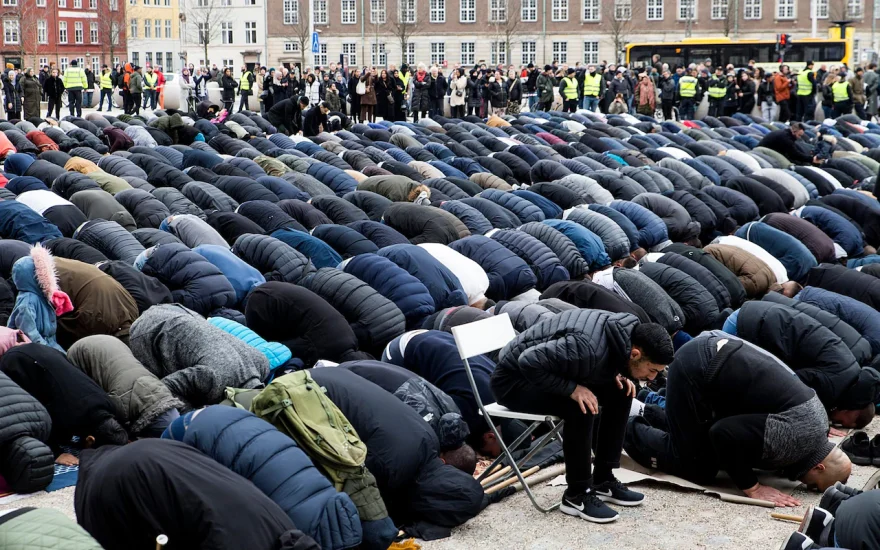

Denmark plans to examine a nationwide ban on the public Islamic call to prayer, known as Azan. Immigration and Integration Minister Morten Bødskov announced the proposal during recent public remarks. He argued that amplified Azan broadcasts should not echo across Danish neighborhoods.
Moreover, he compared parts of Denmark to a “suburb of Islamabad,” sparking immediate political debate. However, the government has not introduced legislation or enforced any nationwide restrictions.
Previous Review Revived Under Government Policy
The proposed measure mainly targets mosque loudspeakers broadcasting the Azan in public spaces. Meanwhile, Muslims would continue praying freely inside mosques without any restrictions. Bødskov directed officials to examine whether Danish law permits such limitations.
Furthermore, the proposal follows work initiated by former immigration minister Rasmus Stoklund. In October 2025, Stoklund restarted an earlier legal review on restricting public calls to prayer. Previously, officials suspended that review before Denmark’s 2022 parliamentary election.
The issue gained attention after a public Azan near Gellerup Church during the COVID-19 pandemic. Islamic organizations later requested permission for similar broadcasts across Denmark.
Legal Concerns Surround Religious Freedom
Legal experts expect the proposal to face constitutional and human rights questions. Denmark’s constitution protects religious practices unless they threaten public order or morality. Therefore, authorities must determine whether the proposed restrictions comply with constitutional protections.
Critics argue that targeting Islamic practices could undermine equal treatment and religious freedom. Conversely, supporters believe amplified calls to prayer do not suit Denmark’s public environment. Nevertheless, officials have not announced when the legal review will conclude. Consequently, any nationwide ban would require further political approval before becoming law.

