
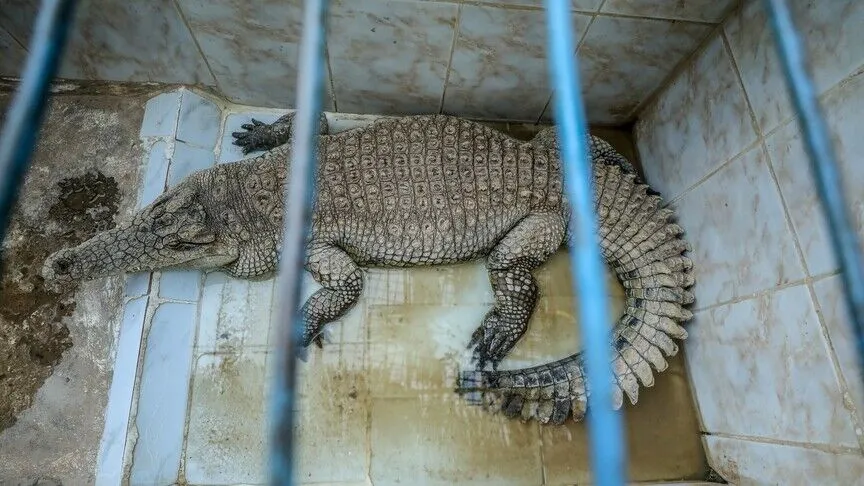

Crocodiles Reclassified for Possible Security Use
Israel has changed the legal classification of Nile crocodiles, clearing a possible path for the reptiles to be used around prisons as an escape deterrent.
Environmental Protection Minister Idit Silman reclassified crocodiles from protected wild animals to captive-managed wildlife. The change allows them to be held outside licensed zoos or research facilities under specific conditions.
The new regulation does not mean crocodiles have already been placed around any prison. However, it gives security agencies a legal route to request permission to keep them for security purposes.
Under the regulation, Nile crocodiles may be bred and held by a security organisation. The animals must remain under conditions approved by the director of the Israel Nature and Parks Authority to prevent them from escaping into the wild.
The environmental protection minister must also determine that keeping the crocodiles serves a genuine security purpose.
Israel’s Prison Service falls within the category of a security body. It is overseen by National Security Minister Itamar Ben Gvir, who has openly supported using crocodiles to discourage prison escapes.
Ben Gvir Promotes Crocodile Prison Plan
Ben Gvir welcomed the rule change with a social media post featuring an artificial intelligence-generated image of himself holding a crocodile on a leash.
He warned potential escapees to think again and claimed that he and Silman were working together to surround prisons with crocodiles.
Israeli media reported that Ben Gvir first proposed the idea during a December meeting with Israel Prison Service Commissioner Kobi Yaakobi.
The proposal reportedly focused on facilities holding Palestinian detainees. Ben Gvir was said to have drawn inspiration from Florida’s controversial detention facility known as “Alligator Alcatraz.”
Senior prison officials visited the Hamat Gader crocodile farm in northern Israel in January. The visit was reportedly intended to examine whether crocodiles could realistically be used within the prison system.
Israeli reports suggest Ben Gvir wants the reptiles deployed first at Ketziot Prison in southern Israel. The high-security facility holds large numbers of Palestinian prisoners detained on security-related charges.
No official construction plan, deployment date or approved budget has been publicly announced. The proposal therefore remains under consideration despite the regulatory change.
Environmental Officials Challenge Controversial Decision
The Israel Nature and Parks Authority reportedly opposed the proposal when it was first presented.
Officials argued that crocodiles were legally permitted only for research or educational purposes. They also raised concerns about animal welfare and the Prison Service’s ability to care for dangerous wild reptiles.
The Environmental Protection Ministry’s legal adviser also reportedly warned that Silman might not have the authority to make the change independently.
Despite those objections, the minister approved the reclassification on Wednesday. The Nature and Parks Authority is expected to discuss the issue again following the decision.
Critics have described the proposal as political theatre rather than a practical security policy. They argue that Israel faces overcrowding and detention-capacity problems rather than a widespread pattern of prison escapes.
Animal welfare concerns also remain unresolved. Crocodiles require controlled temperatures, secure enclosures, specialised feeding and experienced handlers.
Any failure could endanger prison workers, detainees, nearby communities and the animals themselves.
The rule change has removed one legal barrier, but several approvals would still be needed before crocodiles could be installed near a detention facility.
For now, the proposal remains a controversial possibility rather than an operational prison policy.

