
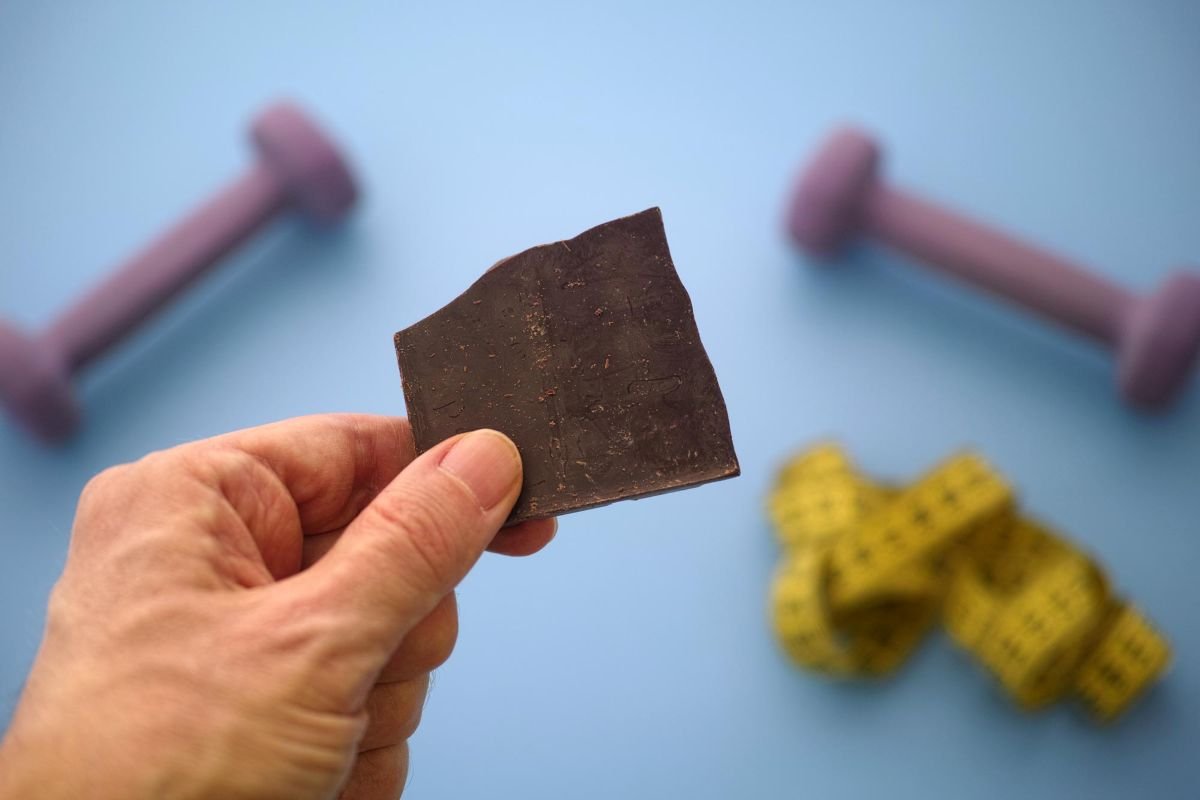

Chocolate Aroma Linked to More Exercise Repetitions
The smell of chocolate could help some people complete more resistance exercise without making the workout feel harder, according to a small exploratory study.
Researchers found that moderately trained young men performed more leg-extension repetitions after smelling dark or milk chocolate. The participants did not eat the chocolate during the experiment.
The study involved 23 healthy men in their early to mid-20s. All participants had previous resistance-training experience.
Each participant fasted for at least 10 hours before arriving for the exercise session. Researchers then exposed them to the aroma of dark chocolate, milk chocolate or odorless water.
The dark chocolate contained 90 percent cocoa. The milk chocolate contained 60 percent cocoa. Water served as the control condition.
Participants smelled their assigned sample for approximately 30 seconds before and during the exercise session.
They then performed repeated sets of leg extensions. This exercise targets the thigh muscles by requiring a seated person to straighten the legs against weighted resistance.
The researchers reported that the dark chocolate aroma was associated with approximately 18 additional repetitions compared with the water condition.
The milk chocolate aroma was linked to approximately nine additional repetitions.
Despite completing more work, participants did not report significantly higher perceived effort. This suggested that the chocolate aroma may have increased exercise volume without making the session feel more difficult.
Dark Chocolate Smell Also Reduced Hunger
Researchers also examined whether the different smells affected appetite before and during exercise.
Participants were asked to rate their hunger, fullness, desire to eat and intention to consume food soon.
The dark chocolate aroma produced the clearest appetite-related changes. Participants reported lower hunger, less desire to eat and reduced intention to eat after smelling it.
They also reported stronger feelings of fullness before beginning the exercise.
Milk chocolate was generally rated as the more pleasant smell. However, it did not significantly reduce hunger or change appetite in the same way as dark chocolate.
Senior study author Dr Mohamed Nashrudin bin Naharudin said the dark chocolate aroma may act as a learned signal connected with a rich and satisfying food.
The brain may associate the bitter and intense smell with something filling. That association could create an expected feeling of satisfaction before any food is actually consumed.
Milk chocolate may work through a different pathway. Its sweeter and more pleasant aroma could improve mood or make the exercise environment more enjoyable.
Researchers believe those psychological responses may help explain why participants completed more repetitions without feeling that they were working harder.
However, the study did not measure brain activity, appetite hormones, digestion or other biological responses. The exact mechanism therefore remains unknown.
Researchers Warn Findings Are Still Preliminary
The results do not prove that smelling chocolate will improve everyone’s fitness performance.
Only 23 people took part in the experiment. All were young men with moderate resistance-training experience.
The findings may not apply to women, older adults, professional athletes, beginners or people with medical conditions.
The participants also completed the exercise after fasting for at least 10 hours. Chocolate aromas may produce different effects among people who have recently eaten.
Researchers acknowledged that the strength of the dark and milk chocolate smells may not have been identical.
The use of odorless water as the control also created a possible limitation. Some participants may have realised they were in the control condition because they could not detect a noticeable smell.
Expectation can influence exercise behaviour. A participant who knows they received chocolate aroma may unconsciously perform differently from someone who receives water.
The study also examined only one exercise. It remains unclear whether similar effects would appear during running, cycling, weightlifting or full-body training.
Researchers said chocolate may not be unique. Other familiar and appealing food aromas could potentially influence appetite and exercise performance in similar ways.
However, additional smells have not yet been tested through the same method.
Larger studies involving more diverse participants will be needed before chocolate aroma can be recommended as a reliable exercise tool.
For now, the research offers a narrow but interesting finding. Smelling dark or milk chocolate may help fasted, moderately trained men complete more leg-extension repetitions without experiencing greater perceived effort.
The study was published in the scientific journal Frontiers in Physiology.

