
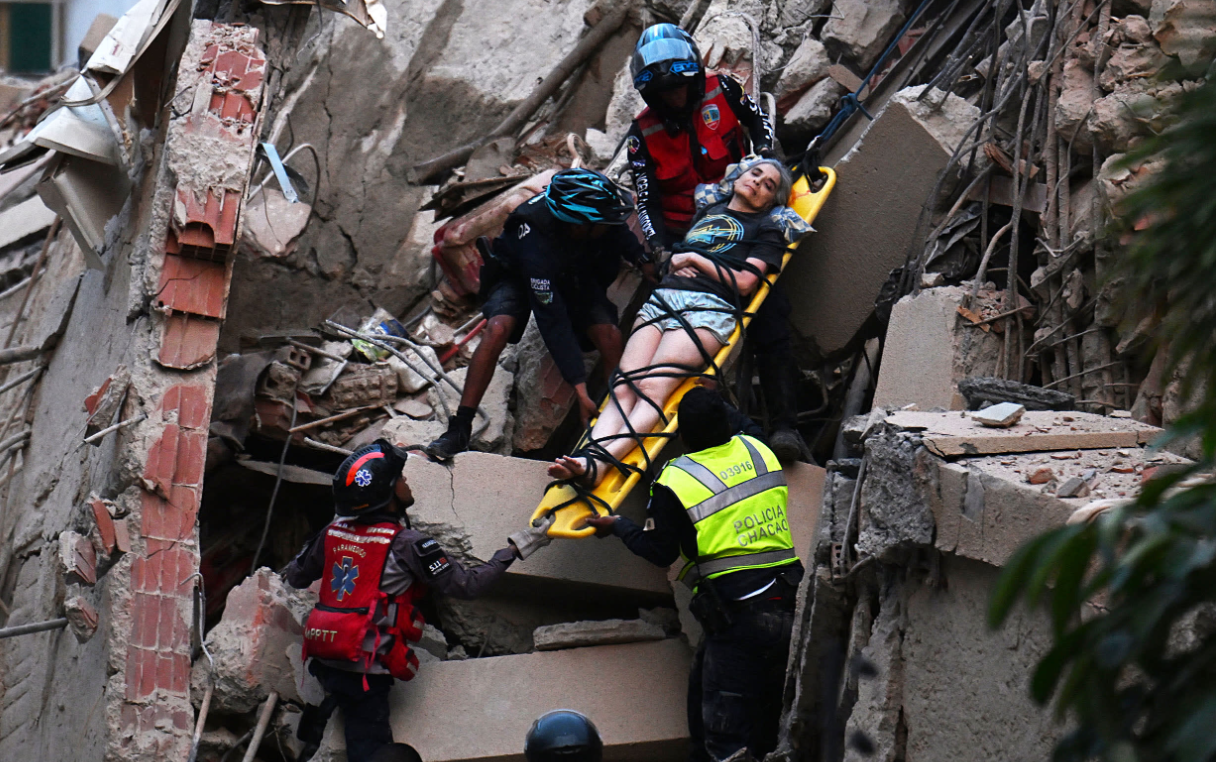

Venezuela is facing a growing humanitarian crisis after two powerful earthquakes struck near the capital region, leaving widespread destruction and hundreds of casualties.
Authorities confirmed that at least 164 people have died, while nearly 1,000 others suffered injuries. However, officials warned that the figures may continue to rise as rescue operations expand across affected areas.
The disaster unfolded after two strong earthquakes struck within moments of each other, causing panic, collapsing buildings and disrupting daily life across several regions.
Twin Earthquakes Trigger Massive Damage
According to official updates, a magnitude 7.2 earthquake struck around 160 kilometers west of Caracas.
Less than one minute later, a second tremor measuring 7.5 followed.
The back-to-back earthquakes caused structural failures and severe damage in multiple locations.
Authorities said the worst-hit area remains La Guaira state near Caracas, which includes the country’s main airport.
Officials noted that casualty figures from that region had not yet been fully included in the national total.
As emergency teams continued search operations, concerns grew that the final death toll could rise significantly.
Scientific estimates also warned that losses could eventually reach much higher levels.
Rescue Operations Continue Across Affected Areas
Interim President Delcy Rodriguez announced that emergency teams remain focused on locating survivors.
She said authorities would establish an initial reconstruction fund worth $200 million to support damaged infrastructure, hospitals and housing.
Rodriguez stated:
“Dozens of buildings have collapsed, and we are currently carrying out very intense rescue efforts to save as many lives as God allows us to save.”
She added:
“I also want to say that this is a true tragedy. From here, we send our message of solidarity, and to those families who have lost loved ones, we reaffirm our condolences and our support in these difficult hours.”
Meanwhile, international rescue teams are expected to assist recovery efforts.
Residents Describe Scenes of Panic and Destruction
People across Caracas rushed into streets as buildings shook.
Many residents said they had never experienced such violent movement.
Maria Alejandra, who escaped from a nearby building, described the moment:
“When we went downstairs, the scene was like a horror movie.”
“We had to climb over the rubble and everything. The building superintendent with the baby and all the neighbors coming down. But from that building, I only saw that one family got out.”
Another resident recalled receiving an earthquake alert shortly before stronger shaking began.
Residents reported falling objects, damaged homes and widespread fear.
A tsunami warning was briefly issued after the earthquakes. However, authorities later cancelled the alert after conditions improved.
Government and International Response Intensifies
Several countries offered support and humanitarian assistance following the disaster.
US President Donald Trump also announced that the United States was prepared to support relief efforts.
He stated:
“The two major earthquakes that just hit the great people of Venezuela are both massive in scale and have left a devastating number of deaths.”
Officials said coordination efforts are underway to manage incoming aid and emergency resources.
Authorities also suspended classes for the remainder of the week.
Additionally, the country’s largest airport temporarily halted operations because of earthquake-related damage.
Hospitals Under Pressure as Recovery Begins
Medical facilities started preparing for increased patient arrivals. Healthcare workers expanded staffing to respond to emergency conditions. At the same time, authorities continued assessing the wider impact on infrastructure and public services.
Early reports suggested major oil facilities avoided immediate damage. However, officials remained concerned that power disruptions could affect industrial operations.
Venezuela sits in a seismically active region where tectonic plates regularly create earthquake risk.
For now, rescue efforts remain the country’s immediate priority as emergency teams continue searching damaged areas for survivors.

