
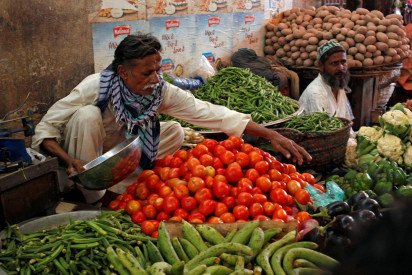

Prices Rise by Up to Rs150 Per Kilogram in Two Weeks
Consumers in Lahore are facing another sharp increase in food costs as prices of several commonly used vegetables and fruits have climbed significantly over the past two weeks.
According to local shopkeepers, vegetable and fruit prices have increased by around Rs100 to Rs150 per kilogram in some cases, while the cost of entire fruit crates has jumped by Rs1,000 to Rs2,000.
Retailers say the increases are being driven primarily by higher prices in Lahore’s wholesale markets, forcing them to pass additional costs on to consumers.
The increases are particularly concerning because vegetables and fruits form an important part of everyday household spending.
For lower- and middle-income families already struggling with higher flour, fuel and other essential costs, another rise in fresh food prices is adding pressure to monthly budgets.
Onions Jump From Rs120 to Rs200 Per Kilogram
Several everyday vegetables have recorded substantial increases.
Shopkeepers said pumpkin has risen from Rs150 to Rs200 per kilogram, representing an increase of Rs50.
Cauliflower has climbed from Rs150 to Rs220 per kg, while cabbage has risen from Rs150 to Rs250.
Fenugreek has become even more expensive, increasing from Rs300 to Rs400 per kilogram.
Capsicum is now selling for around Rs350 per kg, compared with Rs300 previously.
One of the biggest increases has been recorded in onions.
The retail price of onions has risen from around Rs120 to Rs200 per kilogram, an increase of approximately 67%.
Tomatoes have also become more expensive, rising from Rs200 to Rs250 per kilogram.
The increases follow weeks of volatility in Lahore’s food markets.
Earlier this month, market reporting had already shown that several vegetables were being sold above government-notified rates, with significant differences between official price lists and actual retail prices.
Such gaps make it harder for households to benefit from official price controls when traders are paying higher wholesale rates or retailers charge more than the notified amount.
Fruit Crates Become Up to Rs2,000 More Expensive
Fruit prices have also moved sharply upward.
Shopkeepers said a six-kilogram carton of peaches now costs around Rs950.
An apple crate that previously cost approximately Rs2,000 has climbed to Rs3,000, representing a Rs1,000 increase.
Mangoes have recorded an even steeper rise.
A mango crate that previously sold for about Rs3,000 is now being quoted at around Rs5,000, adding Rs2,000 to the cost.
Grape crates have increased from approximately Rs4,500 to Rs5,000.
The increases at crate level eventually affect consumers purchasing fruit by the kilogram because retailers calculate their selling prices based on wholesale acquisition costs, transport expenses, wastage and profit margins.
Shopkeepers maintain that they are not independently creating the latest increases.
They say fruits and vegetables are reaching them at higher prices from wholesale markets, leaving retailers with little room to maintain previous prices without suffering losses.
Wholesale Costs Push Retail Prices Higher
Fresh produce prices can fluctuate much faster than those of packaged goods because supplies depend on weather, harvests, transportation, availability at wholesale markets and the short shelf life of products.
Any disruption in supply can therefore quickly affect retail markets.
Traders purchasing expensive stock from Lahore’s wholesale markets generally transfer at least part of that increase to consumers.
There can also be substantial differences between official government rates and actual prices charged in neighbourhood shops.
A Lahore market review published earlier in August found tomatoes officially priced at around Rs250-Rs270 per kg but being sold for as much as Rs340-Rs400 in some markets.
Similarly, onions carrying official rates of around Rs107-Rs115 were reportedly selling for Rs130-Rs150 at retail outlets.
The latest shopkeeper-reported prices suggest that pressure has continued through the second half of August.
Consumers may therefore encounter different rates depending on locality, quality and retailer.
Food Inflation Accelerates Even as Overall Inflation Slows
The rise in vegetable and fruit prices comes despite a decline in Pakistan’s overall annual inflation rate.
Pakistan Bureau of Statistics data shows that headline Consumer Price Index inflation stood at 9.2% year-on-year in July 2026, down from 11.1% in June.
On a month-to-month basis, however, consumer prices increased by around 1.2% in July, reversing a decline recorded in June.
More importantly for households buying groceries, food inflation actually accelerated.
Food inflation rose to approximately 10.6% in July from 9.4% in June, even while the overall inflation rate declined.
PBS-linked July data also showed significant monthly increases in individual food items.
Onions rose more than 20%, potatoes climbed more than 21% and several other food products also became more expensive during the month.
That distinction helps explain why households may still feel intense inflationary pressure even when headline inflation appears to be improving.
A declining national inflation rate means prices overall are rising more slowly than before. It does not necessarily mean food prices are falling.
Latest Weekly Data Shows Inflationary Pressure Continuing
Recent weekly data also indicates that price pressures have not disappeared.
PBS reported that the Sensitive Price Indicator increased by 0.49% during the week ending August 20, 2026.
The SPI tracks 51 essential commodities across 50 markets in 17 cities and is designed to capture short-term movements in the prices households regularly face.
Flour prices have also risen in several cities, adding another source of pressure to food budgets.
Together, higher flour, vegetable and fruit prices mean many households continue to face expensive grocery bills even as annual CPI inflation moves lower.
The impact is particularly severe for families whose incomes have not increased at the same pace as essential food costs.
Consumers Face Tougher Grocery Bills
For Lahore residents, the latest increases could significantly change weekly grocery spending.
An Rs80 increase in onions, Rs100 rise in cabbage or fenugreek, and higher prices for tomatoes and fruits quickly add up when several kilograms are purchased each week.
Restaurants, street-food businesses and catering operations may also face higher input costs because onions, tomatoes, capsicum and other vegetables are heavily used in commercial food preparation.
Sustained increases could therefore eventually affect prepared-food prices as businesses attempt to protect their margins.
For now, shopkeepers say wholesale prices remain the central problem.
Unless supplies improve or wholesale rates ease, consumers may continue to see elevated vegetable and fruit prices across Lahore’s markets.
The latest situation shows that while Pakistan’s headline inflation rate has declined, food affordability remains a significant challenge for ordinary households.

