
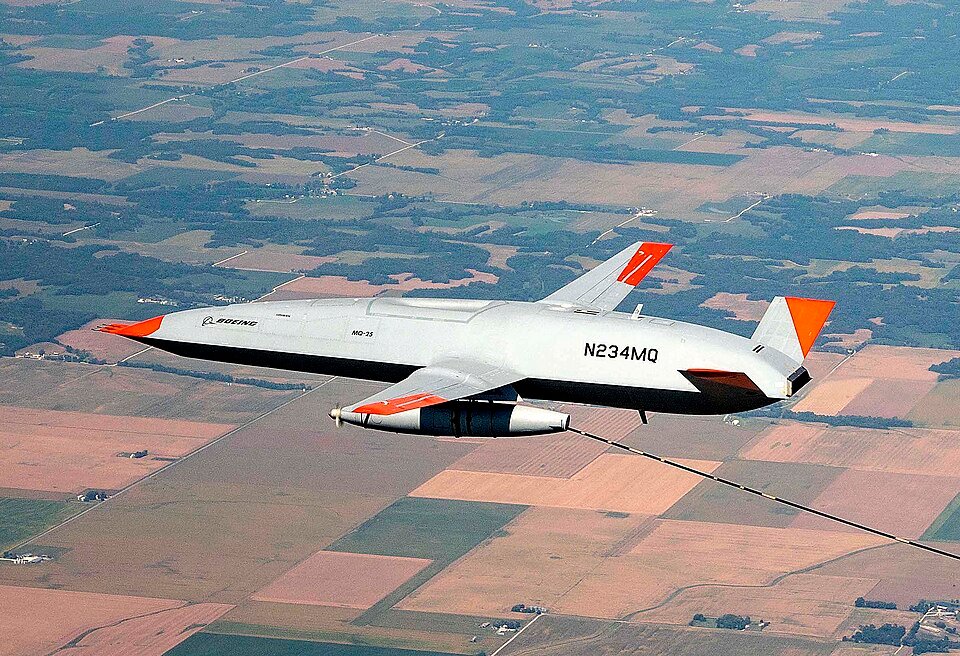

Drone refueling capability marks major shift
The United States Navy has successfully completed the first-ever carrier-based flight of its unmanned MQ-25A Stingray aircraft, marking a significant step in naval aviation. The drone remained airborne for approximately two hours while operators controlled it entirely from a ground station. This milestone signals the beginning of integrating unmanned systems into aircraft carrier operations.
Developers designed the MQ-25A Stingray primarily as an aerial refueling platform. By assuming the tanker role, the drone reduces the burden on manned fighter jets. As a result, aircraft such as the F-35 and F/A-18 Super Hornet can extend their range, remain in the air longer, and carry out more effective missions.
Moreover, this development represents a shift in how naval forces manage fuel and operational efficiency. Instead of using piloted aircraft for midair refueling, the Navy can now rely on unmanned systems to support combat operations.
Technology aims to enhance combat readiness
At the same time, the successful test comes amid growing emphasis on maximizing military resources. Recent conflicts have highlighted the rapid consumption of key munitions, including interceptors and long-range cruise missiles. Consequently, improving the endurance and reach of existing aircraft has become increasingly important.
Additionally, the MQ-25A program aims to strengthen carrier strike group capabilities without requiring additional manned assets. Officials believe this approach will enhance flexibility while reducing operational strain on pilots.
Looking ahead, the Navy plans further testing to refine the drone’s integration into carrier environments. As unmanned aviation enters this new phase, the MQ-25A Stingray could redefine how modern naval airpower operates.

