
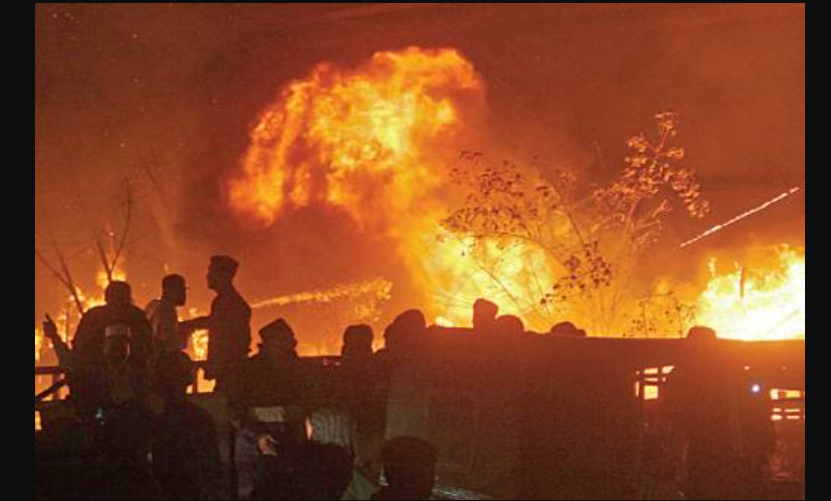

Wildfires erupted across multiple locations in Margalla Hills National Park. The affected zones included Golra Range and Bhara Kahu Range.
Immediately, the Capital Development Authority launched a large-scale emergency response. Moreover, teams moved quickly to stop the fire spread into protected forest areas.
Authorities brought the situation under control late at night. As a result, further damage to ecological zones was prevented.
Large-Scale Firefighting Operation Mobilized
CDA deployed more than 120 personnel from its Environment Wing. These teams worked continuously throughout the night.
In addition, field officers and environment staff actively monitored fire intensity. Assistant commissioners also stayed present on-site for coordination.
Senior officials supervised the operation directly in the field. This approach improved response time and operational efficiency.
Moreover, coordination between departments ensured faster containment across multiple fire points.
Fire Control in Golra and Bhara Kahu Ranges
Fire incidents spread across sensitive forest areas in Golra Range and Bhara Kahu Range. CDA teams responded simultaneously at different locations.
Consequently, firefighters controlled major sections before flames expanded further. The operation focused on protecting dense vegetation and wildlife habitats.
Later, authorities confirmed containment of all major fire spots in these ranges.
Support Extended to Nearby Forest Operations
Meanwhile, CDA also supported the Rawalpindi Forest Department. This assistance targeted a separate fire in the Tamiir forest area.
Over 25 personnel joined the joint firefighting effort. Together, teams managed to control more than 80 percent of the affected forest area.
Additionally, cooperation between departments strengthened the overall emergency response. This coordination helped reduce the spread of fire across boundaries.
Secondary Fire Containment at Londha Dara
A separate fire broke out in Londha Dara within Golra Range on Sunday morning. CDA quickly deployed a 48-member response team.
They acted swiftly and brought the fire under control. After containment, teams began cooling operations.
This step ensured that no hidden embers could reignite the blaze later.
Cooling Operations and Preventive Measures
Following containment, teams continued cooling procedures across affected areas. This process reduced the risk of re-ignition significantly.
Moreover, officials maintained ground surveillance throughout the night. They ensured full stabilization of fire-hit zones.
As a result, the situation remained under control after active firefighting ended.
Public Advisory and Environmental Responsibility
Authorities urged citizens to avoid careless actions in Margalla Hills National Park. They specifically warned against discarding cigarette butts and glass bottles.
Furthermore, officials discouraged barbecues and bonfires during the fire season. Such activities increase the risk of forest fires significantly.
The administration also called for public cooperation in protecting Islamabad’s natural environment.
Investigation and Accountability Measures
Authorities announced that all fire incidents will undergo formal investigation. They also confirmed strict legal action against responsible individuals.
Additionally, officials emphasized stronger monitoring of vulnerable forest zones. This strategy aims to prevent similar incidents in the future.
Conclusion
The overnight firefighting operation in Margalla Hills demonstrated rapid coordination and strong emergency response.
Through combined efforts, CDA and supporting departments successfully contained multiple wildfire outbreaks. Ultimately, the operation helped safeguard Islamabad’s most valuable forest ecosystem.

