
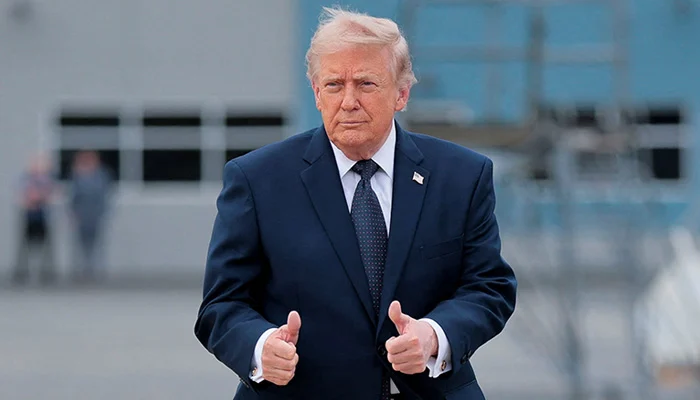

US President Donald Trump has reportedly postponed a final decision on a proposed agreement with Iran, despite holding extensive discussions with senior national security advisers at the White House. The move comes at a crucial stage in diplomatic efforts aimed at ending tensions linked to the ongoing US-Israel conflict with Iran.
According to reports, Trump spent nearly two hours in discussions with top officials before deciding not to give immediate approval to the proposed deal. The White House did not issue an official statement following the meeting, leaving uncertainty over the future of the negotiations.
Sources familiar with the talks said a draft agreement is largely complete. However, final approval still depends on Trump’s decision as several sensitive issues remain under discussion.
Iran Demands Policy Changes Before Signing Any Agreement
Earlier in the day, Trump stated that he was preparing to make a final determination regarding a possible agreement with Tehran. He repeated long-standing US demands, including assurances that Iran will never develop nuclear weapons.
Trump also mentioned several potential components of the deal. These include reopening the Strait of Hormuz, lifting restrictions on Iranian ports, and coordinating efforts to remove and destroy Iran’s enriched uranium stockpiles. However, it remains unclear whether these points have already been accepted by both sides or are still under negotiation.
Iranian officials responded cautiously. Foreign Minister Abbas Araghchi stressed that reaching a final agreement depends on Washington abandoning what Tehran describes as excessive and inconsistent demands. Iranian leaders have repeatedly argued that shifting US positions have complicated negotiations.
Iran’s chief negotiators have also insisted that actions matter more than promises. Tehran continues to demand concrete steps from Washington before making any commitments.
Ceasefire Concerns and Regional Tensions Continue
Despite growing optimism around diplomacy, tensions remain high across the region. Iran and the United States have recently accused each other of violating an existing ceasefire arrangement.
Reports indicate that military exchanges have continued in strategic areas, including near key maritime routes. Concerns over security in the Strait of Hormuz remain particularly significant because the waterway plays a critical role in global energy supplies.
Iranian authorities have warned that foreign vessels from hostile nations could face military action if they enter sensitive waters without authorization. At the same time, officials reported that commercial shipping activity continues under close coordination with Iranian security forces.
The fragile security situation has raised concerns among global investors and energy markets. Oil prices have fluctuated in response to both diplomatic developments and military incidents.
International Mediation Efforts Gain Momentum
Regional powers are increasing efforts to secure a lasting agreement. Qatar has emerged as an important mediator in recent weeks. Reports suggest that Trump discussed the latest diplomatic developments with Qatar’s leadership as negotiations continued behind the scenes.
Market confidence improved after US officials signaled progress in talks. Positive comments from senior American leaders helped boost Asian stock markets, while energy prices eased slightly on hopes of a breakthrough.
However, Iranian media reports indicate that the text of the proposed agreement is still being revised. Sources claim that several sections have undergone changes in recent days, suggesting that important details remain unresolved.
Meanwhile, tensions have also spread beyond Iran. In Lebanon, officials accused Israel of striking a historic medieval castle near the southern city of Nabatieh. Cultural authorities warned that additional heritage sites could be at risk if hostilities continue.
As diplomatic efforts intensify, attention remains focused on Trump’s next move. A final decision could shape regional stability, global energy markets, and future US-Iran relations for years to come.

