
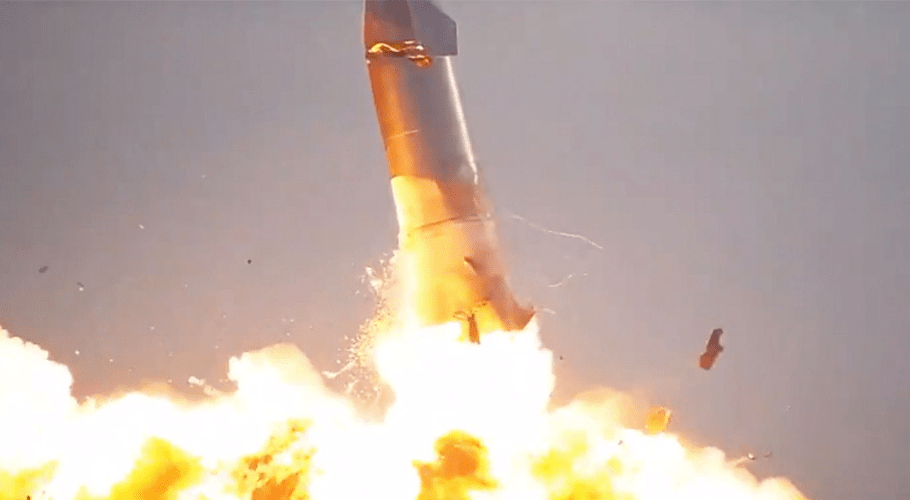

SpaceX successfully launched its Starship rocket on its 12th test flight before the spacecraft exploded during its return phase, officials confirmed. Despite the dramatic end, the mission achieved several important milestones linked to future Moon and Mars exploration programs.
The launch took place on the night of May 22 from SpaceX’s Starbase facility in Texas. According to early mission reports, the rocket completed a successful liftoff, reached orbital trajectory and performed a controlled atmospheric re-entry. However, moments before its planned splashdown in the Indian Ocean, the spacecraft erupted into a massive fireball.
SpaceX stated that the mission primarily tested the third-generation version of Starship and several upgraded spacecraft systems. Engineers designed the fully reusable launch vehicle for deep-space missions, including future human missions to Mars and lunar operations under NASA’s Artemis programme.
During the flight, one of the rocket’s six engines reportedly malfunctioned. Nevertheless, the remaining engines compensated by increasing fuel consumption, allowing the spacecraft to continue its planned mission profile and complete key re-entry stages.
The Starship system stands nearly 120 metres tall and includes a Super Heavy booster powered by 33 engines along with an upper-stage spacecraft that separates after launch. SpaceX has continued refining the vehicle through multiple upgrades to improve reliability and flight performance.
Meanwhile, NASA is working closely with SpaceX to develop Starship as the human landing system for the Artemis 3 mission, which aims to return astronauts to the Moon for the first time in decades. Although the latest mission ended in failure, experts still viewed the orbital performance as a significant technical achievement.

