
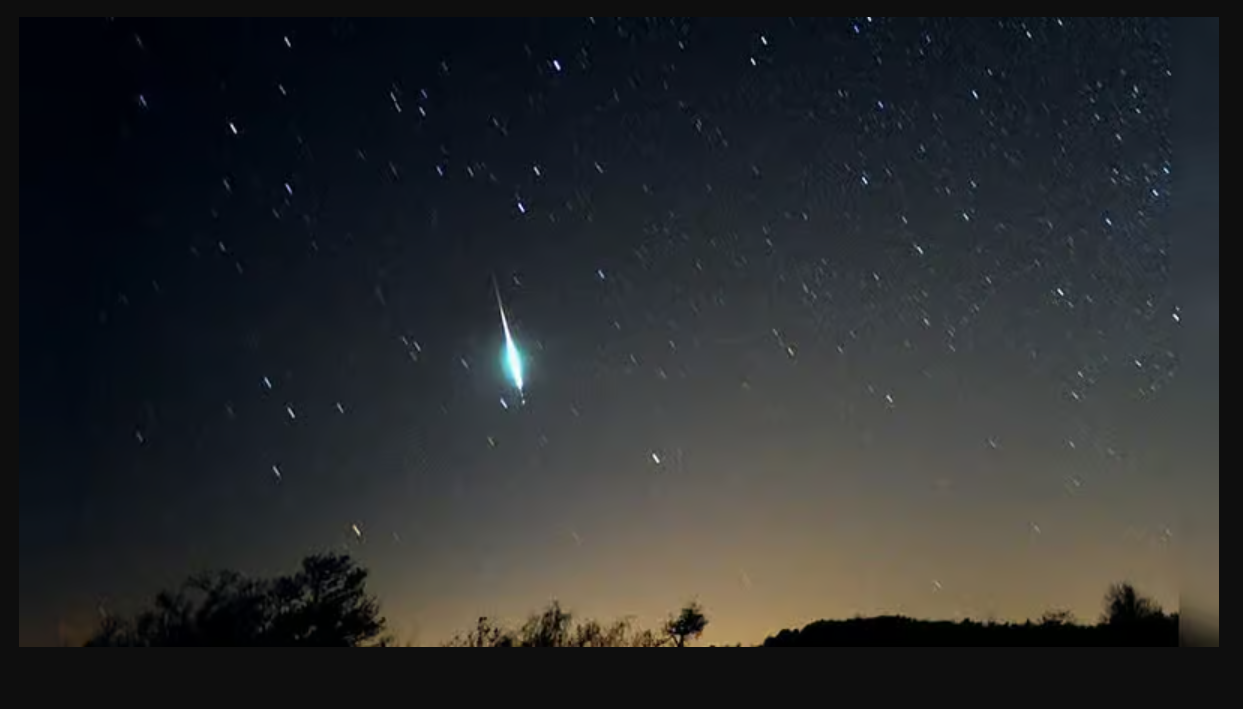

A meteor exploded over the northeastern United States on Saturday. The event produced powerful sonic booms across multiple regions.
NASA confirmed the fireball breakup occurred over northeastern Massachusetts and southeastern New Hampshire at 2:06 pm local time.
The sudden explosion alarmed residents. Many reported loud booms and shaking homes across the affected areas.
Meteor Released Massive Energy Before Breaking Apart
According to NASA officials, the meteor was not part of any active meteor shower. Instead, it was a natural space object.
Importantly, it was also not related to space debris or satellite re-entry.
“The energy released at breakup is estimated to be equivalent to about 300 tons of TNT, which accounts for the loud booms.”
The meteor traveled at an extremely high speed of around 75,000 mph. This equals more than 120,000 kilometers per hour.
It broke apart at an altitude of approximately 40 miles above the Earth’s surface.
Loud Booms Shake Communities Across Region
Residents across Massachusetts and New Hampshire reported hearing explosive sounds. Many described the noise as sudden and intense.
In some areas, people said their homes visibly shook due to the shockwaves.
Social media users quickly shared reactions, describing the experience as alarming but brief.
How Meteor Explosions Happen
Meteor explosions occur when space rocks enter Earth’s atmosphere at high speed. The intense pressure and heat cause them to break apart.
As a result, energy is released rapidly in the form of shockwaves and light.
Although most meteors burn up harmlessly, larger ones can produce sonic booms like this event.
Comparison With Past Space Events
Scientists compared this incident with previous meteor events. One major example is the 2013 Chelyabinsk meteor over Russia.
That fireball exploded at a much lower altitude. It released far greater energy than the recent US event.
The blast damaged thousands of buildings and injured more than 1,600 people, mostly from broken glass.
No Reported Damage or Injuries in US Event
Despite the loud explosion and widespread alarm, no injuries or major damage were reported.
Authorities confirmed that the event was brief and posed no ongoing threat to the public.
However, scientists continue to monitor such near-Earth objects for future risk assessment.
Growing Attention on Near-Earth Objects
Events like this highlight the importance of tracking asteroids and meteors. Space agencies continuously observe near-Earth objects to prevent potential hazards.
Although rare, atmospheric explosions can still produce strong shockwaves over populated regions.
For now, experts say this event serves as a reminder of Earth’s constant exposure to space activity.

