
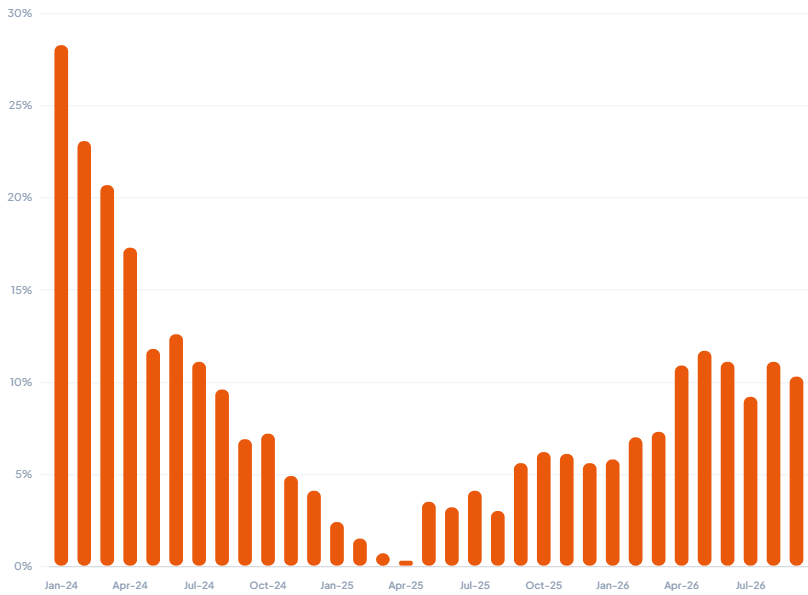

Pakistan’s headline inflation eased to 10.3% in September 2026, down from 11.1% in August, according to Pakistan Bureau of Statistics (PBS) data.
Despite the monthly decline, inflation remained significantly higher than the 5.8% recorded in September 2025. The latest figures also show continued pressure on household budgets as energy and other costs remain elevated.
On a month-on-month basis, the Consumer Price Index (CPI) increased 1.3% in September, compared with a 1.2% rise in August and a 2.1% increase in September 2025.
Urban and Rural Inflation
Urban inflation reached 10.1% year-on-year in September, compared with 10.4% in August. On a monthly basis, urban CPI increased 1.3%, accelerating from the 0.9% rise recorded in August.
Meanwhile, rural inflation stood at 10.5% year-on-year, down from 12.2% in August.
Rural CPI increased 1.2% month-on-month in September, compared with a 1.6% increase in the previous month.
The difference between urban and rural inflation shows that price pressures remain widespread across the country.
Inflation Rises Sharply in First Quarter
During the first quarter of FY2026-27, CPI inflation averaged 10.2%. This represents a significant increase from the 4.3% recorded during the same period of the previous fiscal year.
The higher inflation rate reflects the broader increase in consumer prices during the opening months of FY27.
Pakistan’s CPI measures changes in the prices of a basket of goods and services consumed by households. PBS collects price data from urban markets and rural centres across the country.
Government Had Expected Inflation to Stay Elevated
The September inflation reading was broadly in line with expectations from the Finance Division.
Its monthly Economic Update & Outlook had projected headline inflation at around 10% to 11% for September.
The Finance Division also highlighted international oil prices as a major risk to Pakistan’s inflation outlook.
Higher global energy prices can increase transportation costs, production expenses and the country’s import bill. Consequently, sustained increases in oil prices could keep inflation elevated in the coming months.
Fuel and Energy Costs Remain a Key Risk
Energy prices remain particularly important for Pakistan because changes in fuel costs can affect several parts of the economy. Higher fuel prices can raise transportation and logistics expenses. Businesses may then pass some of those additional costs on to consumers.
Electricity costs can also affect production and household expenses.
As a result, the future direction of global oil prices will remain important for Pakistan’s inflation outlook.
The Finance Division has also highlighted the government’s Prime Minister’s Fuel Relief Scheme, which aims to support lower-income households through digital payments while maintaining the petroleum levy.
What Experts Expected Before the Data
Before the official figures were released, several brokerage houses expected September inflation to remain around 10%.
Estimates from Topline Securities, Ismail Iqbal Securities, Abbasi and Company and Growth Securities placed expected inflation between 9.9% and 10.5% year-on-year.
The actual reading of 10.3% therefore remained within the range anticipated by market analysts.
However, analysts had also warned that rising fuel and electricity costs could continue to influence inflation and complicate the monetary policy outlook.
Outlook for Pakistan’s Inflation
The September figure shows that inflation has eased from August but remains considerably above last year’s levels. Moreover, the monthly increase of 1.3% indicates that prices continued to rise during September even as the annual rate moderated.
For consumers, the impact will depend on how prices of food, energy, transport and other essential goods develop in the coming months.
Meanwhile, policymakers will continue watching global oil prices and domestic cost pressures closely.
For now, Pakistan enters the second quarter of FY27 with inflation still around double-digit levels, making price stability an important economic challenge.
For the latest updates, visit and follow The Truth International website (www.thetruthinternational.com) and subscribe to the YouTube Channel.

