
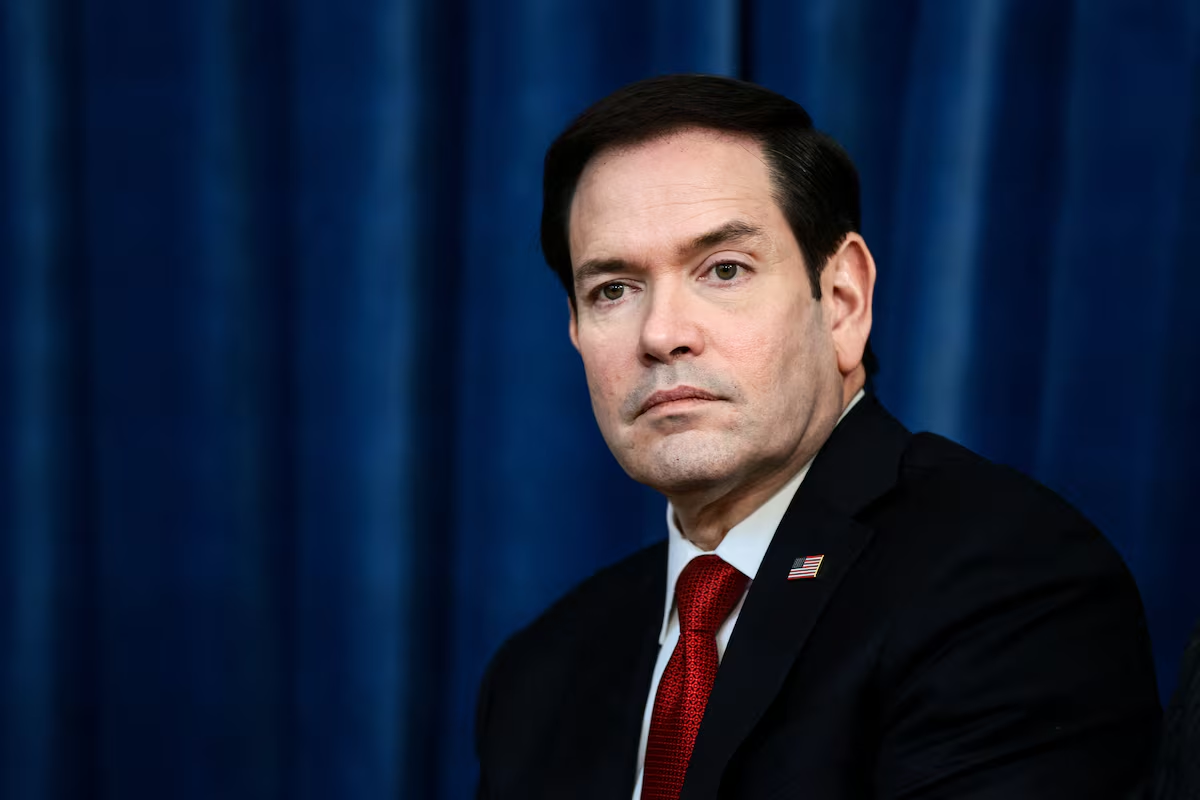

Diplomatic efforts between Washington and Tehran have hit another setback after US Secretary of State Marco Rubio ordered Iran’s UN delegation to leave the United States.
The delegation included Iranian Foreign Minister Abbas Araghchi, who had remained in New York for talks alongside the United Nations General Assembly. A US official said the order came after negotiations stalled.
However, Iran has disputed the account, saying the delegation’s departure had already been scheduled. The disagreement comes as Qatar continues efforts to bridge differences between Washington and Tehran.
Rubio Orders Iranian Delegation to Leave
The US mission to the UN informed Iran’s UN mission on Monday evening that Araghchi’s delegation had to leave New York immediately.
A US official said the delegation had “overstayed their welcome.” The official added, “The UN General Assembly was over, so it was time for them to go.”
The delegation later travelled from New York to Doha. However, another source said Araghchi had already planned to return to Tehran.
The development followed indirect talks between the two countries, with Qatar acting as a mediator. Washington had reportedly hoped to see progress during discussions on Monday.
By later that day, however, the negotiations had reached a stalemate. Qatari mediators have continued discussions with both sides in an effort to find common ground.
Iran Receives US Response to Latest Proposal
At the same time, Tehran said it had received Washington’s response to its latest proposal aimed at reviving a collapsed ceasefire.
Iranian officials said Araghchi received the US response through Qatari mediators after leaving New York. The proposal seeks to establish steps for restoring an interim arrangement between the two sides.
The proposal reportedly links the reopening of the Strait of Hormuz with measures by Washington.
Iran had proposed that the United States lift its blockade of Iranian ports. In return, Tehran would reopen the Strait of Hormuz within seven days.
US President Donald Trump had publicly rejected the proposal. However, Iranian officials said Tehran had not initially received a formal response.
The latest communication therefore provides Tehran with Washington’s position through the mediation process. The contents of the US response have not been fully disclosed.
What Is Holding Up the Talks?
An official familiar with the negotiations said the two sides largely agree on the steps required.
However, they still disagree over the order in which those steps should happen. That sequencing issue has emerged as a key obstacle in the latest diplomatic effort.
Qatar has continued moving messages between Washington and Tehran as both sides consider possible compromises.
The talks are focused partly on the Strait of Hormuz, a major route for global oil shipments. Shipping through the waterway has increased recently, although energy flows remain disrupted.
Maritime security incidents have continued to add pressure to the negotiations. Britain’s maritime security body reported that two ships were hit by projectiles on Tuesday.
US Completes Withdrawal From Iraq
The diplomatic developments came as Washington completed its military withdrawal from Iraq.
The United States had maintained forces in Iraq as part of its campaign against Islamic State. The withdrawal marks the end of that military mission after more than a decade.
Iran and groups aligned with Tehran have viewed the withdrawal as an important development. Tehran has long sought to reduce the US military presence across the region.
The timing has therefore added another dimension to the broader US-Iran confrontation.
What Comes Next for US-Iran Diplomacy?
For now, the two sides remain engaged through intermediaries despite the latest diplomatic setback.
Iran has received Washington’s response, while Qatar continues efforts to narrow the remaining differences. However, disagreements over the sequence of proposed measures remain unresolved.
Meanwhile, the departure of Iran’s delegation from the United States highlights the difficulties facing the diplomatic process.
The coming days could therefore determine whether mediators can bridge the remaining gaps or whether the talks face another prolonged deadlock.
For the latest updates, visit and follow The Truth International website (www.thetruthinternational.com) and subscribe to the YouTube Channel.

