
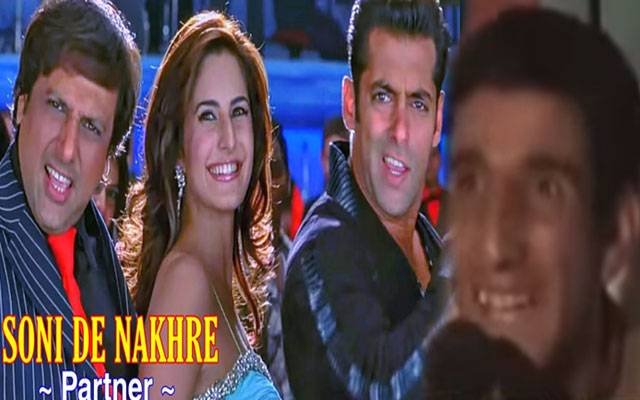

Bollywood’s popular dance track Soni De Nakhre has returned to the spotlight after music fans began questioning whether parts of the song resemble an older Pakistani recording.
Released in the 2007 film Partner, the energetic track became one of the movie’s most recognisable songs. However, claims about its alleged Pakistani musical source remain unverified because the recording being compared with the Bollywood hit has not been reliably identified.
Soni De Nakhre Became a Bollywood Party Favourite
Soni De Nakhre featured Salman Khan, Govinda and Katrina Kaif in the film Partner.
The song was performed by Wajid Khan, Labh Janjua and Sneha Pant, while the music was composed by Sajid-Wajid.
Its upbeat Punjabi lyrics, energetic choreography and catchy hook helped it become a popular party track following the film’s release.
Years later, the song continues to attract attention whenever fans revisit popular Bollywood dance numbers from the 2000s.
Pakistani Song Connection Remains Unconfirmed
The latest discussion centres on claims that parts of Soni De Nakhre resemble an older Pakistani recording. However, the specific Pakistani song allegedly used as a source has not been reliably established. Therefore, it would be premature to describe the Bollywood track as a confirmed copy of a Pakistani song.
A proper comparison would first require identifying the original Pakistani recording and establishing its singer, composer, lyricist and release date.
Music experts would then need to examine whether the similarities involve the melody, rhythm, hook, lyrics or overall arrangement.
Song Has a Documented International Connection
There is, however, a separate and documented musical connection associated with Soni De Nakhre. The track features the familiar phrase “Pump Up the Jam”, which is strongly associated with the 1989 dance hit by Belgian group Technotronic.
That song became an international dance phenomenon and remains recognisable for its distinctive hook.
The use of the phrase in Soni De Nakhre gives the Bollywood track a clear connection to an earlier international dance record.
However, this documented element is separate from the current speculation surrounding a possible Pakistani recording.
Musical Similarities Do Not Automatically Prove Copying
The renewed debate also highlights how difficult it can be to establish whether one song has been copied from another. Songs can share similar rhythms, chord progressions, hooks or musical structures without necessarily constituting plagiarism.
Moreover, popular music often develops through influences that cross borders and generations.
A stronger claim would require evidence showing that a distinctive musical element was reproduced from an identifiable earlier recording.
Without the original Pakistani song and a detailed comparison, the current claim remains a matter of online discussion rather than an established fact.
Fans Revisit the 2007 Hit
The controversy has nevertheless encouraged listeners to revisit Soni De Nakhre and compare it with older Pakistani music.
The discussion also reflects the long history of musical exchange between South Asian artists and the influence of international dance music on Bollywood.
For now, the alleged Pakistani connection remains unconfirmed. Meanwhile, Soni De Nakhre continues to be remembered as one of the memorable dance tracks from Partner, with its Punjabi energy and instantly recognisable hook keeping it familiar to audiences years after its release.
For the latest updates, visit and follow The Truth International website (www.thetruthinternational.com) and subscribe to the YouTube Channel.

