
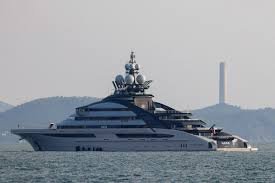

A luxury superyacht owned by Russian billionaire Alexey Mordashov has successfully crossed the strategically sensitive Strait of Hormuz, despite heightened geopolitical tensions in the region. The rare transit highlights a controlled but fragile maritime environment as global powers continue to monitor movements in one of the world’s most critical waterways.
The vessel, named Nord, completed its passage after undergoing maintenance in Dubai. The journey occurred without interference from either Iran or the United States, both of which have played central roles in the ongoing regional standoff.
Strategic Waterway Sees Limited Traffic
The Strait of Hormuz remains one of the most important shipping routes in the world. It connects the Persian Gulf to global markets and handles a significant portion of global oil shipments. However, traffic through the strait has dropped sharply since tensions escalated earlier this year.
Before the conflict, around 125 to 140 vessels crossed the strait daily. Now, only a small number of ships pass through each day. Most of these are commercial vessels operating under strict monitoring and security protocols.
The superyacht’s transit stands out because of its luxury status and high-profile ownership. According to sources, the yacht followed an approved route and complied fully with international maritime regulations. This adherence likely played a key role in ensuring safe passage through the restricted zone.
No Objections from Key Powers
Sources close to the situation confirmed that authorities in Iran did not block the yacht’s movement. The vessel was reportedly classified as a civilian ship from a friendly nation, which reduced the likelihood of interference.
Similarly, the United States did not raise any objections. Officials noted that the yacht had no operational or logistical links to Iran. It also avoided Iranian ports during its journey, further minimizing concerns.
The smooth passage suggests that limited maritime activity is still possible under current conditions. However, such movements require strict compliance with international laws and careful coordination with regional authorities.
Regional Tensions Continue to Impact Shipping
The broader situation in the region remains tense. The conflict between Iran and the United States has disrupted normal shipping operations. A blockade of certain ports and increased military presence have added to the uncertainty.
Despite these challenges, a fragile ceasefire has allowed some controlled navigation. Analysts believe that any escalation could further restrict access to the waterway and disrupt global energy supplies.
Meanwhile, diplomatic efforts continue behind the scenes. Vladimir Putin recently held discussions involving regional stakeholders, signaling ongoing attempts to stabilize the situation.
After completing its journey, the yacht Nord was tracked near the coast of Oman. Its successful transit serves as a rare example of navigation through a highly sensitive geopolitical zone.
The incident also highlights the importance of diplomacy and adherence to international norms in maintaining limited access to critical global routes during times of conflict.

