

A notable political development has emerged in Gilgit-Baltistan as newly elected independent members of the Assembly begin aligning with established political forces, reshaping the post-election landscape in the region.
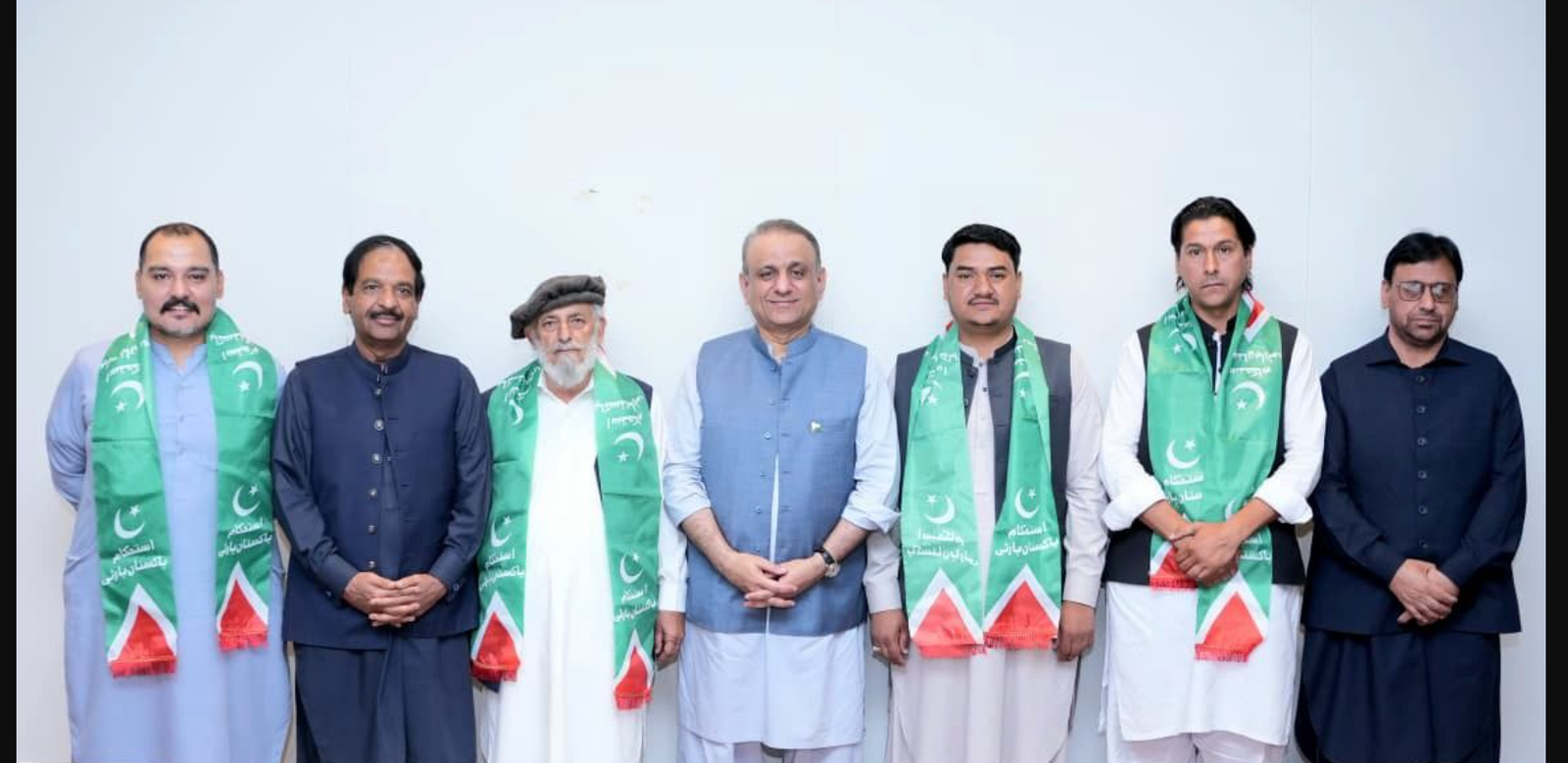
Four independent winners of the recent Gilgit-Baltistan Assembly elections have officially joined the Istehkam-e-Pakistan Party (IPP), marking a significant boost for the party’s presence in the region. The decision was announced during a meeting with Federal Minister for Communications and IPP President Abdul Aleem Khan.
Independent Members Join IPP
The newly joined assembly members include Anwar Ali from GBA-23 Ghanche-2, Asad Shafiq from GBA-24 Ghanche-3, Muhammad Dilpazeer from GBA-15 Diamer-1, and Aman Ali from GBA-21 Ghizer-3.
These members, elected as independents in the June 7 elections, formally aligned with IPP during their meeting in Gilgit. The move reflects ongoing political realignments as parties seek to strengthen their position in the newly formed assembly.
Group Strategy and Political Plans
Speaking on the occasion, Muhammad Dilpazeer stated that the four independents had already formed a group before joining IPP. He also noted that discussions were ongoing with other independent members as well as candidates associated with Majlis Wahdat-e-Muslimeen.
According to him, the group intends to invite additional independent members to join the party in the coming days. He further claimed that IPP could emerge as the second-largest political force in the Gilgit-Baltistan Assembly if these efforts continue successfully.
Election Results and Emerging Power Balance
The general elections for 24 seats of the Gilgit-Baltistan Assembly were held on June 7. Preliminary and unofficial results showed the Pakistan Peoples Party (PPP) securing the position of the largest party with 10 seats.
PPP’s victories included constituencies such as GBA-1, GBA-4, GBA-5, GBA-7, GBA-9, GBA-10, GBA-11, GBA-12, GBA-17, and GBA-19, according to early counts.
With no single party achieving a clear majority, independent members have become a crucial factor in government formation and coalition building within the assembly.
Government Formation Developments
Following the election results, the political environment in Gilgit-Baltistan has remained dynamic. The federal leadership extended support to the Pakistan Peoples Party for forming the government in the region.
The prime minister stated that the PPP had emerged as the leading party in the elections and would be supported in forming a government in line with parliamentary traditions.
It was also noted that while the Pakistan Muslim League-Nawaz (PML-N) would sit in opposition in the Gilgit-Baltistan Assembly, its elected members would still support the PPP during the government formation process.
Shifting Alliances in Gilgit-Baltistan Politics
The entry of independent members into IPP highlights the evolving nature of coalition politics in Gilgit-Baltistan. Independent lawmakers continue to play a decisive role, especially in a fragmented assembly where no single party holds an absolute majority.
As negotiations continue among parties and independents, the political balance in the region remains fluid. The coming weeks are expected to further clarify alliances and power-sharing arrangements within the assembly.
For now, IPP’s expansion through independent lawmakers signals a strengthening position in the regional political landscape, adding another layer to the post-election adjustments underway in Gilgit-Baltistan.

