
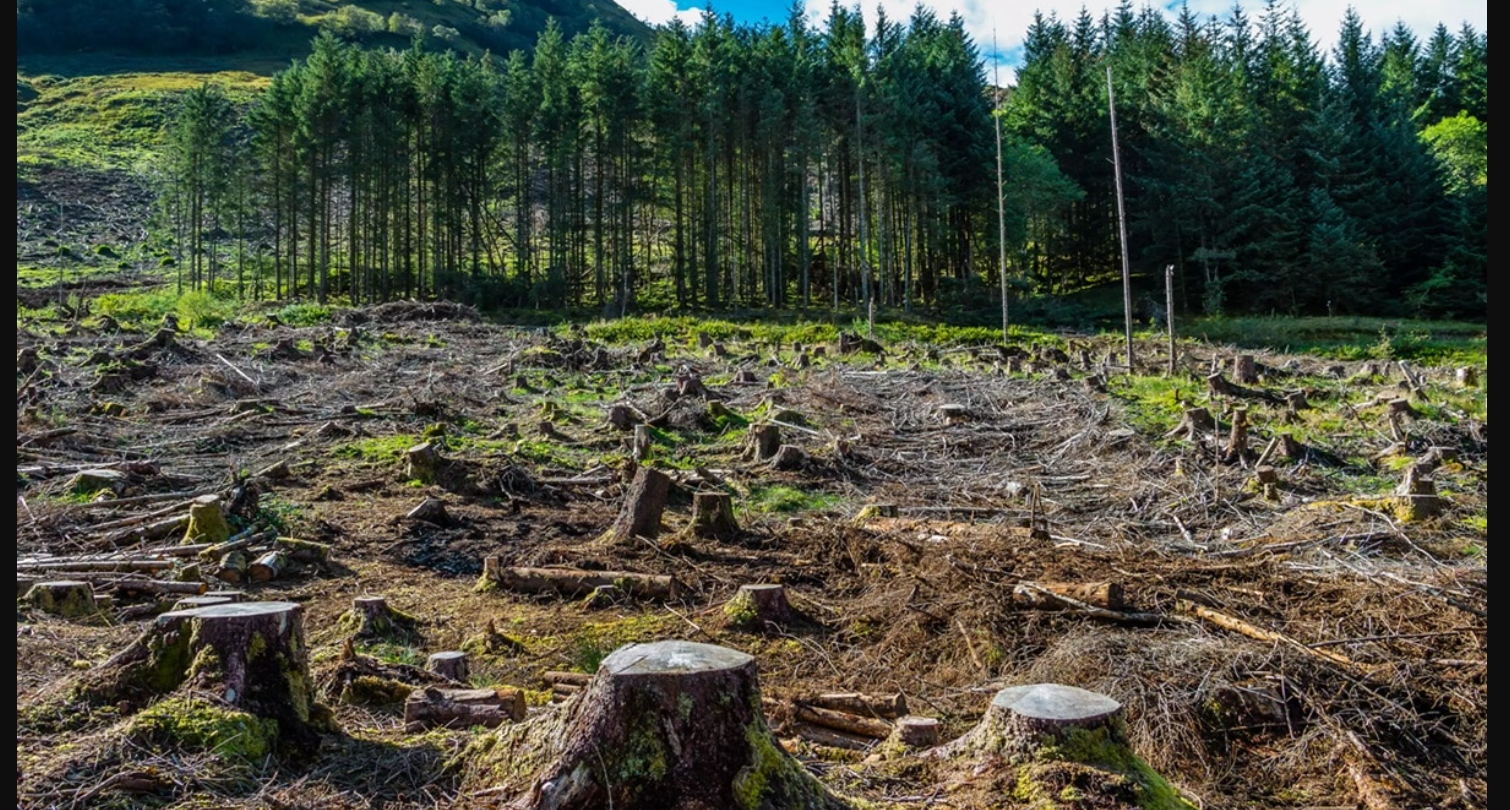

Pakistan is losing approximately 11,000 hectares of forest area every year, according to findings presented in the Pakistan Economic Survey 2026. The continued decline highlights growing environmental pressure and raises concerns about the country’s long-term ecological stability.
Although forests occupy a relatively small portion of Pakistan’s land, their contribution extends far beyond timber production. They support biodiversity, regulate water systems, protect soil quality, and strengthen climate resilience.
At present, Pakistan’s total forest area stands at around 4.11 million hectares. This represents only 4.7 percent of the country’s total land area, making forest conservation increasingly important in the years ahead.
Pakistan’s Forest Resources Remain Under Continuous Pressure
The survey shows that several forest categories continue to face pressure despite their environmental importance.
Coniferous forests make up the largest share of Pakistan’s forest resources. They are followed by scrub forests, riverine forests, mangroves, and irrigated plantation forests.
Each forest type performs a distinct ecological function. Together, they help maintain environmental balance and support local communities.
However, ongoing deforestation and changing land use patterns continue to reduce these natural assets. As a result, concerns about sustainability are becoming more urgent.
The decline in forest cover also affects water management and weakens natural protection against environmental shocks.
Why Forest Loss Matters Beyond Trees
The shrinking forest area is not simply an environmental issue. It also creates wider economic and social challenges.
Forests support biodiversity and provide habitat for wildlife. In addition, they help regulate water cycles and contribute to soil preservation.
Healthy forest systems also support livelihoods in many regions. Rural communities often depend directly or indirectly on these natural resources.
Moreover, forests play an important role in absorbing carbon emissions and improving climate resilience.
As forest cover decreases, environmental vulnerability increases. Consequently, communities become more exposed to changing weather patterns and ecological stress.
Government Efforts Focus on Afforestation and Ecosystem Restoration
To address these challenges, the Ministry of Climate Change and Environmental Coordination continues to work with provincial and territorial governments.
Current efforts focus on large-scale afforestation and ecosystem restoration initiatives designed to improve environmental sustainability.
One of the central initiatives remains the Green Pakistan Program.
The programme has received a budget allocation of Rs122.15 billion and continues to support forest restoration efforts across the country.
According to the survey, these initiatives have resulted in the planting, regeneration, or distribution of nearly 2.26 billion plants nationwide.
These efforts aim to improve forest cover while strengthening Pakistan’s ability to respond to climate-related challenges.
However, environmental restoration requires long-term continuity and consistent implementation.
Climate Vulnerability Remains a Major Concern
Despite ongoing plantation campaigns, Pakistan remains highly vulnerable to climate change.
The survey identifies several factors contributing to this vulnerability.
These include low forest cover, rapid land-use changes, population growth, rural poverty, and heavy dependence on natural resources.
Together, these pressures increase environmental stress and reduce the country’s ability to adapt to changing climate conditions.
As urban expansion and development continue, maintaining ecological balance becomes increasingly challenging.
Therefore, forest protection remains an important component of broader environmental planning.
Forests Contribute More Than Their Direct Economic Share
The forestry sector contributes approximately 0.5 percent directly to Pakistan’s Gross Domestic Product.
However, the survey indicates that the broader economic value of forests is significantly higher.
Forest ecosystem services are estimated at around 11.48 percent of GDP.
These services include environmental protection, biodiversity support, water regulation, and livelihood benefits.
This difference highlights an important reality.
Commercial forest output represents only a small part of the total value forests create for society and the economy.
When ecosystem services are included, forests become far more important than standard economic indicators suggest.
Pakistan’s Long-Term Sustainability Depends on Forest Protection
The findings present a broader message about Pakistan’s environmental future.
Although forests may appear to occupy a limited area, their influence extends across climate resilience, economic stability, and ecological health.
The continued loss of approximately 11,000 hectares annually signals the need for sustained conservation efforts and stronger ecosystem management.
Pakistan’s environmental future will depend not only on expanding forest cover but also on protecting existing natural resources.
Preserving forests today may shape the country’s long-term environmental and economic resilience for decades to come.

