
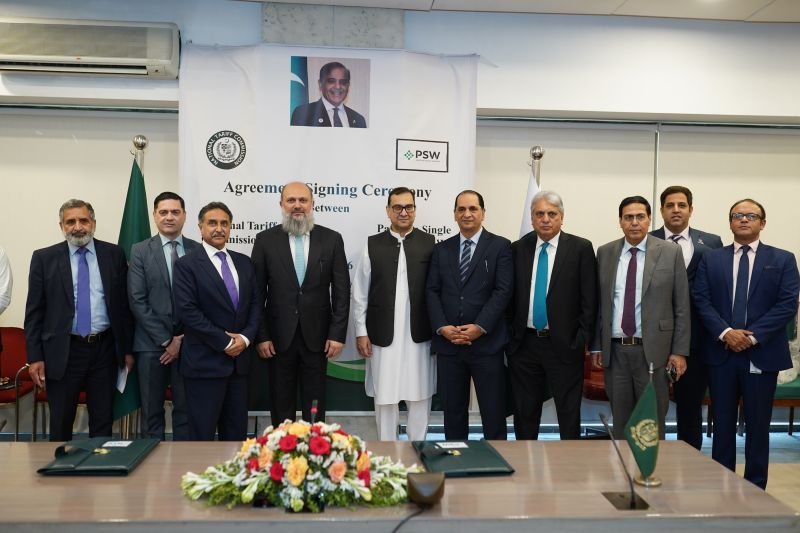

The National Tariff Commission (NTC) and Pakistan Single Window (PSW) signed a landmark agreement to modernise Pakistan’s tariff management system. The accord will automate tariff processes and enable real-time data sharing between both institutions. Moreover, the signing ceremony took place in Islamabad with senior commerce, customs, and trade officials attending.
The initiative supports Pakistan’s broader efforts to improve trade efficiency and strengthen institutional coordination. Officials believe digital reforms will streamline tariff management and improve public sector performance.
Digital Partnership Strengthens Trade Governance
Dr. Jawwad Uwais Agha and Syed Aftab Haider formally signed the agreement during the ceremony. Federal Commerce Minister Jam Kamal Khan witnessed the signing and welcomed the partnership. He praised the commission’s transformation into a more responsive and credible institution.
Furthermore, the minister described digitalisation as a key driver of ongoing trade reforms. He also stressed aligning Pakistan’s tariff framework with international best practices. Dr. Muhammad Saeed, Commerce Secretary Jawad Paul, and senior officials also attended the ceremony.
Automation to Improve Tariff Investigations
The agreement promotes stronger cooperation through automated systems and secure real-time data sharing. Additionally, both organisations will strengthen tariff analysis and improve trade policy coordination. The partnership also aims to reduce delays in trade remedial investigations.
These measures include anti-dumping, countervailing, and safeguard duty investigations. Chairman Dr. Jawwad Uwais Agha said automation would shorten case processing times. He added the system would improve investigation accuracy and institutional performance.
Meanwhile, the Tariff Policy Centre will use digital tools to support transparent policymaking. PSW Chief Executive Syed Aftab Haider said the integration would strengthen institutional coordination. Both organisations also reaffirmed their commitment to transparent trade governance and stronger industrial competitiveness.

