
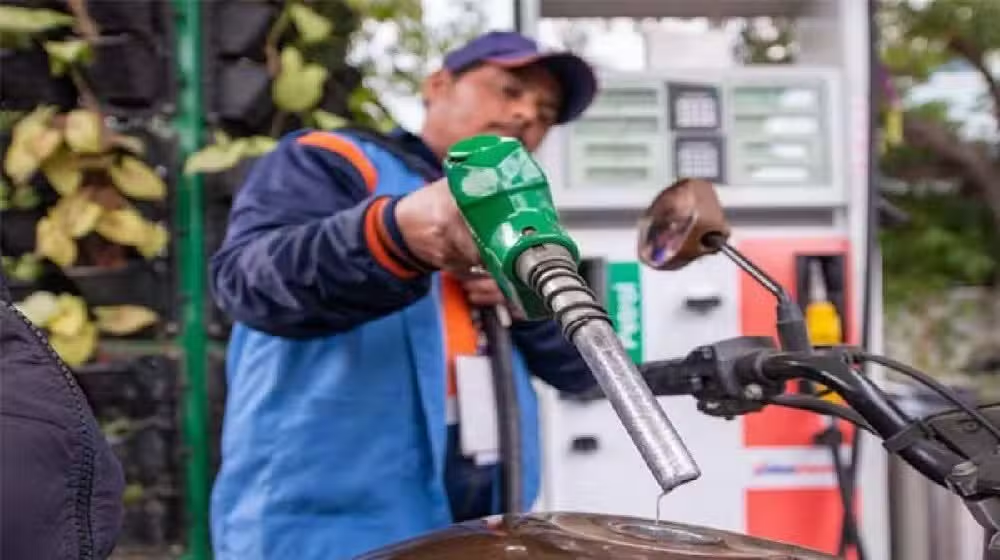

The federal government has increased petrol and high-speed diesel prices following fresh volatility in global oil markets.
Petrol has become more expensive by Rs3.05 per litre.
The new petrol price has been fixed at Rs370.80 per litre.
High-speed diesel has increased by Rs5.37 per litre.
Its new price now stands at Rs398.04 per litre.
The revised rates will take effect from September 11, according to a notification issued by the Petroleum Division.
The increase comes as the government moves towards a daily fuel pricing mechanism designed to reflect changes in international markets more quickly.
Daily Fuel Pricing Mechanism Comes Into Effect
The Oil and Gas Regulatory Authority has started publishing daily petroleum prices on its official website.
The government says the new system is intended to improve transparency in fuel pricing.
Petroleum Minister Ali Pervaiz Malik said daily prices are being calculated using the seven-day average of international market rates.
The government says this method is aligned with international pricing practices.
Under the revised mechanism, OGRA will determine daily ex-depot prices for petrol and high-speed diesel.
The regulator will be able to announce prices without seeking prior approval from the prime minister or federal government.
However, prices announced on Friday will remain unchanged on Saturday and Sunday.
The new system replaces the earlier fortnightly pricing cycle.
A weekly review system had already been introduced after heightened tensions in the Middle East disrupted global energy markets.
The government later decided to move to daily pricing as international oil rates remained volatile.
Middle East Tensions Keep Global Oil Markets Unstable
The latest fuel price increase comes amid renewed concerns over energy supplies from the Middle East.
Regional tensions have increased uncertainty around global crude oil prices.
The Strait of Hormuz remains a major focus because of its importance to international energy shipments.
The waterway has traditionally handled a significant share of global oil and gas supplies.
Any disruption to the route can quickly affect international prices.
Pakistan remains heavily exposed to changes in global petroleum markets because of its reliance on imported fuel.
Higher international crude oil prices can therefore increase domestic fuel costs.
Exchange rate movements, taxes, petroleum levies and distribution costs also affect final retail prices.
Under the new mechanism, international market changes are expected to be passed on to consumers more rapidly than before.
Import Rules Also Revised for Oil Companies
The federal cabinet has also approved changes to petroleum import arrangements for the 2026-27 fiscal year.
Under the revised framework, high-speed diesel imports will be handled exclusively through Pakistan State Oil.
Private oil marketing companies will still be allowed to import petrol.
However, petrol imports will be linked to each company’s market share.
Companies that fail to meet import obligations or required fuel upliftment targets may face restrictions.
Such companies could be denied fresh import permissions for up to nine months.
The framework also covers kerosene oil and light diesel oil.
Their prices will also be determined on a daily basis.
The petroleum levy will remain within limits approved by the federal cabinet.
Any change in the levy rate will require approval from the Finance Division.
The latest increase means high-speed diesel is now approaching Rs400 per litre.
This could raise transport and freight costs across the country.
Petrol prices also remain under pressure, affecting private motorists and businesses.
Future fuel prices will depend heavily on international oil markets and regional geopolitical developments.

