
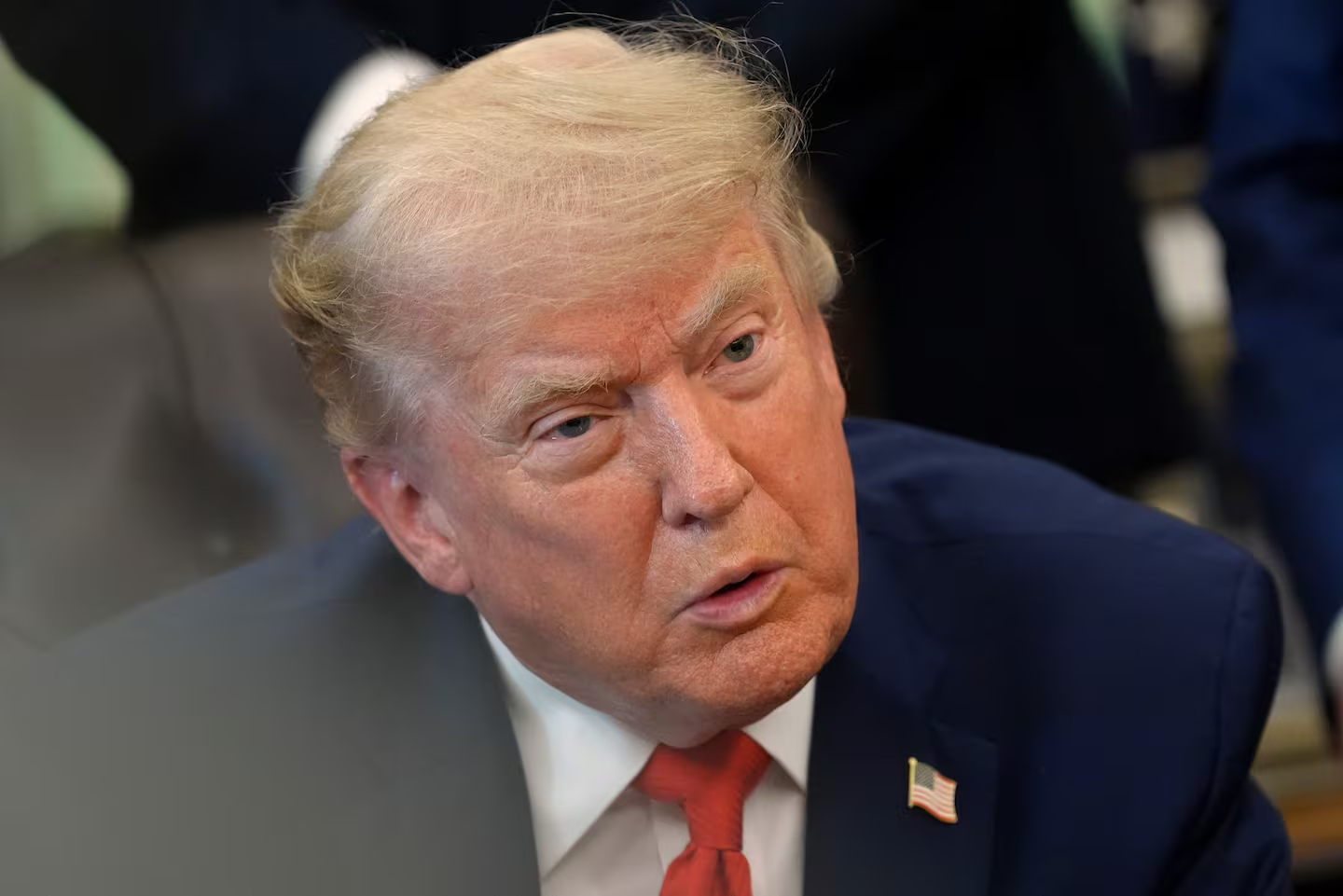

US President Donald Trump has strongly criticized Congress after lawmakers passed a resolution aimed at ending US military involvement in Iran. He described the move as “poorly timed and meaningless.”
He argued that the decision complicated his efforts but insisted he would “get it done, one way or the other.”
Senate Approves Resolution to End Hostilities
The US Senate passed a symbolic measure calling for an end to hostilities with Iran. The vote passed by a narrow 50–48 margin.
The resolution had already cleared the House of Representatives before reaching the Senate. It reflects growing political divisions over US involvement in the conflict.
Although largely symbolic, the vote signals strong congressional opposition to continued military engagement.
Conditions for Withdrawal of US Forces
The resolution instructs the president to withdraw US forces from hostilities with Iran unless Congress formally authorises military action.
However, the measure is a concurrent resolution. It does not require presidential approval and carries disputed legal weight.
Despite this, it places both chambers of Congress on record against ongoing conflict with Iran.
Background of the US-Iran Conflict
The confrontation began after US and Israeli strikes on Iran in late February. The situation later expanded into a wider regional conflict.
The escalation involved Lebanon and several Gulf states, increasing regional instability and security concerns.
The dispute also triggered diplomatic efforts aimed at reducing tensions and restoring stability.
Diplomatic Efforts and White House Position
The Trump administration has launched a 60-day diplomatic initiative with Iran. The goal is to reach a long-term agreement.
Key discussion points include Iran’s nuclear programme, sanctions relief, and the future of the Strait of Hormuz.
The White House argues that limiting presidential authority could weaken US negotiating power.
Officials also maintain that the conflict effectively ended under an April ceasefire ordered by the president.
Congressional Divide Over War Powers
Senate Democratic leader Chuck Schumer pushed for the vote. He argued that public accountability was necessary for ending the war.
He stated, “Republicans can complain about Trump’s war, his secrecy, and his disastrous deal with Iran all they want behind closed doors, but the only way to ensure this war ends once and for all is for Republicans to act,”
The resolution revealed rare bipartisan cooperation. It passed the Republican-controlled House with support from four Republicans alongside Democrats.
Debate Over Presidential Authority
Critics argue that the president acted without congressional approval. They cite the 1973 War Powers Act as legal basis for oversight.
The law requires presidential consultation with Congress when deploying forces in hostilities. However, its interpretation remains disputed across administrations.
House Speaker Mike Johnson warned that restricting the president during negotiations could create a “very dangerous prospect.”
Supporters of the resolution argue that military action exceeded legal time limits and continued beyond authorization.
Economic and Political Concerns
The conflict has raised concerns over global economic stability. Disruptions to trade routes have increased pressure on energy markets.
Rising fuel costs have contributed to inflation worries in the United States. These concerns are becoming more prominent ahead of the upcoming midterm elections.
Conclusion
The dispute highlights deep divisions between the White House and Congress over war powers and foreign policy. While Trump pushes forward with negotiations, lawmakers continue to challenge the scope of presidential military authority.

