
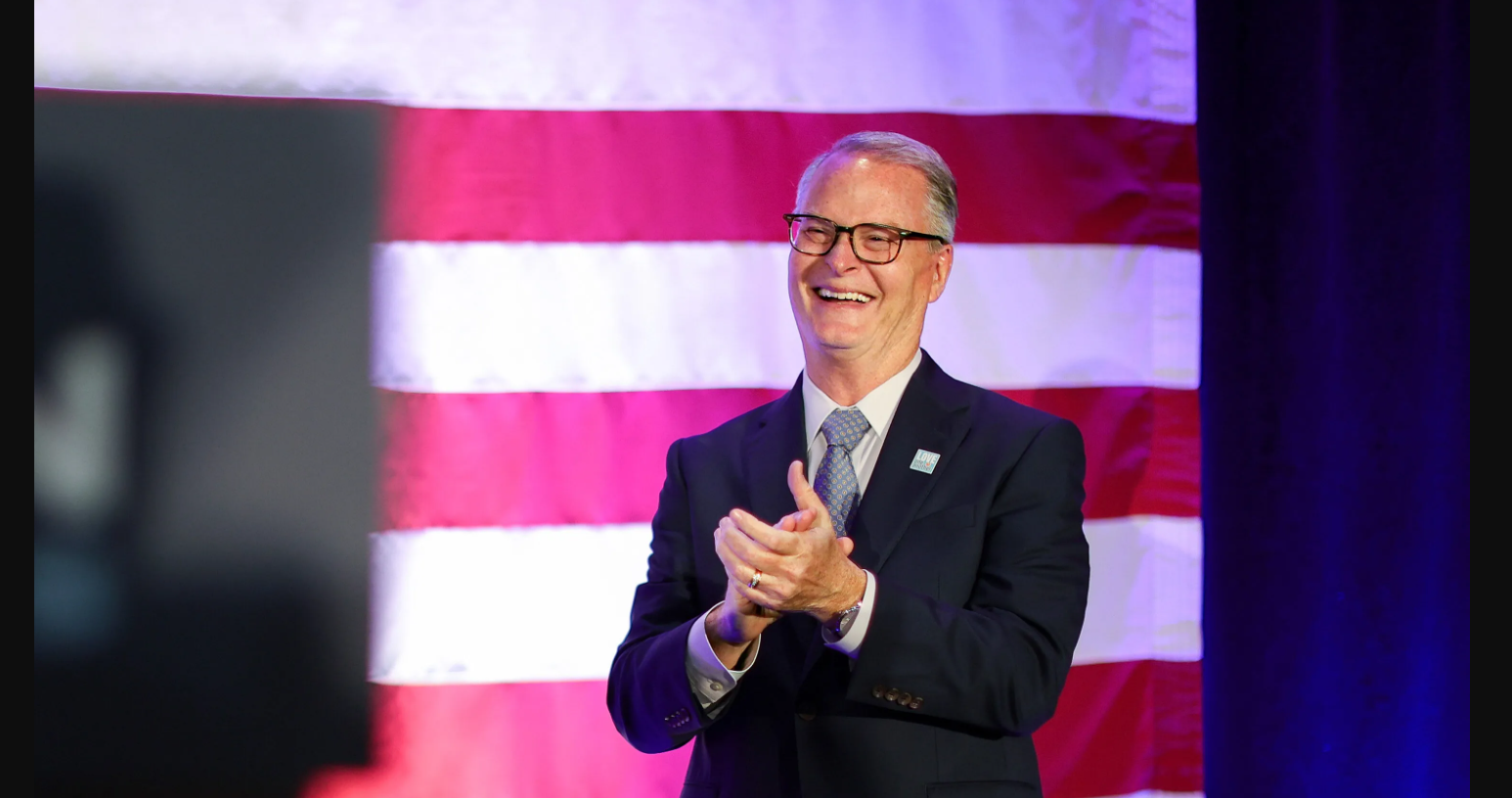

Kansas has witnessed a historic political shift as Democrat Adam Hamilton defeated Republican incumbent Roger Marshall in the US Senate race. The victory marks the first time since 1932 that a Democrat has won a Senate election in the largely rural, conservative state.
The projected result also delivers a setback to President Donald Trump, who has repeatedly carried Kansas by double-digit margins. Moreover, Trump visited the state last week to rally support for Marshall, marking his first visit there since 2018.
Who Is Adam Hamilton, the Democrat Behind Kansas’ Political Upset?
Hamilton, a pastor at a Methodist megachurch, entered the Senate race with an unconventional political background. He was registered as a Republican until recently and had previously considered running as an independent.
However, he ultimately contested the election as a Democrat, presenting himself as a moderate candidate. Rather than aligning closely with national Democratic leaders, Hamilton sought to appeal to voters across political lines.
He also promised not to support Chuck Schumer as Senate majority leader. Additionally, Hamilton criticized the Biden administration’s handling of immigration, distancing himself from positions associated with the national Democratic establishment.
Why Hamilton Kept His Distance From Trump
Throughout the campaign, Hamilton largely directed his criticism toward Marshall and congressional Republicans instead of targeting Trump personally.
At their final debate, Hamilton made his position clear, saying, “I’m not running against President Trump,”
Marshall, meanwhile, urged voters to see his candidacy as support for the president’s agenda. Consequently, the candidates offered contrasting approaches to connecting with Kansas voters.
Their disagreement extended beyond party politics, particularly over the economic policies affecting farmers and rural communities.
Tariffs Become a Major Election Battleground
Trade policy emerged as a significant point of disagreement between the candidates. Hamilton called for ending Trump’s tariffs and demanded congressional approval for any future tariffs.
Marshall, however, maintained that the tariffs were producing results.
Meanwhile, Kansas farmers have faced mounting financial pressure, including higher fuel costs linked to the Iran war. Retaliatory tariffs have also affected agricultural exports, particularly soybeans and wheat.
At the same time, cattle ranchers expressed anger over Trump’s plan to ease tariffs on beef imports. These concerns added another layer to the economic debate surrounding the Senate contest.
What Kansas Voters Were Signalling
Hamilton’s support extended into rural areas that had strongly backed Trump in previous elections.
In Neosho County, where 73 percent of voters supported Trump two years ago, Hamilton’s campaign signs appeared during the final weeks of the race.
The development offered a glimpse into the political mood of some voters, although it does not establish a single reason behind Hamilton’s statewide victory.
Travis Falstad, a 53-year-old left-leaning voter in the county, described the sentiment ahead of the election, saying, “I think people are just desperate for a bit of normalcy,”
Hamilton’s victory therefore represents more than a contest between two Senate candidates. It also highlights the challenges Republicans can face when national political debates intersect with local economic concerns.
Although Kansas remains a conservative state, this result demonstrates how candidate positioning, economic pressures and voter priorities can reshape an established political landscape.
For the latest updates, visit and follow The Truth International website (www.thetruthinternational.com) and subscribe to the YouTube Channel.

