
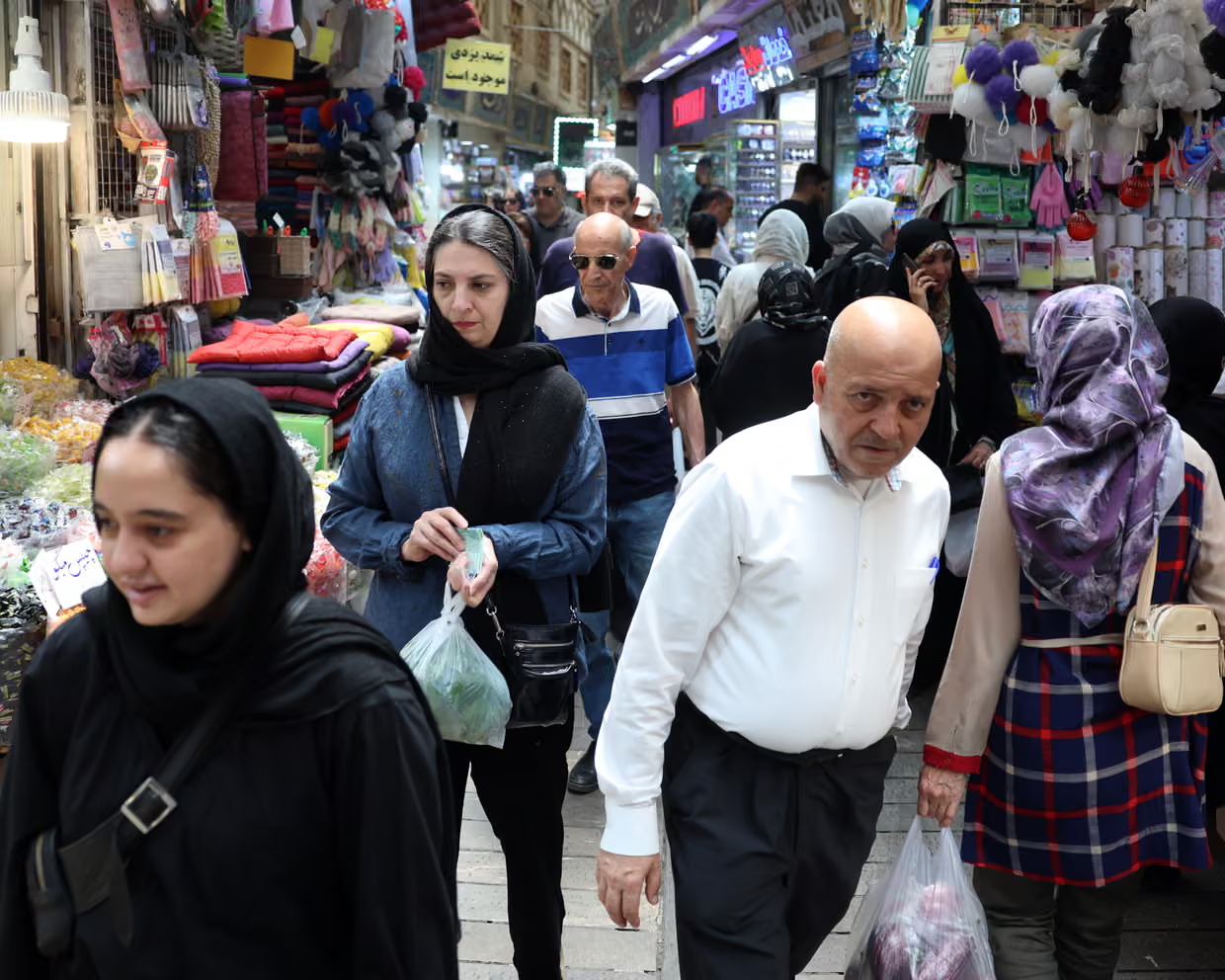

TEHRAN: Iran’s worsening economic crisis is squeezing household budgets, disrupting fuel supplies and increasing political pressure as Washington launches its latest sanctions campaign, dubbed Operation Economic Outcast.
Iran’s Statistical Centre reported year-on-year inflation of 84.4% in August, while the rolling annual average reached about 65%. Meanwhile, the US dollar climbed to roughly two million rials on the open market on August 23, marking a new record.
Food prices have risen particularly sharply. Vegetable oil reportedly cost 383% more than a year earlier, while egg prices increased 294%, chicken 177% and red meat 148%.
Households Cut Spending as Purchasing Power Collapses
Consequently, Iranian families are changing consumption habits as their purchasing power deteriorates. Demand for red meat reportedly fell 50% year-on-year in April, while potato consumption increased significantly.
Some households are postponing medical treatment, repairing clothes instead of replacing them and reducing the quality of their diets.
Moreover, motorists faced lengthy queues in Tehran and Mashhad as several petrol stations closed. Officials attributed the disruption partly to panic buying and damage to major oil depots.
The government is considering higher petrol prices to reduce costly subsidies. However, officials remain wary after a 50% overnight increase in November 2019 triggered widespread protests.
Oil Blockade Adds Pressure to Iran’s Economy
Meanwhile, energy experts identify Iran’s difficulty exporting oil under the US blockade as a central economic challenge. Reduced exports deprive Tehran of foreign currency while increasing storage and production costs.
Iranian leaders have urged citizens to reduce petrol consumption and support domestic production as acts of national resilience.
However, authorities also appear increasingly concerned about the political consequences of declining living standards.
The new US sanctions campaign therefore arrives as Iran already faces severe inflation, currency depreciation and shortages.
As economic pressures intensify, Tehran faces a growing choice between sustaining confrontation and pursuing diplomacy to ease the financial strain.

