

Concerns Raised Over Legislative Oversight
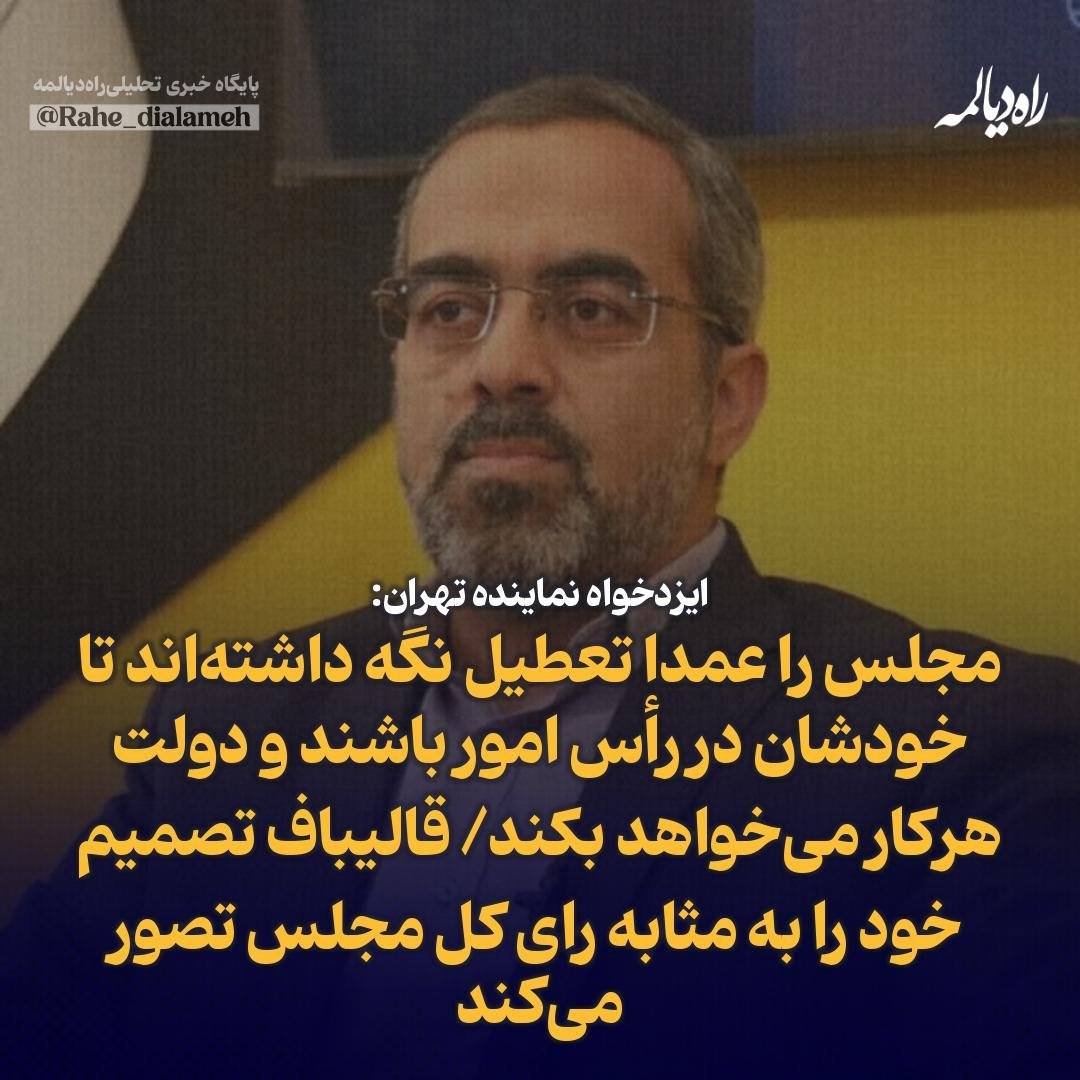
TEHRAN — Iranian parliamentarian Ruhollah Ezedkhaah has criticised the continued adjournment of parliament, alleging that authorities have sidelined lawmakers during a critical period of national decision-making. In a note published on his personal channel, he argued that key government actions are proceeding without proper legislative approval.
Specifically, Ezedkhaah objected to any decision related to the Strait of Hormuz, stating that such a move would contradict public sentiment and the views of elected representatives. Moreover, he asserted that taking action without a formal parliamentary vote would violate constitutional procedures. Consequently, he rejected potential justifications from political leaders.
At the same time, he claimed that the prolonged suspension of parliamentary sessions allows decision-makers to retain control without broader consultation. As a result, he suggested that governance is increasingly shaped by a limited group rather than through institutional processes.
Leadership Role and Institutional Balance Questioned
Furthermore, Ezedkhaah criticised Parliament Speaker Mohammad Baqer Qalibaf, alleging that he has acted beyond his mandate by treating personal decisions as representative of the entire assembly. He argued that this approach reduces the role of elected members in determining national policy.
In addition, he pointed out that other institutions, such as the Assembly of Experts, have continued to meet despite security concerns. Therefore, he questioned the rationale behind keeping parliament inactive during a sensitive period.
Overall, his remarks reflect broader tensions within Iran’s political system regarding authority, accountability, and the balance between executive actions and legislative oversight during evolving regional challenges.

