
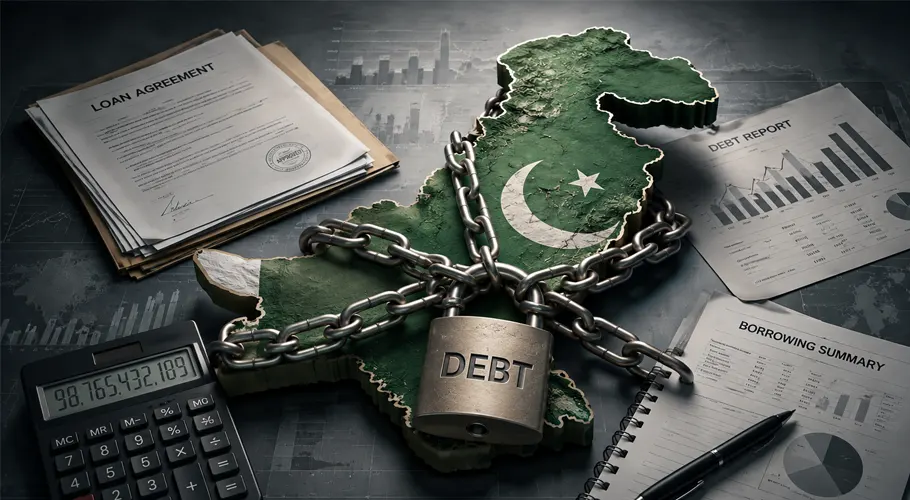

Pakistan’s rising debt burden deepened further in the last fiscal year, with per capita debt increasing by nearly 13%, according to a recent report. The data shows that each citizen now carries an average debt of around Rs 333,000, which is roughly Rs 39,000 higher than the previous year. Economists say the sharp increase reflects persistent fiscal imbalances and growing borrowing needs.
Public debt climbs, fiscal pressure intensifies
Overall public debt has surged beyond Rs 80.5 trillion, adding significant strain to the economy. Analysts warn that the current debt trajectory poses serious risks to fiscal stability and long-term economic planning. According to the report, Pakistan’s total public debt has reached nearly 76% of its gross domestic product, which is estimated at around Rs 127 trillion. This high ratio limits the government’s flexibility to increase spending on development projects and social welfare programs.
Moreover, experts argue that rising debt servicing costs reduce the state’s ability to respond effectively to economic shocks. As a result, policymakers face difficult choices between managing repayments and supporting growth. Economists stress that without structural reforms, debt levels could continue to rise in coming years.
Household analogy highlights growing strain
To explain the situation, economists compared the national economy to a household budget. They noted that if Pakistan were a household earning Rs 127, its debt obligations would already stand at Rs 76. This comparison highlights how stretched the country’s finances have become and why fiscal space continues to shrink.
The report also pointed out that the average annual income per citizen is about Rs 532,000. Consequently, a substantial share of individual earnings effectively matches the growing debt burden. Analysts say this trend underscores the urgent need for revenue reforms, export growth, and tighter fiscal discipline.

