
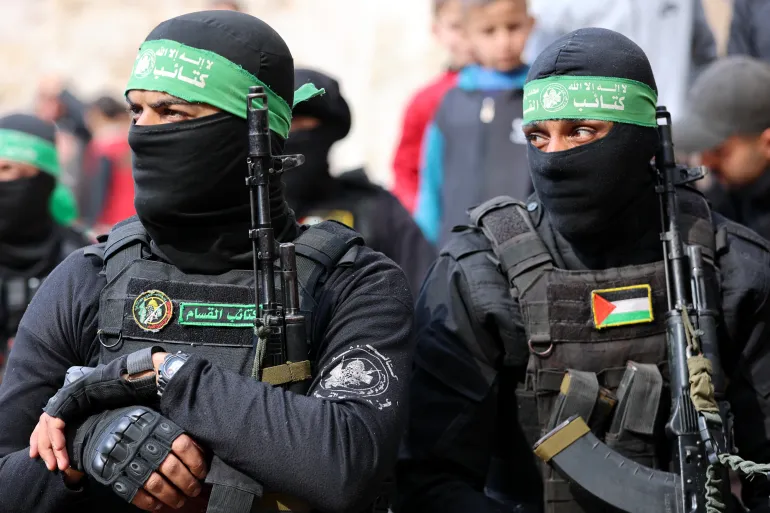

Group Proposes Long-Term Truce While Retaining Military Arsenal
Hamas has ruled out handing over its weapons at this stage, resisting ongoing calls for disarmament and insisting that any decision regarding its military arsenal must emerge from broader discussions among Palestinian factions.
Speaking in an interview with Al Jazeera, Hamas political bureau member Husam Badran outlined the group’s vision for a long-term truce in Gaza. He said that once a proposed Palestinian administrative committee assumes control of the territory, weapons would no longer be visibly carried in public areas, except by official Palestinian police forces.
However, Badran stressed that the arrangement should not be interpreted as a surrender of weapons. Instead, he described it as a temporary framework designed to reduce armed displays while leaving the future of weapons under discussion within a national Palestinian consensus.
Meanwhile, Hamas is expected to send a delegation to Cairo for a new round of negotiations scheduled to begin this weekend. The talks aim to revive efforts to advance a ceasefire plan that has faced repeated delays amid ongoing violence.
Palestinian Factions Seek Unified Position Amid Stalled Process
The upcoming Cairo meetings are expected to bring together several major Palestinian factions, including Hamas, Palestinian Islamic Jihad and other political groups, to formulate a common negotiating position.
According to Hamas officials, major obstacles remain unresolved. The group argues that key provisions of earlier ceasefire arrangements, including humanitarian aid deliveries, border-crossing mechanisms and infrastructure restoration, have not been fully implemented.
At the center of the dispute remains the issue of disarmament. International mediators have reportedly proposed a phased process in which weapons would gradually come under the authority of a Palestinian administrative body rather than being transferred to Israel. The proposal also links progress on disarmament to a phased Israeli military withdrawal and the deployment of an international stabilization force.
Nevertheless, Palestinian political analysts remain skeptical, arguing that negotiations have produced limited results while conditions on the ground continue to deteriorate.
Furthermore, questions remain over the future role of the proposed Gaza administrative committee, which officials say faces significant operational and security challenges before it can assume authority.
As diplomatic efforts continue, humanitarian concerns remain severe. Ongoing hostilities, infrastructure damage and restrictions on aid access continue to affect civilians across Gaza, while negotiators struggle to bridge deep political and security differences between the parties involved.

